
- News
- lifestyle
- parenting
- parenting-stories
- Children who grow up hearing these 7 phrases often become anxious adults, psychologists warn
Children who grow up hearing these 7 phrases often become anxious adults, psychologists warn
Children who grow up hearing these 7 phrases often become anxious adults, psychologists warn
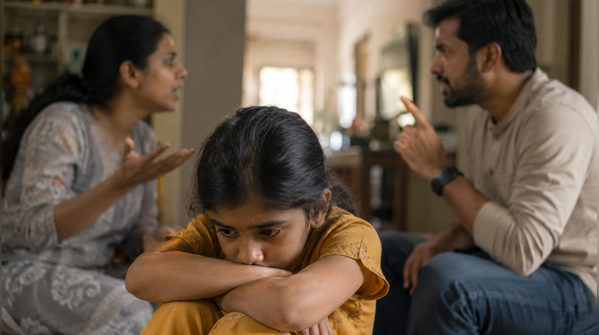
Children do not only hear words in childhood. They absorb tone, repetition, and the emotional message hidden inside everyday language. A phrase that seems harmless to an adult can land very differently in a child’s mind, especially when it is heard often. Over time, these repeated lines can shape how a child sees themselves, how safe they feel in relationships, and how much they trust their own thoughts and feelings.
Psychologists often point out that anxiety in adulthood does not appear out of nowhere. It is sometimes built slowly through years of self-doubt, pressure, criticism, and emotional unpredictability. Words alone do not create a person’s entire future, but they can leave a lasting imprint. Here are seven phrases that children who hear often may carry into adulthood in the form of worry, fear, and overthinking.
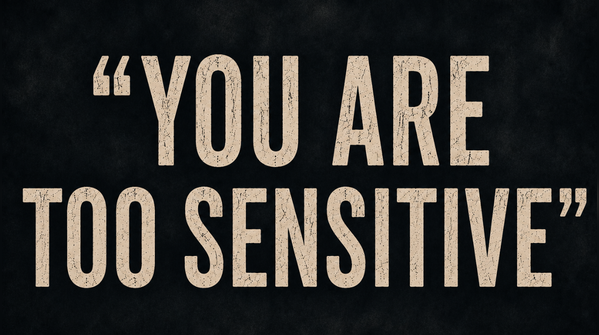
“You are too sensitive”
This phrase teaches a child to mistrust their own emotional response. Instead of learning that feelings are information, they learn that their reactions are inconvenient. Over time, that can create an adult who second-guesses every emotion and apologises for having needs.
A child who hears this repeatedly may grow up believing that discomfort means weakness. They may suppress sadness, anger, or fear until those feelings return later as anxiety, tension, or emotional exhaustion.
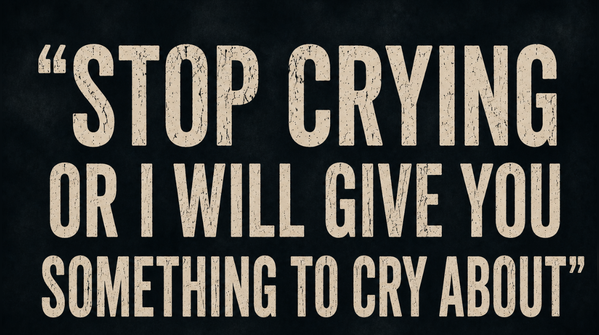
“Stop crying or I will give you something to cry about”
This is one of the clearest ways a child learns that expression is unsafe. The message is not simply “calm down.” It is “your feelings are a problem.” For a child, that can create fear around emotion itself.
Adults who grew up with this kind of language may struggle to express distress until it becomes overwhelming. They may also feel guilty for needing comfort, because early on they were taught that pain had to be hidden, not held.
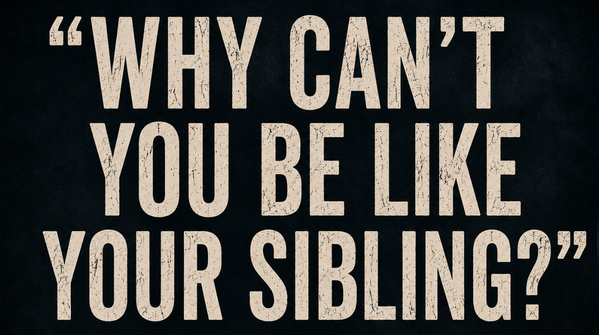
“Why can’t you be like your sibling?”
Comparison can sound practical to adults, but children often hear it as rejection. They are not being encouraged to improve; they are being told they are falling short of someone else’s standard. That comparison can quietly plant shame.
Later in life, such children may become perfectionists, constantly measuring themselves against other people. They may find it hard to feel satisfied, because someone else always seems to be doing life better.
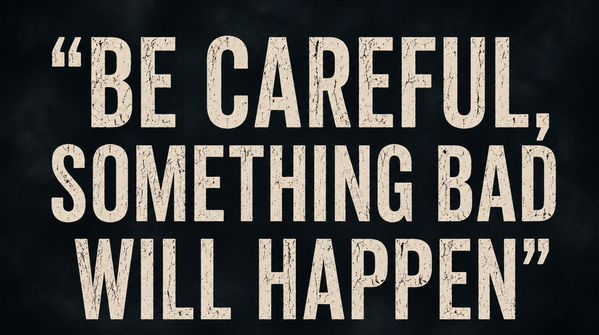
“Be careful, something bad will happen”
A warning here and there is normal. But when fear becomes a family language, children learn to scan for danger everywhere. The world starts to feel less like a place to explore and more like a place to survive.
Over time, this constant state of alertness can shape the nervous system itself. Children raised around chronic fear may become hypervigilant, always watching for mistakes, rejection, or conflict. Even joyful moments can feel difficult to trust because their minds have learned that safety is temporary and something bad could happen at any moment.
As adults, they may struggle to relax even when nothing is wrong. Their minds may be trained to expect the worst, to prepare for disappointment, and to see risk in ordinary situations. Anxiety often grows in that kind of mental climate.
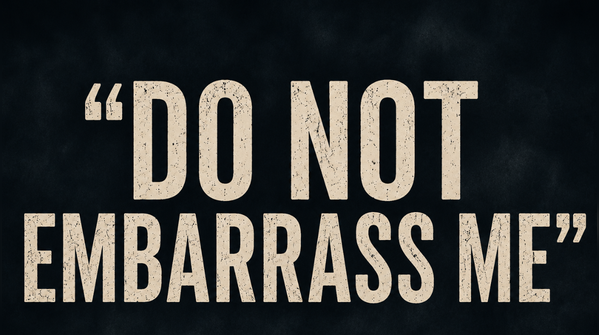
“Do not embarrass me”
This phrase may sound like discipline, but it often teaches a child that other people’s opinions matter more than their own well-being. They may learn to shrink themselves, stay quiet, and avoid drawing attention, even when they need help.
Instead of feeling emotionally protected, the child begins scanning every room for approval. They become hyperaware of tone, reactions, and judgment. Over time, self-expression starts feeling risky. Even normal mistakes can feel humiliating because the fear of being criticized or embarrassing the family becomes deeply tied to their sense of safety.
Later in life, that can become social anxiety, people-pleasing, or a constant fear of making mistakes in public. The child grows into an adult who is always watching themselves from the outside.
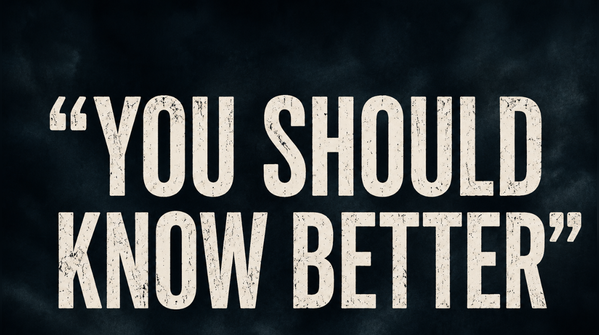
“You should know better”
A child who hears this often may start living under a cloud of shame. Instead of being guided through mistakes, they are made to feel that their error proves something bad about who they are. That distinction matters.
Mistakes are part of learning. Shame turns mistakes into identity. Adults who grew up with this kind of language may become harsh inner critics, always assuming they ought to do more, know more, and be better by now.
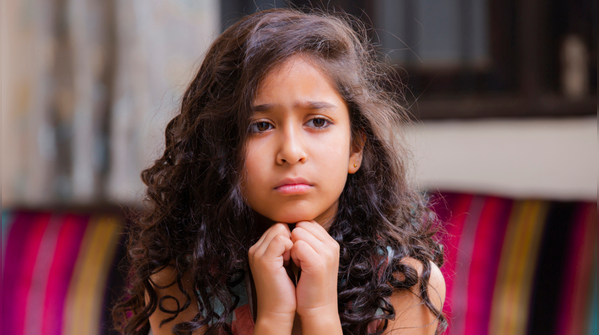
Words become a child’s inner voice
The deepest impact of these phrases is not always immediate. Children may seem fine while growing up, only to realise later that they are carrying a loud inner critic, a hair-trigger sense of danger, or a constant need to please.
That is why the words used at home matter so much. Children do not just remember what was said. They remember what it taught them about themselves. And in many cases, they spend adulthood trying to unlearn it.
A healthier home does not need perfect language. It needs repair, patience, and the habit of making children feel emotionally safe. The right words cannot solve everything, but the wrong ones, repeated often enough, can echo for years.
Featured In lifestyle

MORE FROM ETIMES
life & style