
- News
- City News
- delhi News
- South Delhi to Jewar airport in just 45 minutes? This mega expressway link is almost ready
South Delhi to Jewar airport in just 45 minutes? This mega expressway link is almost ready
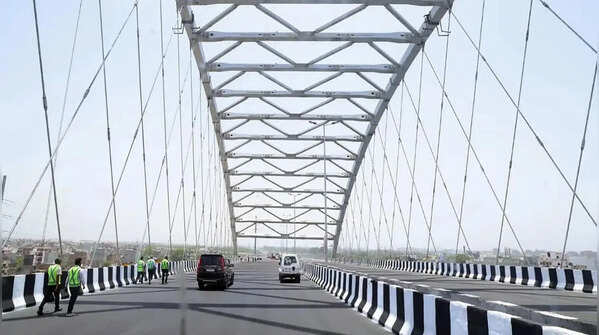
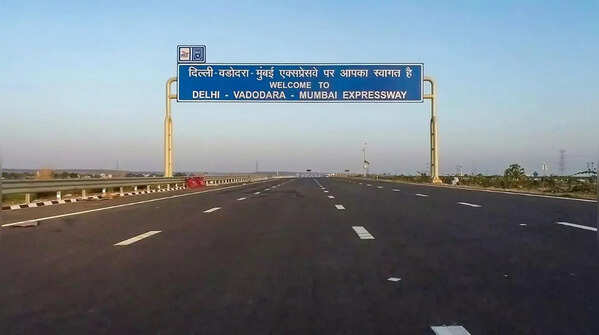
Delhi–Mumbai Expressway’s first Delhi stretch set to open soon
The first leg of the Delhi–Mumbai Expressway from DND Flyway to Jaitpur is expected to be ready within days, promising faster and signal-free travel for commuters heading towards Haryana, Rajasthan and beyond.
The access-controlled corridor is being positioned as a major step in easing congestion across Delhi-NCR while improving connectivity to upcoming infrastructure projects like Jewar International Airport.
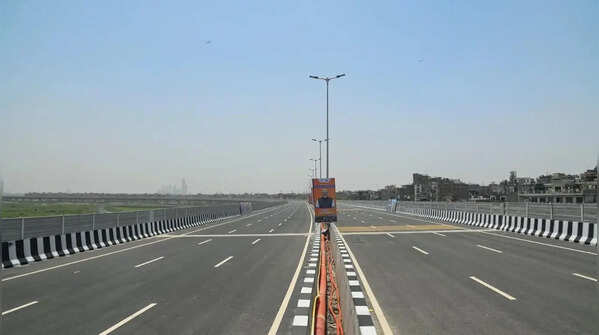
What is opening first
The upcoming stretch connects the DND Flyway area in Delhi to Jaitpur as part of the larger Delhi–Faridabad–Sohna section of the Delhi–Mumbai Expressway.
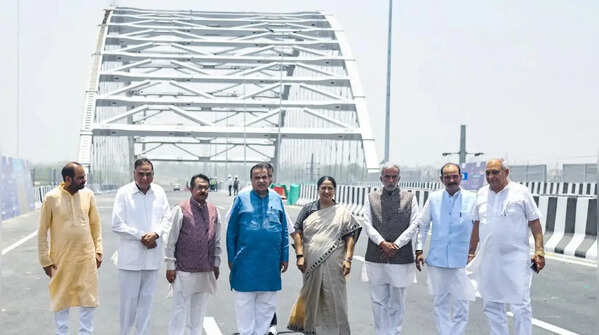
Union road transport minister Nitin Gadkari inspected the corridor along with Delhi chief minister Rekha Gupta and officials from Delhi, Haryana and the Centre before announcing that the stretch could be inaugurated soon.
Once operational, commuters from Noida, East Delhi and South Delhi will be able to bypass several heavily congested city roads.
A faster route out of Delhi
The expressway stretch is expected to significantly improve travel for people heading towards Haryana, Rajasthan, Madhya Pradesh, Gujarat and Maharashtra.
Instead of navigating crowded urban corridors and traffic signals, vehicles will move through a controlled-access route linking Delhi directly to Sohna and onward to the larger Delhi–Mumbai Expressway network. Officials say the project forms a key part of the Centre’s broader Delhi-NCR decongestion strategy.
Big boost for Jewar airport connectivity
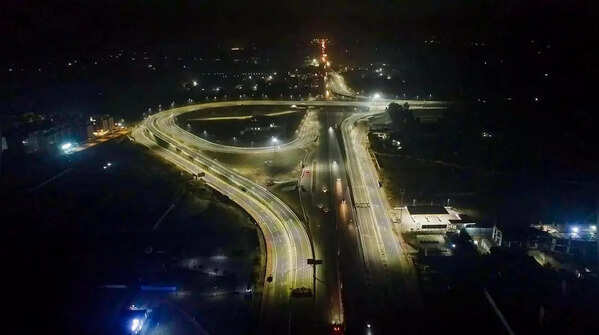
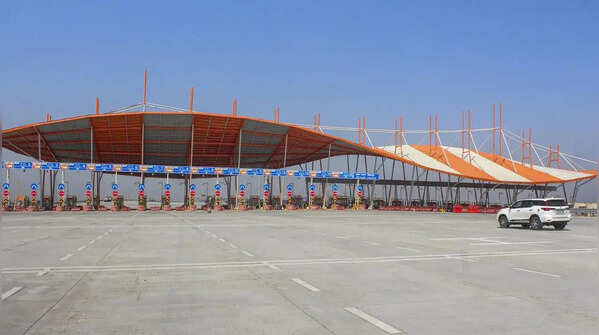
A major feature of the project is the under-construction 31.5-km link connecting the expressway corridor to Noida International Airport at Jewar.
Once completed, the route is expected to cut travel time from South Delhi to the airport to nearly 45 minutes. The corridor is expected to become one of the most important airport access routes in NCR, especially for travellers coming from Delhi, Faridabad and neighbouring regions.
Part of a larger Rs 34,000-crore plan
The expressway opening is only one part of a much larger infrastructure push planned for Delhi-NCR.
According to Gadkari, projects worth nearly ₹34,000 crore are being planned or executed to modernise the region’s road network. These include new ring roads, tunnels, elevated corridors and signal-free connectivity projects designed to reduce bottlenecks and improve movement across NCR.
Among the proposed projects are six-lane links connecting UER-II with the Delhi-Dehradun Expressway and additional connectivity to Noida and Faridabad.
Delhi’s expanding highway network
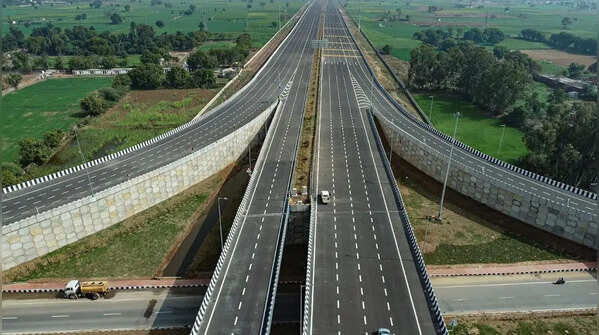
Delhi chief minister Rekha Gupta said the Centre has invested nearly ₹1.3 lakh crore in highway and connectivity projects across the capital region.
Officials believe Delhi’s traffic pressure would have become far worse without the construction of expressways and elevated corridors over the last several years. The new infrastructure is aimed not just at reducing travel time, but also at creating a more future-ready transport network for a rapidly expanding urban region.
The route through Delhi and Haryana
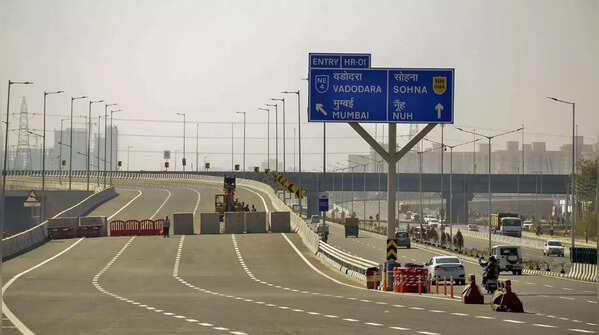
The Delhi portion of the Delhi–Mumbai Expressway begins near Maharani Bagh close to the DND Flyway.
From there, it passes through Kalindi Kunj, the Jaitpur–Mithapur stretch and the Faridabad bypass before eventually linking with the Kundli-Manesar-Palwal (KMP) Expressway near Khalilpur in Haryana’s Nuh district. The alignment is expected to provide a smoother transition between Delhi and the larger national expressway network.
The engineering highlight: Network Arch Bridge
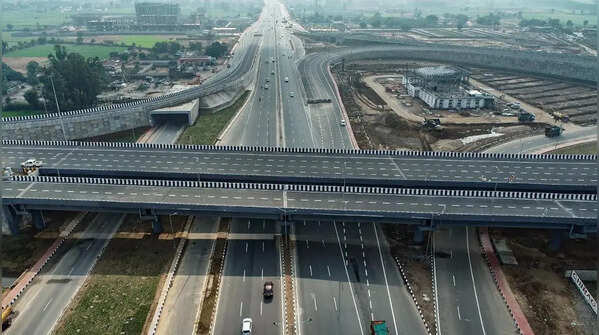
One of the standout features of the corridor is the newly built Network Arch Bridge, designed using advanced engineering systems aimed at improving durability, comfort and structural stability.
Built at a cost of ₹142.3 crore, the bridge includes inclined crossed hangers, high-damping rubber bearings, swivel-type expansion joints and high-tensile steel systems. Officials say the structure has some of the widest pier caps in India at 36.4 metres and features a 47-metre-high arch rib, giving it both engineering and visual significance.
Infrastructure and environmental push together
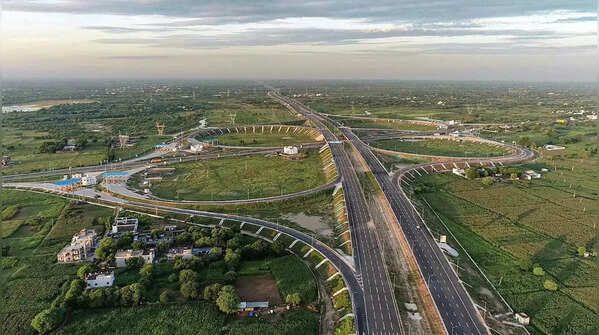
As part of the project’s environmental compensation measures, afforestation work is being carried out on nearly 10 hectares of land previously used for fly ash dumping by NTPC.
The site is now being developed into a jungle safari project under the Delhi government. Officials say the idea is to combine ecological restoration with public-use green spaces while balancing large-scale infrastructure expansion in NCR.
A new mobility network for NCR
The opening of the first Delhi stretch of the Delhi–Mumbai Expressway is expected to reshape how people move in and out of the capital.
For commuters, it could mean faster exits from Delhi, reduced congestion on city roads and smoother long-distance travel. For NCR, it marks another major step in building an interconnected network of expressways, airports, elevated corridors and logistics routes aimed at supporting the region’s rapid growth over the coming decades.
Featured In City

