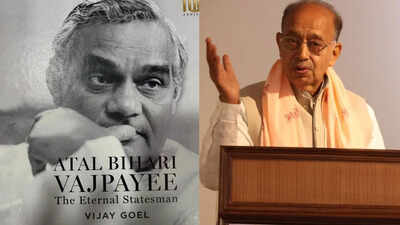
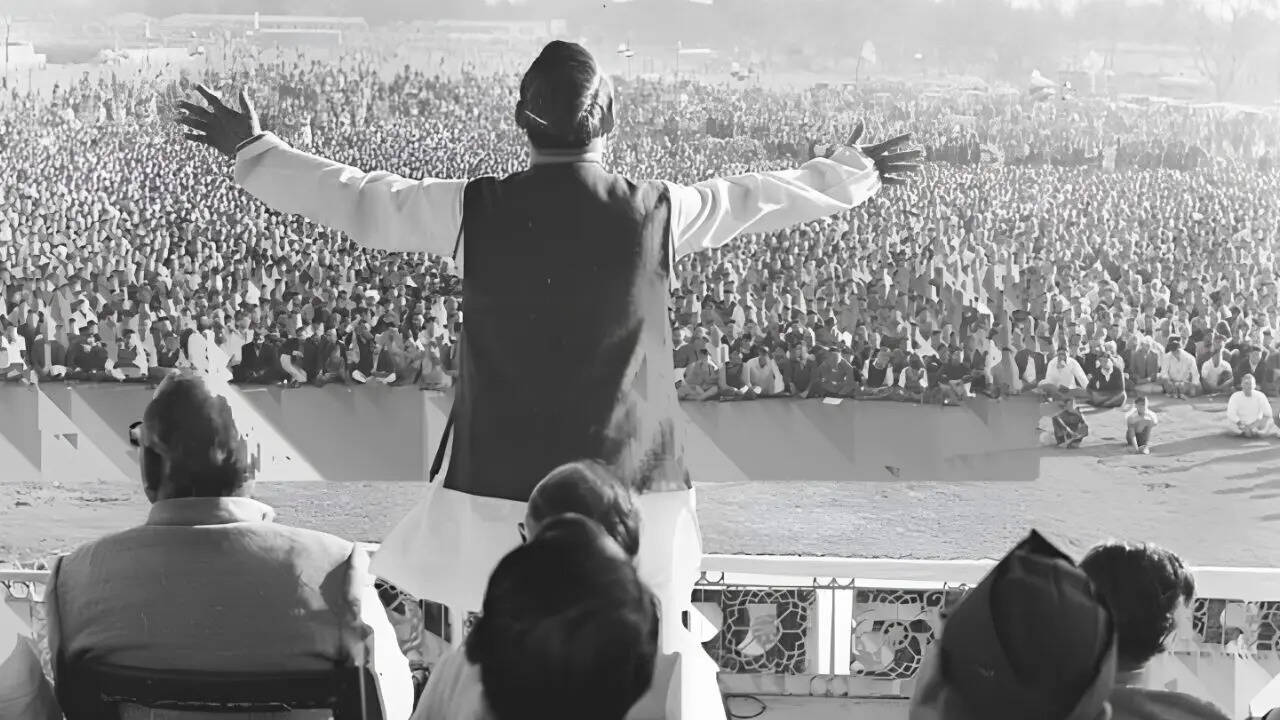
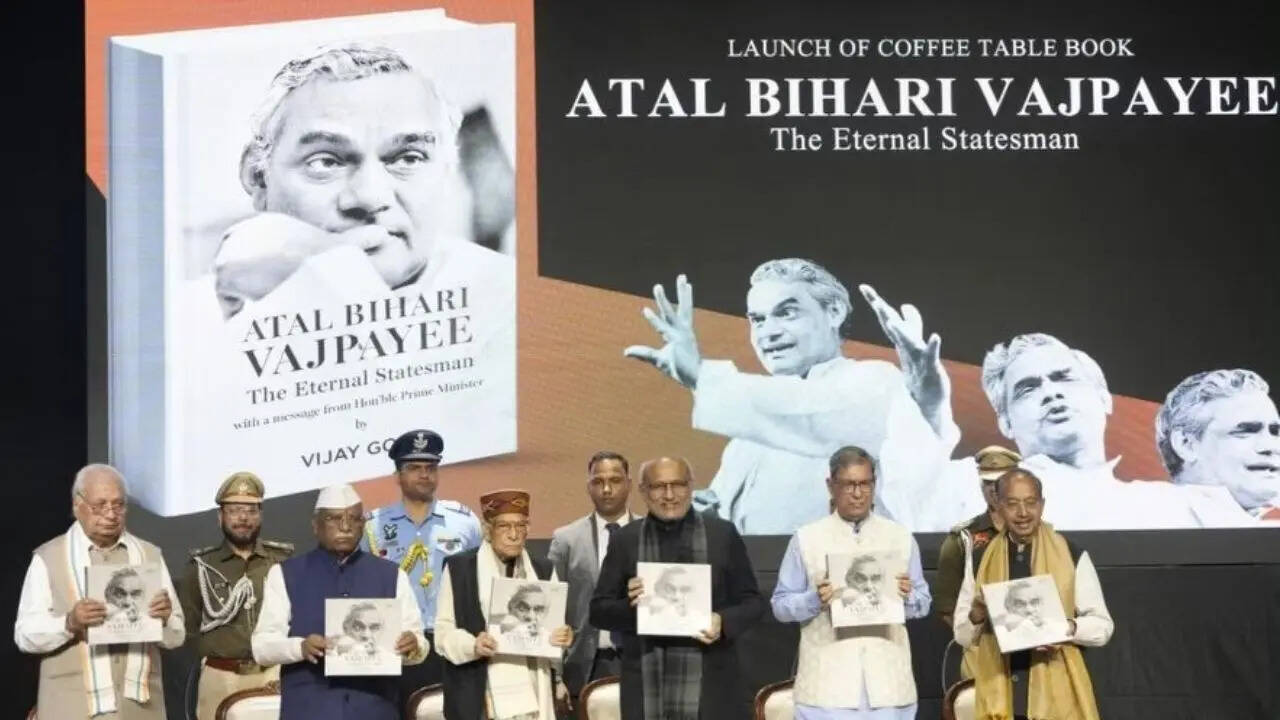
3-time Prime Minister of India, Atal Bihari Vajpayee stands out as one of the most towering figures in Indian politics. He was not only the first non-Indian National Congress Prime Minister to complete a full five-year term, but also the longest-serving BJP Prime Minister until 2024. He was one of the best-known Hindi orators in Parliament, with speeches that are remembered even today. His passing at the age of 93 in 2018 was one of the biggest losses for Indian politics. While several biographies have been written about his life, the one by senior BJP leader
Vijay Goel stands out because of the deep bond the two shared.
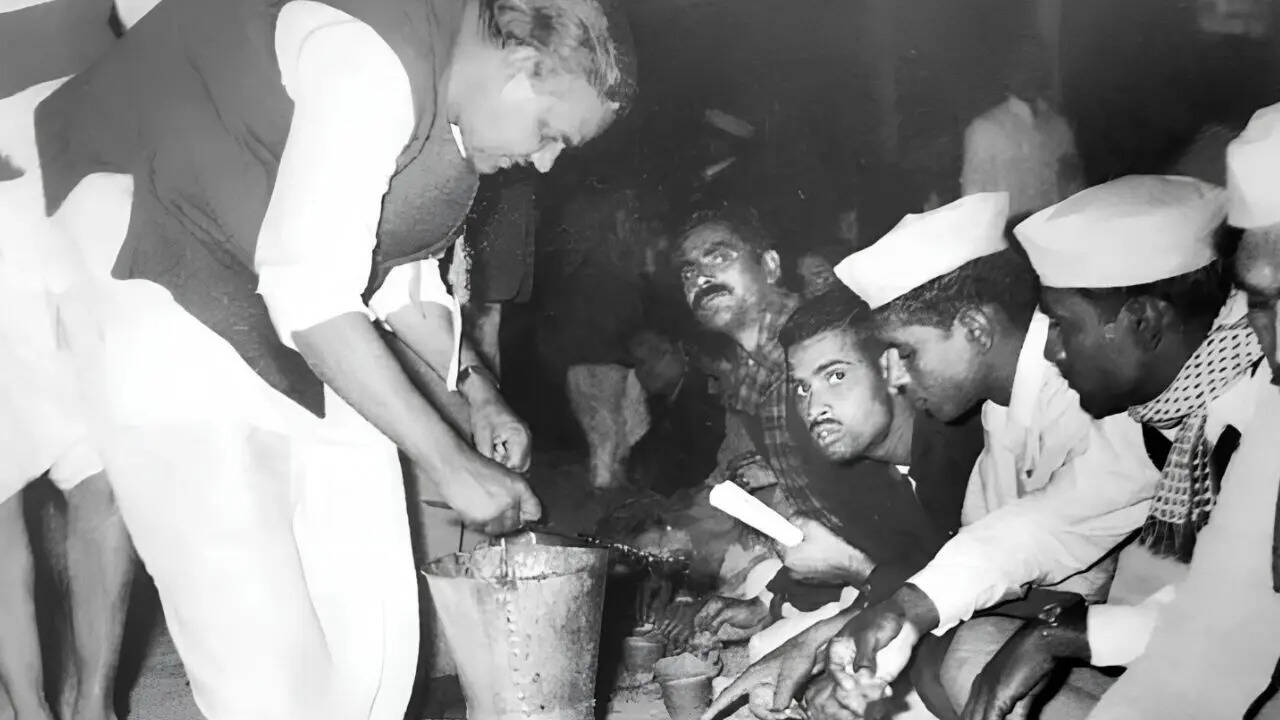
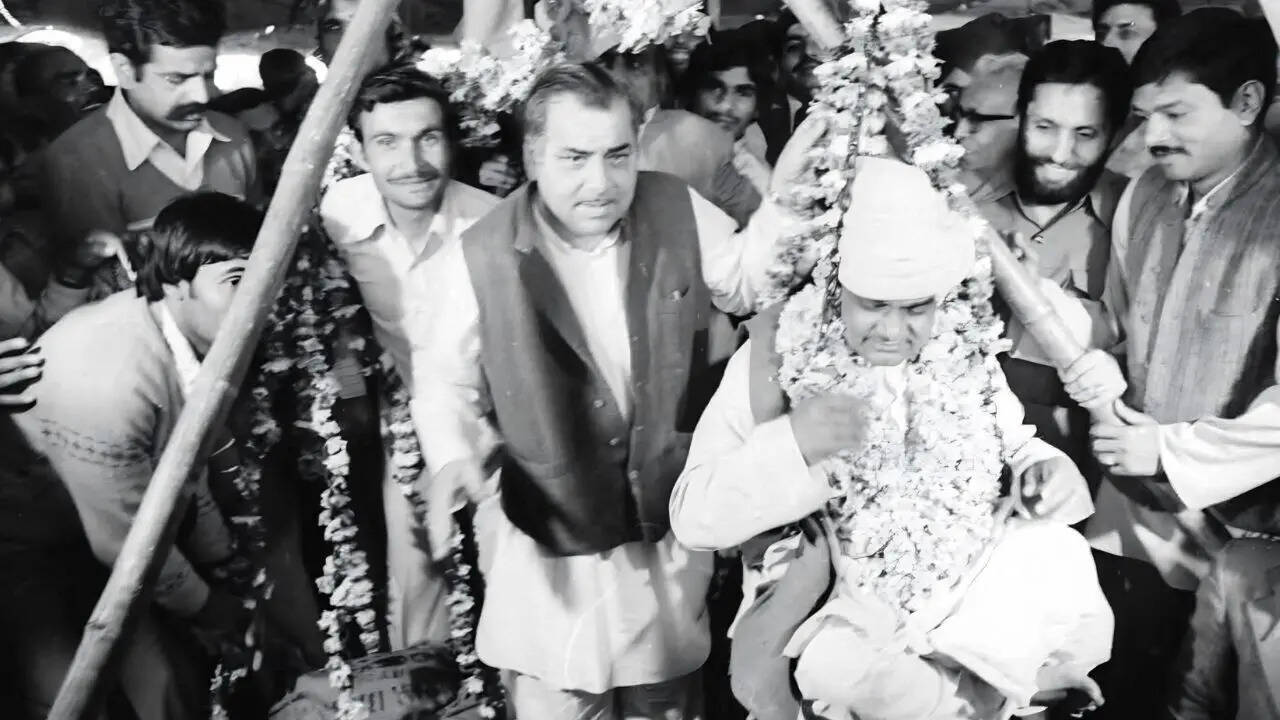
Vijay Goel, who is also the Vice Chairman of the Gandhi Smriti and Darshan Samiti (GSDS), has not just written a book, but has traced history while being an inalienable part of it. The coffee table book, Atal Bihari Vajpayee: The Eternal Statesman, is a gold mine of historical information and rare photographs. The book not only traces the life and ideology of Atal Bihari Vajpayee, but also throws light on the warm relationship shared by the veteran politician and the author. In an exclusive interaction with Smita Mishra, Vijay Goel shares fascinating insights into his relationship with Vajpayee ji, his political career, his mind and thoughts, and the immense effort that went into the making of the book.
"I took four years to complete it. It was not easy—I had to search for rare photographs, identify people in old pictures, and gather forgotten details. In our country, there are hardly any coffee table books on post-Independence political leaders. At times, the process became deeply emotional for me, because it felt like revisiting an important chapter of my own life. In many ways, the book is as much about Vajpayee ji as it is about my own journey with him. My life remains entwined with his. He was present in all important occasions of my life. He came for my marriage. I can still see him standing there in my barat and my heart swells up with warmth."
"When Vajpayee ji came out on parole after the Emergency, very few people would go to meet him. But I never stopped visiting him. I continued to go regularly and invited him to all my functions. I remember when he became the Prime Minister and I went to meet him for the first time. I still remember the look I saw in his eyes—as if he was saying-look where we have reached. I was so emotional myself that I could hardly speak. Before leaving, I simply said, ‘Sir, if there is any work, please let me know.’ He only replied, ‘Aaya karo’ (keep coming). I was young, inexperienced and I went straight to his PA and asked him, that what did he mean by " Aaya Karo. And the PA said-'It means what it means! Aaya karo, keep coming." Since then the doors of his home were always open for me, I was always welcome."
How did a politician become a writer?"As for writing, it began early in my life. When I was in school, I wrote an essay titled Meri Pehli Kahani, which was published in Bal Bharati and became quite popular. That encouraged me to keep writing, and over the years my articles were published in several newspapers and magazines. I also wrote a book on Chandni Chowk. This book, however, is truly a labour of love. Anyone writing about someone they deeply admire can only do so with this kind of passion. I have admired Vajpayee ji all my life. Writing this book was not difficult because of the words—it was difficult because of the emotion, effort, and memories attached to it."
A tale of two political leaders, some history, lessons and their beautiful bond"When Vajpayee ji was in jail during the Emergency and later came out, very few people went to meet him. But I never stopped meeting him. He would explain things to me like one explains to a child. Even when he was in the PMO, he would guide me on what more needed to be done. In the beginning, when I asked too many questions, he would ask me to slow down and explain the nuances like a family member, " says Vijay Goel.
How was he as Prime Minister? "Even when I was not in the PMO, I would keep sending suggestions, just as I do to Modi ji today. I was part of many of his meetings and interactions. There is one instance which probably I will always remember as it was also a great lesson on people management. Once Mayawati came meet him and she kept on speaking for nearly an hour, listing out problem after problem. Vajpayee ji replied in just five sentences, and she left satisfied. That was his art!"
Balancing facts and personal admiration in the book"I deeply admired him, and I also learned a lot from him. Along with facts, I have tried to present stories. There were contradictions and challenges—balancing ideology with coalition compulsions. For instance, when Jayalalithaa tried to withdraw support, discussions were even held at my home. I was then only an MP and not in the PMO. He sent word asking if she was coming, and when I said yes, he came too. At first, they were not speaking, so I began the conversation by joking that she could make good food and Vajpayee ji could make good poetry. That broke the ice and conversations flowed. Coalition compulsions existed, but he always handled them beautifully."
Great initiatives that should have been valued more"His Lahore bus journey is often undervalued because of the war that followed. The Agra Summit also failed. Both were serious efforts, but circumstances overtook them. I once told him that people trusted him so much that even when these efforts failed, their faith in him remained intact. On infrastructure, he was far ahead of his time. He spoke of roads, digital highways, and the Golden Quadrilateral. At that time, he was criticised for spending too much money, but today similar development is widely appreciated."
What would have been different had Vajpayee ji been here today? "There would have been greater harmony between the government and the opposition. People loved his smile. He made everyone feel wanted and welcome. He had a playful side too. He loved films and often travelled simply. He enjoyed kavi sammelans and poetry gatherings. Once, we persuaded him to attend a film night by telling him Salma Agha would be there. He was a fun-loving man."
Was there any internal conflict that troubled him? "His worries are reflected in his poetry. He thought deeply about life and mortality. He was never in a hurry to achieve everything at once. With his age, health, and wisdom, there was truly no one like him. He did not become Prime Minister through shortcuts. He rose by travelling across the country, meeting ordinary people lane by lane and house by house. That is why people felt personally connected to him. I was surprised by how many people actually knew him personally. I have met hundreds who have told me-Atal ji came to my home! The popularity and love that he got is rare in today's time. Even when he was not in the Lok Sabha or active in public life, people still wanted to meet him. He was a man with a golden heart and a great composure. He never showed any negative reaction when Advani ji became Leader of the Opposition. For him work and party came first, His only aim was to ensure that the government functioned well and the nation moved forward. In his last days when he was unwell, his family took great care of him. He had earned this love, this respect which is rare in today's time."
Vijay Goel’s book is a remarkable work of patience, dedication, and painstaking effort. Beyond its political insights and historical detail, what truly sets the book apart is its emotional depth and deeply personal anecdotes. Through these intimate recollections, the reader encounters not merely the statesman Atal Bihari Vajpayee, but the man behind the public persona — thoughtful, compassionate, witty, and profoundly human. The narrative beautifully captures the warmth of Vajpayee’s relationships with those closest to him, revealing bonds built on trust, affection, and mutual respect. These moments lend the book an authenticity and tenderness that transform it from a conventional political account into a deeply moving portrait of a leader whose humanity was as compelling as his legacy.