
- News
- Relationships News
- Success quote of the day by Maya Angelou: “What you're supposed to do when you don't like a thing is..."
Success quote of the day by Maya Angelou: “What you're supposed to do when you don't like a thing is..."
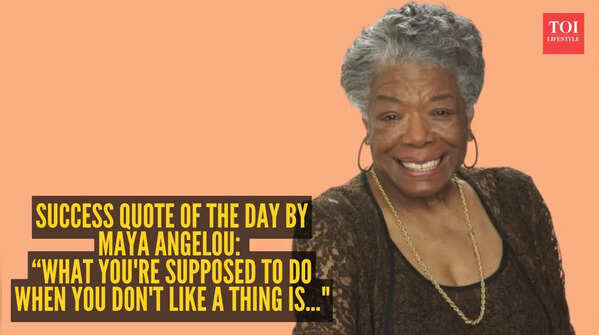
Maya Angelou's success quote
“What you're supposed to do when you don't like a thing is change it. If you can't change it, change the way you think about it. “Don’t complain.”
— Maya Angelou, Wouldn’t Take Nothing for My Journey Now
Maya Angelou’s words are more than a motivational quote. They are a quiet compass for how to navigate difficulty, disappointment and everyday frustration with dignity and purpose. In a world full of problems we can’t immediately fix — unjust situations, unchangeable circumstances, and people we can’t control — Angelou’s quote offers a simple but powerful framework: act where you can, change your mindset where you can’t, and stop wasting energy on complaints that lead to no change.Stop complaining, start choosing
When something feels unfair, exhausting, or simply “wrong,” our first instinct is often to vent. We complain to friends, replay the situation in our heads, and sometimes let irritation grow into resentment. Angelou doesn’t dismiss how real that pain can be. What she challenges is turning complaint into a habit. Complaining feels like action, but it rarely changes anything. It keeps us mired in the problem instead of propelling us toward the solution. Angelou’s message is simple: emotions are real, but they aren’t carte blanche to wallow for eternity. Naming a problem matters, but circling around the issue without action is exhausting.Her line invites us to pause and ask, Can I actually change this? If the answer is yes, then complaining becomes a distraction from the real work of addressing it.

Change it when you can
The first part of her quote—“change it”—is about responsibility and agency. If there’s a behavior you dislike, a situation you can improve, or a pattern you can shift, then Angelou is nudging you to step in. That might mean setting a boundary, speaking up, walking away from a toxic environment, or finally making a decision you’ve been avoiding.For many people, “changing it” in real life is messy. It can mean confrontation, uncertainty, or short‑term discomfort. But Angelou’s wisdom reminds us that short‑term discomfort is usually better than long‑term resentment. Success isn’t always about winning big; sometimes it’s about the quiet courage to adjust your life so it aligns a little more closely with your values.

Change how you think about it when you can’t
The second part of the quote—“if you can't change it, change the way you think about it”—is where resilience is forged.Not every situation is in our control. Markets shift, relationships end, our bodies change, and external events happen without our permission. In those moments, Angelou teaches us that even when circumstances stay the same, our internal world doesn’t have to. Changing how you think about a situation doesn’t mean pretending nothing hurt you. It means reframing, learning, and sometimes choosing a different emotional posture. A difficult colleague, a delayed opportunity, a mistake you can’t erase—these can either become stories of powerlessness or lessons that shape your growth.When we shift our perspective, we reclaim some of the power that seemed to have been taken from us.

Don’t let complaining become your identity
Angelou’s final line—“don’t complain”—isn’t about suppressing your feelings. It’s a call to break the cycle of negativity that becomes a kind of identity: “I’m the person who always has something to complain about.” When complaining becomes a habit, it affects how we see the world and how the world sees us. Energy once spent fixing, adapting, or creating is instead spent criticizing, judging, and rehashing.Not complaining doesn’t mean that you turn a blind eye to injustice or sweep things under the rug. It means you save your voice for what matters, and you use it constructively. When we reduce complaining, we open the door for gratitude, problem-solving and even humor—small but powerful shifts that can dramatically change the tone of our lives.

Success is how you respond
Maya Angelou’s quote on success is ultimately about response, how you choose to respond when life doesn’t live up to your expectations.Do you stay paralyzed by frustration, or do you look for the part you can change? If you truly can’t change it, do you dig deeper into resentment, or do you diligently work on your own mindset, attitude, and perspective? Living by this quote doesn’t mean life becomes easy. It means that when things are hard, you’re less likely to drown in complaint and more likely to stand on the side of action—or, at the very least, on the side of a calmer, clearer mind. In that sense, success isn’t only about outcomes; it’s about the quiet courage to keep choosing your response, again and again, every time you don’t like a thing
Featured In Relationships

