
- News
- Relationships News
- Success quote of the day by Aristotle: “Excellence is never an accident, it is always the result of..."
Success quote of the day by Aristotle: “Excellence is never an accident, it is always the result of..."
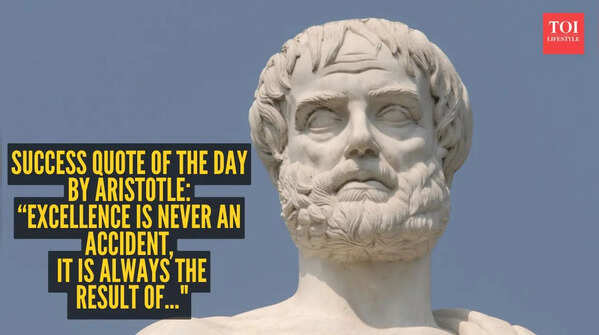
Aristotle's success quote
Many of us secretly hope that success will find us by luck or timing—that if we “get the right break,” everything will fall into place. But over 2,000 years ago, Aristotle offered a quiet, powerful reality check:
“Excellence is never an accident. It is always the result of high intention, sincere effort, and intelligent execution; it represents the wise choice of many alternatives – choice, not chance, determines your destiny.”
This isn’t just a motivational line; it’s a calm, firm reminder that excellence—whether in work, relationships, or self‑growth—is rarely a surprise. It’s the product of three main ingredients: clear intention, honest effort, and thoughtful action. When you match that with deliberate choices, rather than hope, you’re not just chasing luck; you’re shaping your own destiny.

Excellence isn’t accidental
Aristotle’s first line—“Excellence is never an accident”—cuts through the myth that some people are simply “born successful.” His point is simple: the people who seem effortlessly excellent usually have a history of quiet, consistent work we don’t see.
Excellence in any area—whether it’s playing an instrument, writing, leading a team, or parenting—comes from repetition, refinement, and reflection. It’s not that they never fail; it’s that they fail more reflectively, learn more quickly, and keep coming back. Aristotle reminds us that greatness is rarely a flash of inspiration; it’s a series of small, intentional choices done over time.

High intention: knowing what you’re aiming for
“High intention” means starting with a clear sense of direction. Excellence rarely begins with, “I hope something works,” and usually begins with, “This is what I want to build, create, or become.”
High intention isn’t just about big goals; it’s about deciding, “What kind of person do I want to be in this process?”
Do you want to be known for your integrity, not just your results?
Do you want to be kind, not just successful?
When your intention is clear, your daily actions line up more easily. You’re not just drifting toward success; you’re walking toward it with a quiet purpose.

Sincere effort: doing the work, even when no one is watching
“Sincere effort” means more than just putting in hours; it means committing with honesty and presence. It’s the practice done when no one is watching, the preparation done when success feels far away, the late‑night revision, the extra mile taken when it would be easy to stop.
Sincere effort also means admitting when you’re tired, confused, or stuck, instead of pretending you’ve got it all figured out. It’s effort that’s real, not decorated. Aristotle knew that the difference between average and excellent often isn’t raw talent, but how much genuine, unseen work someone is willing to do behind the scenes.

Intelligent execution: choosing the right moves
“Intelligent execution” is the bridge between wanting something and getting it. It’s not just hard work; it’s working with strategy, reflection, and adaptation. It means:
- Learning from feedback instead of ignoring it
- Trying different approaches when one isn’t working
- Staying flexible enough to change course without giving up on the goal
Excellence isn’t brute‑force stamina; it’s smart, steady, and thoughtful movement. When you mix sincere effort with intelligent choices, progress becomes more predictable and less like a gamble.

Choice, not chance, shapes your life
The final line—“choice, not chance, determines your destiny”—is Aristotle’s quiet call to ownership. It reminds us that who we become is shaped more by the thousands of small decisions we make every day than by luck, genetics, or circumstances.
Every time you:
- Choose to learn instead of procrastinate
- Choose kindness instead of anger
- Choose growth instead of comfort
…you’re quietly steering your life toward a higher version of yourself. Excellence isn’t a one‑time lottery win; it’s a life‑long habit of choosing the path that actually builds it.
Aristotle’s quote remains powerful because it strips away the fantasy of effortless success and replaces it with something more honest—and more empowering: excellence is for those who choose to show up, again and again, with clear intention, honest effort, and thoughtful action.
Featured In Relationships

