
- News
- lifestyle
- travel
- things-to-do
- From Sapera to Irulas: Famous snake tribes of India and why they fascinate travellers from the world over
From Sapera to Irulas: Famous snake tribes of India and why they fascinate travellers from the world over
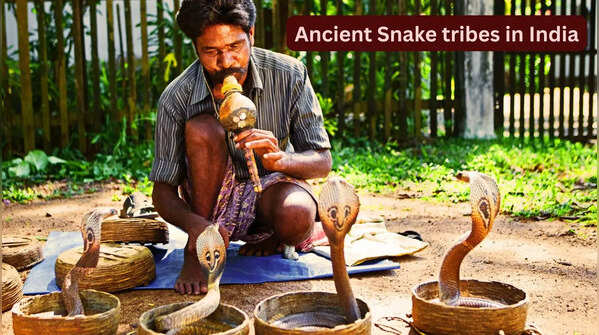
From Sapera to Irulas: Famous snake tribes of India and why they fascinate travellers from the world over
India has a deep connection with snakes which goes beyond mythology, legends and temples. It’s a fact that across the country live many nomadic and tribal communities which have historically coexisted with snakes. Communities which have earned livelihoods through snake catching, folk performances and wildlife knowledge. While many of these practices have changed today, these communities still remain an important part of India’s cultural landscape attracting travellers from all over. For travellers wanting to know more about indigenous people connected with snakes, it is a unique travel experience.
A look at five ancient snake tribes in India and what travellers need to know:
(Canva)
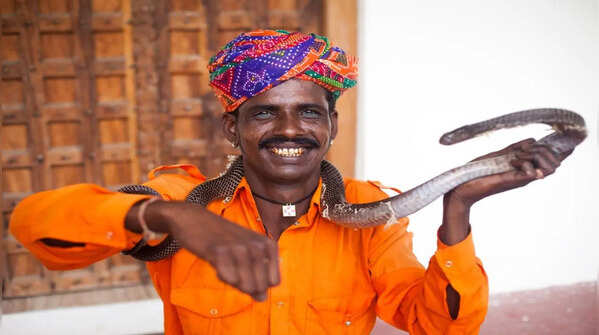
The Kalbelia Tribe, Rajasthan
Rajasthan’s Kalbelia community is traditionally known as snake charmers. These are among the most famous snake-related tribes in India associated with the deserts of Rajasthan. Their name is the combination of two words “Kal” (snake) and “Beliya” (friend). As per historical records, the men of this tribe used to catch snakes and extract their venom to perform snake shows. And the women in the tribe are known for graceful and interesting dance moves. It is a UNESCO-recognised folk tradition which is inspired by movements of the snake.
However, the Wildlife Protection Act of 1972 restricted them from handling snakes. So today most of them have become performing artists.
For travellers, it is an experience of a lifetime. They can experience Kalbelia culture during festivals like the Pushkar Camel Fair or around Jaisalmer and Jaipur where they perform for tourists. Their black swirling costumes and jewellery looks absolutely stunning. They perform on traditional ‘been’ music and their acrobatic dance performances are among the biggest attractions.
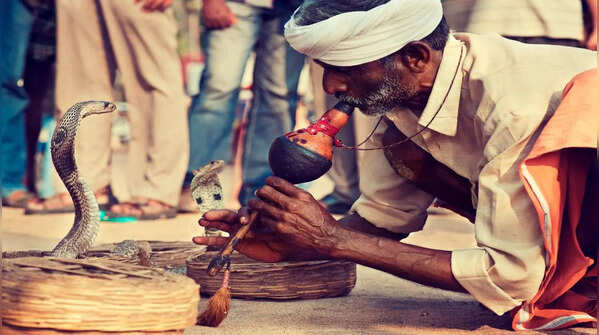
The Sapera Community of North India
The Sapera community is a semi-nomadic group of traditional snake charmers and catchers across North India. These can be particularly found in states like Haryana, Delhi, and Uttar Pradesh and Bihar. The word “Sapera” itself means snake charmer.
Historically, Saperas travelled village to village with cobras, one of the most venomous snakes in the world, in baskets. These were trained snakes which would dance to the iconic ‘been’ tunes. It was mostly meant for entertainment. People would often remove uninvited snakes from homes and farms.
Today, their traditional livelihoods are disappearing and families have transitioned into folk musicians, street performers or labourers. But travellers visiting rural areas in northern India may still encounter folks from the Sapera community.
(Canva)
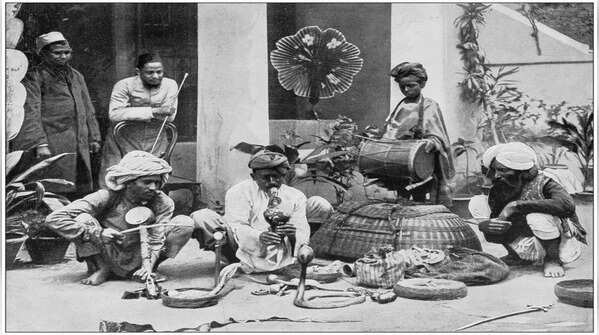
The Irula Tribe, Tamil Nadu
The Irula Tribe from South India is among the world’s most respected snake-catching communities in the country. They are mainly found in Tamil Nadu and parts of Kerala. But it’s a globally-recognised tribe for its extraordinary knowledge of snakes and venom extraction.
The Irulas are connected with scientific conservation and anti-venom production. Their expertise in locating venomous snakes by reading environmental signs has been passed down for generations. Some people from the Irula community like Masi Sadaiyan and Vadivel Gopal have also gained national recognition for their contribution to healthcare and conservation. For travellers, it makes for an eco-tourism experience.
(Canva)

What travellers should know
India’s snake tribes represent centuries of ecological knowledge, folk medicine, and nomadic traditions.
Travellers should:
Respect wildlife protection rules
Seek ethical cultural experiences
Ask permission before photographing communities
Support local artisans
(Canva)
Featured In lifestyle

MORE FROM ETIMES
life & style