
This mountain range is the oldest in India—and older than dinosaurs: 5 stunning facts
This mountain range is the oldest in India—and older than dinosaurs 5 stunning facts
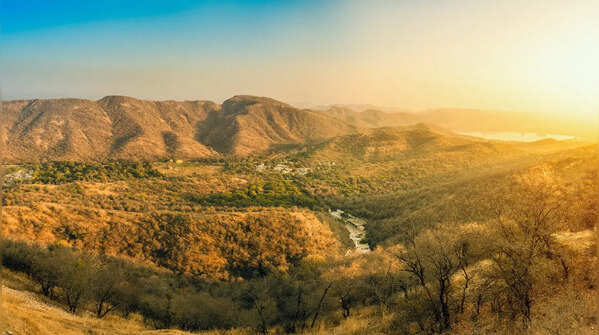
While Indian landscapes have always been characterized by the presence of the Himalayas – young and dynamic mountains with an ever-evolving landscape, a mountain range existed long before these mountains came into existence.
The Aravalli mountain range stands out as one of the oldest mountain ranges not only in India but on planet Earth. The modest range may be unremarkable now but has a legacy that is estimated to date back more than a billion years.
Here are five fascinating facts that reveal why the Aravallis are unlike any other mountain range in the country.
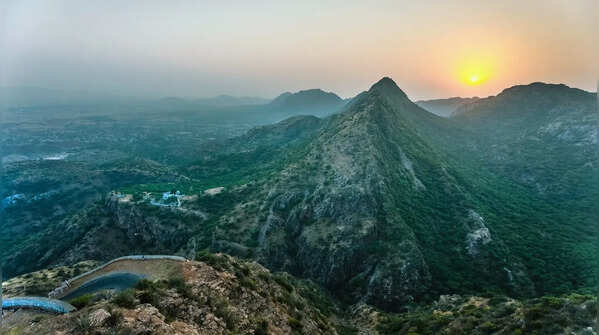
It is over 1.5 billion years old—far older than dinosaurs
The Aravalli mountain range is thought to be over 1.5 billion years old, dating back to the Proterozoic Era, when life forms on Earth were yet microscopic beings. The dinosaurs emerged onto the planet some 230 million years ago, while the Aravallis had been existing for over a billion years prior to this time. Indeed, this chain of mountains has survived the coming together and subsequent breaking up of super continents, drastic climate changes, and evolution itself. Walking through the Aravallis today is, in a way, like stepping into a living geological archive, one that predates most of what we know about life on Earth.
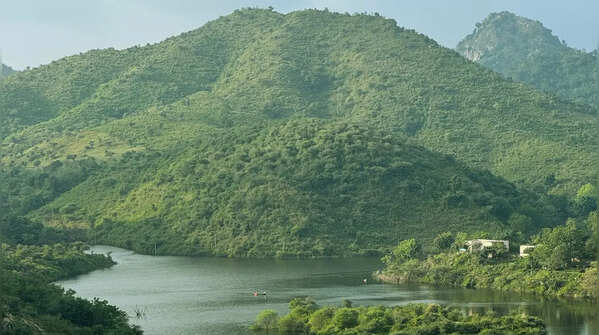
They were once as tall as the Himalayas
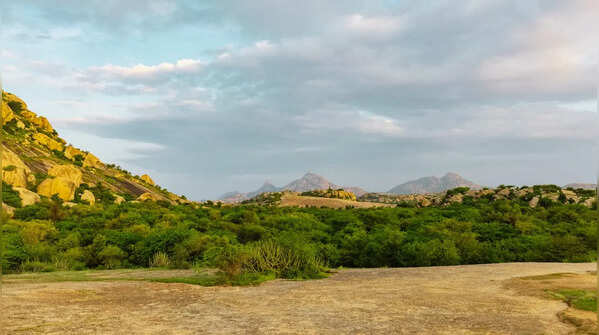
While it might seem impossible to believe now, the Aravalli range used to be huge mountains, similar to how the present-day Himalayas are. However, natural forces such as erosion, weathering, and lack of geological activity have led to its steady degradation over time. Whereas the Himalayas continue to grow because of ongoing geological processes, the Aravalli range is referred to as “relict” – meaning they are the remains of a much older, once-mighty system. The result of constant erosion is that the present-day Aravalli Mountains don’t look anything like a typical mountain range.
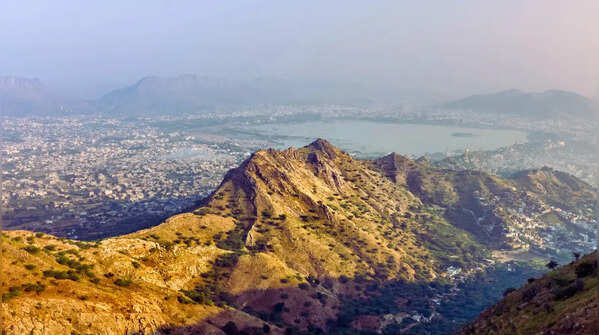
The range stretches across four states and shapes the landscape
The Aravalli range stretches over a length of approximately 700-800 kilometres, covering Gujarat, Rajasthan, Haryana, and even the area of Delhi. Such an extent of geographic presence makes this range one of the most important natural features of northwest India. Throughout history, the Aravallis have played an important role in the establishment of settlements, trade routes, and climate patterns. For example, in Rajasthan, the Aravalli range separates the state into two distinct regions, the fertile east and the arid west, close to the desert.
In Delhi too, traces of this mountain range can be found in rocky ridges.
It acts as a natural barrier against the Thar Desert
Amongst the many vital roles performed by the Aravalli hills, the ecological role is one of them. It serves as a natural barrier that helps curb the expansion of the Thar Desert towards the east. Through its impact on wind direction and vegetation cover, it reduces the process of desertification of certain areas in northwest India. But it has been threatened by activities like deforestation, mining, and urbanization.
Rich in wildlife, history, and hidden travel gems
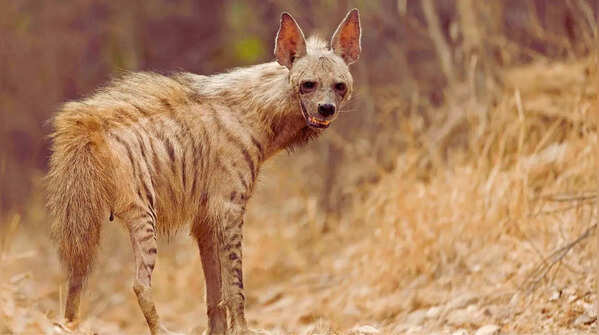
Though being one of the most ancient mountain ranges, the Aravallis still boast a diverse fauna. It includes animals such as leopards, striped hyenas, jackals, and various bird species. There are also several protected zones, such as Sariska Tiger Reserve and Ranthambore National Park, which make the place significant from the point of view of nature preservation. Apart from natural significance, there is another aspect that is worth mentioning about the Aravallis - its historical value. Various civilizations, Rajput states, and caravan routes used to thrive in the mountains.
Featured In lifestyle

MORE FROM ETIMES
life & style