
- News
- lifestyle
- travel
- destinations
- 7 floating markets across the world preserving centuries of tradition
7 floating markets across the world preserving centuries of tradition
7 floating markets across the world preserving centuries of tradition
Shopping is something that everyone indulges in, some maybe more, some not so much. But it remains an integral part of any trip for sure. Here, we bring to you some unique places where travellers get to enjoy shopping not in a regular way. These are not malls, or just any shopping centres. These markets are floating on water. Known as floating markets, they bring a splash of color, a waft of sizzling street food, and the musical chaos of vendors shouting from their boats. These markets, rooted in centuries-old river trade traditions, still thrive today as living cultural experiences. Here are seven floating markets around the world that are worth the detour.
Damnoen Saduak Floating Market, Thailand
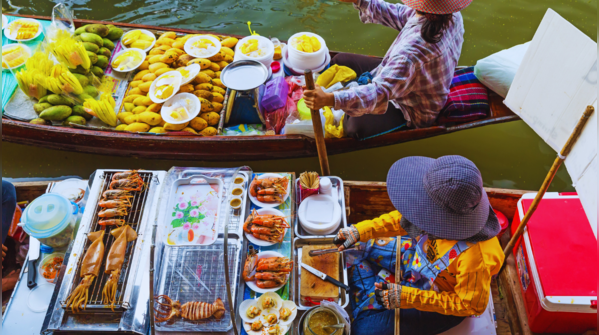
If floating markets had a poster child, it would be Damnoen Saduak. About 100 km from Bangkok, this market feels like stepping into a postcard: wooden boats brimming with tropical fruits, women in straw hats paddling gracefully, and plenty of noodles sizzling on boat stoves. Yes, it’s touristy, but that’s also part of its charm. Also, the market sits on a canal dug in the 19th century under King Rama IV’s orders, linking rivers for trade and agriculture.
Cai Rang Floating Market, Vietnam
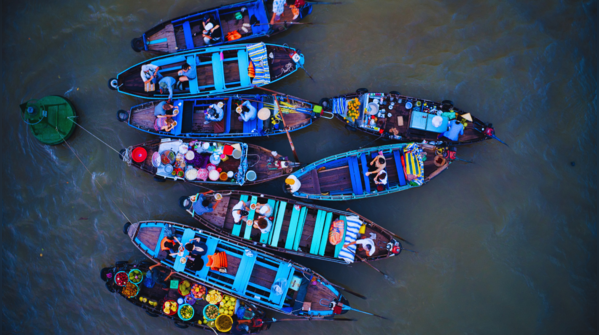
In Vietnam’s Mekong Delta, Cai Rang isn’t just a market, it’s a morning spectacle. This is one of the largest floating markets in the region, where vendors hoist samples of their goods on tall bamboo poles so you can spot what they’re selling from a distance. Want pineapples? Look for the boat with a pineapple hanging up front. The best time to visit is dawn, when the water is a buzz of bargaining, steaming bowls of pho, and coffee served from boats.
Lok Baintan Floating Market, Indonesia
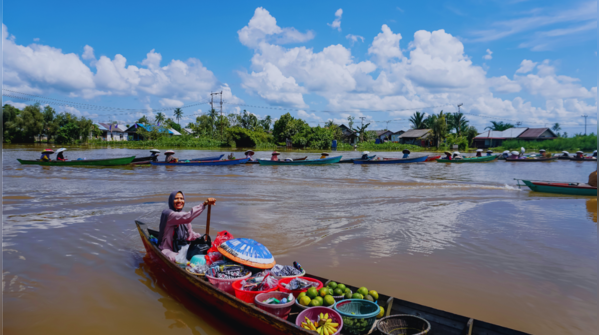
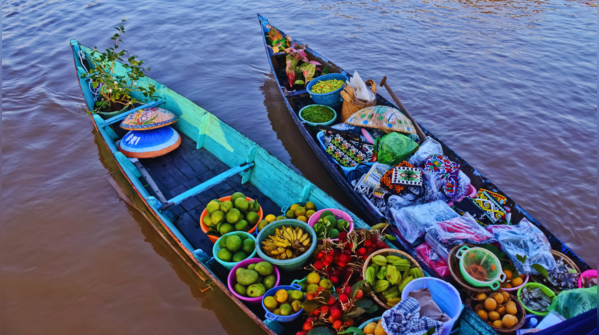
Indonesia’s South Kalimantan is home to Lok Baintan, a floating market that feels refreshingly authentic. Forget tourist crowds, this is where locals come to barter. The trade is largely “tukar menukar” (exchange by barter), with bananas swapped for chillies or fish for vegetables. Women in traditional wide-brimmed hats, known as “tanggui,” paddle wooden jukung boats piled high with produce. Early morning is the golden hour here, when the mist hovers low and the river glows as boats gather.
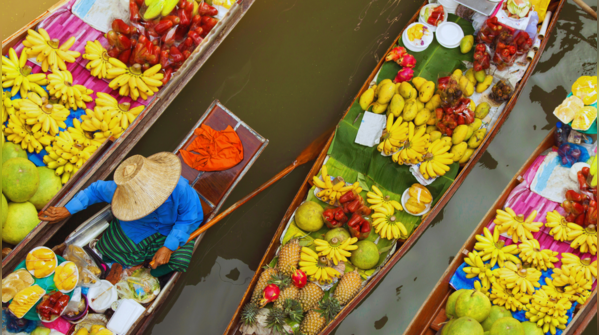
Khlong Lat Mayom Floating Market, Thailand
While Damnoen Saduak gets the fame, Khlong Lat Mayom (just 20 kilometers from Bangkok) gets the foodies. This market is all about eating your way through water-bound stalls—grilled fish, coconut pancakes, papaya salad, you name it. Unlike some other floating markets, much of the dining here happens along the riverbank at low tables, with boats still serving as kitchens. It’s more relaxed and more local—perfect if you want a market that feels less like a performance and more like a feast.
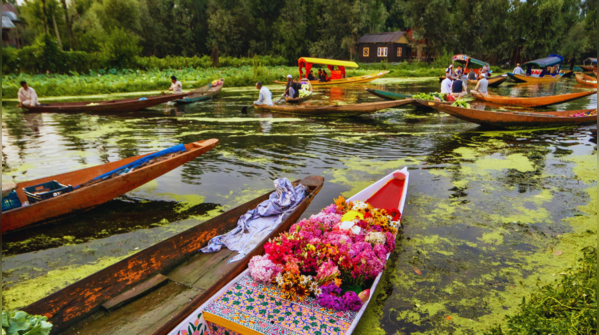
Dal Lake Floating Market, India
Nowhere else will you find a floating market surrounded by snow-capped Himalayan peaks. Dal Lake hosts a tiny but enchanting morning vegetable market, where farmers row out in shikaras (wooden boats) to sell fresh produce. This tradition goes back centuries, sustained by the fertile waters of the lake. Unlike Southeast Asian floating markets buzzing with tourists, Dal Lake’s version feels intimate, you’ll mostly find locals, and the occasional traveler lucky enough to witness the quiet hum of life on the lake.
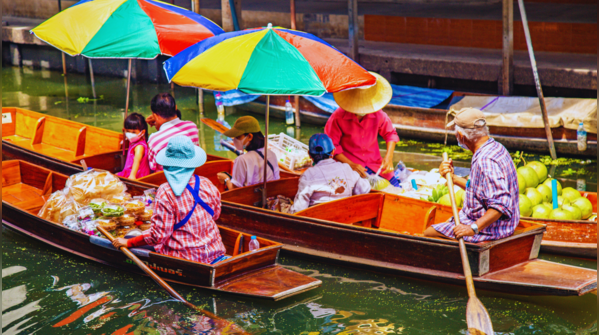
Amphawa Floating Market, Thailand
If Damnoen Saduak is the tourist magnet, Amphawa is its hip sibling. Located about 90 kilometers from Bangkok, Amphawa is especially popular with Thais. The market lines a canal shaded by wooden shop-houses, where boats sell grilled seafood, coconut ice cream, and spicy noodles. Visit in the evening and you’ll catch the market twinkling under lanterns, plus the bonus of fireflies glowing in nearby trees. It’s proof that floating markets aren’t just about shopping—they’re about atmosphere.
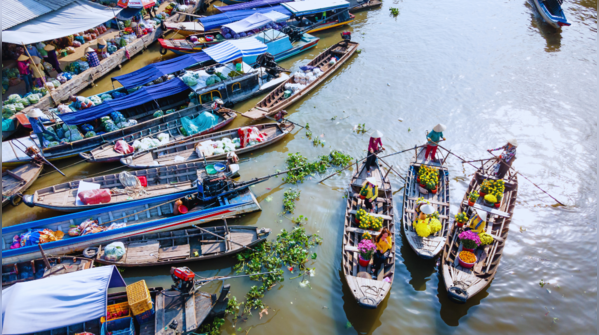
Nga Bay Floating Market (Phung Hiep), Vietnam
Another gem in the Mekong Delta, Nga Bay (also called Phung Hiep) is actually a seven-way river junction—imagine the chaos and commerce! Established in 1915, it remains one of the most fascinating floating markets, offering everything from fruits and vegetables to exotic pets and handicrafts. The bustle of hundreds of boats converging at the “seven crossroads of water” is a photographer’s dream. Plus, the market reflects how rivers shaped the very lifeline of Vietnam’s rural economy.
Featured In lifestyle

MORE FROM ETIMES
life & style