
- News
- City News
- bengaluru News
- Anti-incumbency in elections on the decline? Jury still out
Trending
This story is from March 13, 2022
Anti-incumbency in elections on the decline? Jury still out
The recent results of five state polls and assembly and Lok Sabha elections held in the past five years suggest pro-incumbency is the new trend as people are choosing the parties in power.
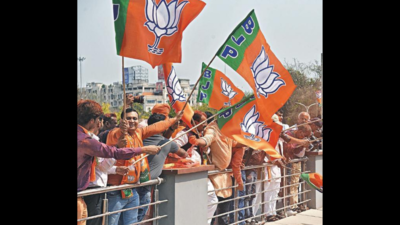
A file photo of BJP workers in Lucknow celebrating UP's victory
Karnataka BJP also strongly believes it will return to power despite the fact that no ruling party has been voted back in the state since 1980s.

The reverse trend has continued in the just-concluded elections to five states as BJP has been voted back in Uttar Pradesh, Goa, Uttarakhand and Manipur. Barring Goa, the party has got a thumping majority, proving the advocates of anti-incumbency — who felt the party’s prospects may suffer due to its failure to contain rising prices and alleged mishandling of the pandemic — wrong.
In the past four years, 11 states have gone to polls and in eight — Bihar, Maharashtra, West Bengal, Kerala, Telangana, Delhi, Odisha and Assam — the ruling party or its allies in power have been voted back. Despite winning the majority seats, BJP could not form the government in Maharashtra as its ally Shiv Sena decided to sever two-decade-old ties with the saffron party. Andhra Pradesh, Chhattisgarh and Jharkhand are the only three states which saw people voting out the ruling party.
The landslide victory of PM Narendra Modi-led BJP in the 2019 Lok Sabha elections is being seen as a trendsetter in overcoming the anti-incumbency factor. In fact, Modi is the only politician in independent India who hasn’t been bitten by the anti-incumbency bug even once.
So why are people voting for the parties in power? Was there no anti-incumbency against them? Some argue that the good performance of incumbent governments carried more weightage than anti-incumbency, while others say voters are driven by emotions rather than issues.
State BJP spokesperson Ganesh Karnik said the new political template of Modi where people are able to connect more with BJP than other parties is the reason for its repeated victories. “The relentless effort of the Modi government to ensure last-mile delivery of government benefits without any pilferage, revival of cultural nationalism among youth, long-term sustainable development agenda and Modi’s foreign policy keeping India’s interest ahead of everything are appealing to the people, especially youngsters,” he said.
A JD(S) leader begs to differ and says people are making electoral choices based on emotions rather than issues like corruption, price rise, etc. “Even the good work is not being recognised. Our party’s dismal performance in the bypolls despite Kumaraswamy waiving farmers’ loans of nearly Rs 50,000 crore is a testimony to this,” he added.
End of Article
FOLLOW US ON SOCIAL MEDIA





Hot Picks
TOP TRENDING
Trending Stories
In City
Entire Website
- The Secret Behind NFL Marriages: How These Couples Make It Work
- UPI transaction limit to change from September 16! Here are the new limits for various UPI payments
- When Laura Loomer said she's single because she's too focused on Donald Trump
- South Delhi shooting: Sleuths see killing as a message to big businessmen
- Top 10 sports stars turned power couples: From Agassi-Graf to Conner-Comaneci
- 3 Zodiac Signs Most Likely to Become Multimillionaires
- Narayana Murthy faces backlash for parenting remarks on social media; users say, "after working 72 hours a week, there’s barely time left to have babies…”
- 'Would not fit in ... ': Princess Diana's brother warned Prince Harry about marrying Meghan Markle
- The 3 Strongest Zodiac Signs: Powerhouses of the Zodiac Wheel
- Dark Side Of Each Zodiac Sign
- Trump safe after gunshots nearby, FBI calls incident 'apparent assassination attempt'
- Trump shooting incident: 'Shooter was only 400-500m away' - Key details
- Will turning Trump into a joke help Kamala win the White House?
- Process for census initiated, 'open' on caste count: Govt
- Kejriwal says he will quit as CM in 2 days, wants aam aadmi's 'honesty certificate'
- How Sachin Tendulkar mastered the upper cut shot to perfection
- Why cow vigilantes killing a Brahmin is the wake-up call India needed
- Wipro to employees: Attend office at least 3 days-a-week or risk losing…
- Trump's 'mass deportation' threat evokes images of WW2 internment camps
- No look shot gone wrong! Pakistan batter hilariously trolled after dismissal. Watch

Popular Categories
Hot on the Web
Top Trends
Trending Topics
World Largest HorseEID WishesEID 2024 WishesPriyanka Chopra TattooKottukkaali OTT ReleaseEngineers Day WishesGoat CollectionHair LossSudha MurtyMalayalam ProducersIndia's Best Dancer 4Simi GarewalDilli BabuIndian National ParksLaung BenefitsVikas SethiApple iPhone 16Donald TrumpAadhar Card UpdateWordle Answer
Living and entertainment
Latest News
Challenges won’t stop me from making films that matter: Aditya KripalaniThe Diets of NFL Athletes: What Fuels Their Performance3 Reasons Why Hell in a Cell Tag Team Match Between Cody Rhodes, Roman Reigns and The Bloodline 2.0 Would Be perfect for Bad Blood 2024Odisha to join Ayushman plan; Delhi, Bengal to be only holdoutsRobert's wild encounter with Henry, the world's oldest 124-year old crocodile; internet shocked | Watch videoHooda says Congress coming to power in Haryana, asks criminals to give up crime or leave state‘I Hate Taylor Swift!’: Donald Trump rages after singer endorses Kamala Harris'Virat bhaiya's passion and dedication for the game is...': Sarfaraz KhanFather-son duo Eugene and Dan Levy's dazzling entrance at the EmmysFather rapes and murders 8-year-old daughter in Madhya Pradesh, throws body in wellBakuchiol: Nature’s answer to youthful skin radianceSaudi Arabia footballer Fahad Al-Muwallad hospitalized after fall from balcony'Will hug my kids extra tight tonight': JD Vance after Trump 'assassination attempt'Bengal govt blames junior docs for logjam but sends fresh offer for talksLodi-era mosque collapses in AgraVineet Kumar Singh calls Superboys of Malegaon standing ovation at TIFF a 'magical experience': 'I can still hear the clapping and whistling" - ExclusiveFoods to pair with dates for boosting immunityNeeraj Chopra misses second Diamond League title by an agonising 1 cm; finishes second behind Anderson
Copyright © 2024 Bennett, Coleman & Co. Ltd. All rights reserved. For reprint rights: Times Syndication Service