
- News
- City News
- thiruvananthapuram News
- Kerala: Loss of Rs 171 crore in 2019-20 dents claims over KIIFB
Trending
This story is from November 20, 2020
Kerala: Loss of Rs 171 crore in 2019-20 dents claims over KIIFB
The balance sheet of Kerala Infrastructure Investment Fund Board (KIIFB) for the year 2019-20 saw red, with the organization recording a net loss of Rs 171.1crore. This is the first time KIIFB has registered a loss after a total revamp of the organization in 2016. Interestingly, the Comptroller and Auditor General (CAG) had found serious lapses in KIIFB’s model of availing foreign loans in the audit for the previous year, 2018-19. KIIFB’s audit figures add credence to the concerns expressed by CAG as it paid Rs 362.3 crore towards interest alone on masala bonds, KSFE bonds and other bank loans.
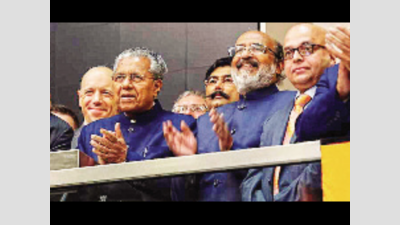
A file photo of Pinarayi Vijayan and Thomas Isaac at the launch of KIIFB masala bonds at the LSE.
This is the first time KIIFB has registered a loss after a total revamp of the organization in 2016. Interestingly, the Comptroller and Auditor General (CAG) had found serious lapses in KIIFB’s model of availing foreign loans in the audit for the previous year, 2018-19.

During the three years from 2016-17, KIIFB’s balance sheet registered profits of Rs 6.32 crore, Rs 30.34 crore and Rs 37.88 crore. KIIFB, not envisaged as a profit-making body, had claimed that losses are bound to happen until its limited number of projects—which are expected to churn out revenuebecomes fully operational. However, its losses are set to mount year after year and would be absorbed by the government through budgetary allocation, as mandated under the amended KIIFB Act.
The balance sheet, accessed by TOI, shows that for masala bonds alone (CAG’s main matter of contention), KIIFB paid an interest of Rs 209.25 crore last year. KIIFB had raised Rs 2,150 crore through Masala bonds at a high interest rate of 9.72%, when it could have floated bonds domestically at a cheaper rate.
“Financial risk of Masala bonds, which are tradeable and listed at London Stock Exchange, is that it’s issued at a high rate. KIIFB could have floated bonds under Kerala State Industrial Development Corporation like other states. The rate of interest could have been 7.5 to 8% which is the usual rate of borrowing for other state government-guaranteed bonds,” said a top government official, who had dealt with the matter, on condition of anonymity.
Bodies like Andhra Pradesh Industrial Infrastructure Corporation and Punjab State Industrial Development Corporation had floated bonds at much cheaper rates in which pension funds, insurance companies invested as they are SLR (statutory liquidity reserve bonds). “This market is big; huge amounts of pension, insurance and provident fund money are waiting to be invested in SLR bonds,” the official said.
In 2019-20, KIIFB paid Rs 401.12 crore as interest for Masala bonds, interests loans availed from banks and other financial institutions (Nabard, SBI, Union Bank, Indian Bank, Syndicate Bank), KSFE bond and guarantee commission.
Amid claims by the government that projects worth Rs 60,000 crore were on the roll till March 31 this year, KIIFB has disbursed only Rs 4,736 crore, of which Rs 1,214.4 crore were released for revenue-generating projects and Rs 3,524.6 crore as grants, for projects that would not yield any returns.
Though government and KIIFB were claiming that the management is done in such a way that it will raise money only when required, KIIFB is holding Rs 8,684 crore –raised through Masala bond and term loans – that are deposited as fixed deposits in various banks and mutual funds at lesser interest rates than at which the loans were raised.
“KIIFB is a classic example of financial mismanagement. Losses will naturally accumulate in coming years. In five years, state – being the guarantor for all KIIFB loans– will have to undertake a huge repayment that will be the responsibility of the next government. With hardly any resource for repayment, the next government is going to face a serious financial emergency,” said Congress MLA VD Satheesan
End of Article
FOLLOW US ON SOCIAL MEDIA










Hot Picks
TOP TRENDING
Trending Stories
In City
Entire Website
- 9 Inspirational Quotes Every Student Should Embrace for Academic Success
- '3 lakh laddus daily, Rs 500 crore revenue annually': Tirupati's sacred sweet takes a sour turn after ghee adulteration charges
- 'What was the need to disrespect?': Priyanka Gandhi slams PM Modi over JP Nadda's reply to Kharge
- Anna Sebastian Perayil’s death: EY Chairman Rajiv Memani says, ‘I truly regret…’
- Admission of India's greatness from Pakistan: 'Bharat ek great team ban chuka hai'
- RG Kar ex-principal Sandip Ghosh no longer a doctor: What is next for this orthopaedic surgeon?
- Scotch giant to lay India's biggest malt distillery's foundation in Nagpur on Oct 7
- Northeast faces unprecedented autumn heat, no relief in sight
- Who is Dr. Kaustav Nayak, Removed by CM Mamata Banerjee from the Position of Director of Medical Education?
- How Reliance-led Campa is taking on Coca-Cola and PepsiCo at half the price of these soft drinks
- 'Stripped, tied my legs': Army captain's fiancée shares 'torture' story at police station
- Centre seeks report on Tirupati laddu issue, says will take suitable action
- One nation, one poll: Does Modi have the numbers to clear it?
- Supreme Court takes down YouTube channel after hacking incident
- 1st Test Live: Shubman Gill, Virat Kohli steady India after early jolts
- Jaiswal joins elite company, becomes fourth most...
- How one drug might work for weight, fertility and dementia
- Ex-Google employee looking for job in Canada: 'I've been reducing ...'
- How Israel allegedly used shell companies to orchestrate pager attack
- Bengal floods: Mamata writes to PM, threatens to sever ties with DVC

Popular Categories
Hot on the Web
Top Trends
AppleGurgaon Bike AccidentTirupati Laddu RowIsraeli Strikes on HezbollahIND vs BAN LiveJacoby BrissettIIT Companies WFH PolicyOdisha Bharatpur Police Station NewsRhea RipleyIsrael Hezbollah WarKerala Lottery ResultAssembly ElectionTirupati PrasadamEY Pune EmployeeSean DiddySandip GhoshLive Cricket Score
Trending Topics
Stree 2 CollectionRuksana BanoAbdu RozikYudhra ReviewJayamSana Khan HusbandTirupati Laddoo ControversyGOAT CollectionVaazha OTT ReviewKozhipannai Chelladurai ReviewCheetahsKangana RanautAditi Rao HydariDalljiet KaurHoliday DestinationVikas SethiBest Selling Earbuds Under 1000Apple iPhone 16 ProVirat KohliWordle Answer
Living and entertainment
Latest News
SoftBank’s latest investment signals Masa’s brand-new India strategyEvery single infiltrator will be thrown from here, need to protect tribal culture: Amit Shah in JharkhandHenry Danger: Here’s where you can see all seasons - 1 to 5Former Rapper Shyne barrow speaks about Diddy's arrest, says he "Killed" his lifeWhat happens if we see God in DreamsCon artist held for posing as customs inspector in SuratKaun Banega Crorepati 16: Amitabh Bachchan reminisces about shooting for Deewar and Kabhi Kabhie; says “Kabhi Kabhie josh mein hum log bohot kuch kar dete hain"Allu Aravind on Bollywood filmmakers having limited perspectives in their films: 'They are locked between Bandra and Juhu'Mafia ran govt in Samajwadi Party rule while 'babua' slept: Yogi AdityanathThe Interplay of Sun Signs and Numerology: Unlocking Your Ultimate PotentialAnil Ambani's Reliance Infrastructure to raise over Rs 6,000 croreHow Israel built a modern-day Trojan Horse: Exploding pagersPM Modi must take to task those abusing Rahul, says CongressGarena Free Fire MAX redeem codes for September 20: Win free in-game rewards dailyOnePlus 12 is available for Rs 35,314 only on Amazon; check exchange deal and bank offersHow to watch 'Fast and Furious' movies in chronological order and release datesAnna Sebastian Perayil’s death: EY Chairman Rajiv Memani says, ‘I truly regret…’'If they don't listen ...': Amit Shah's stern warning to Maoists
Copyright © 2024 Bennett, Coleman & Co. Ltd. All rights reserved. For reprint rights: Times Syndication Service