
Trending
This story is from April 27, 2024
Sunetra, who campaigned for kin, now seeks votes for herself
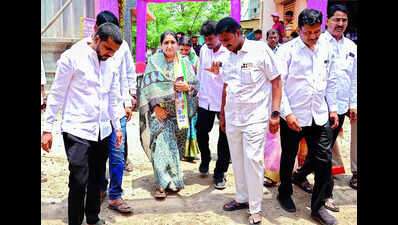
The NCP's first-time contender from Baramati Sunetra Pawar’s composure when she steps out of her vehicle to meet voters comes from the knowledge that her husband, the deputy chief minister, has a dedicated following here.

Her team hands her a list of names of party workers and supporters to be acknowledged in her speeches where she underscores Dada’s reputation for getting things done, his accessibility and examples of his hands-on assistance. Distancing herself from divisive politics, she tells the electorate that if they trust him, they should trust her too.
She compares the electoral contest to a "Rahul Vs Modi" battle and emphasizes Dada’s endorsement of Modi’s development-focused policies. Her foray into electoral politics in new, but Sunetra's journey is deeply rooted in the political landscape.
Born in and married into influential political families, she has campaigned for many in her family and often showed up at social functions where Ajit Pawar could not be present.
Her nephew Ranajitsinh Patil ventured into the political arena ahead of the 2019 assembly elections and became Tuljapur’s MLA from the BJP in their native Dharashiv.
It marked a significant divergence from Patil’s family's traditional affiliations, but was not entirely surprising.
Patil’s father and Sunetra’s brother Padamsinh Patil was once a close associate of NCP (SCP) chief Sharad Pawar and held many ministerial posts in the state. People said this closeness led to her marriage in the 1980s, an alliance that preceded Ajit Pawar's emergence in politics.
However, the rapport between senior Pawar and Patil deteriorated amidst allegations of corruption, particularly centred around Osmanabad District Central Co-operative Bank. It ended with his suspension from the party after CBI arrested Patil in 2009 in connection with the death of Congress leader Pavanraje Nimbalkar and his driver around 2006.
But Sunetra has drawn the line__ family and politics are different. She may not know the names of local party workers, she doesn’t have her husband’s oratory, and her speeches talk about Modi and Dada instead of local issues, but in the after-meeting interactions, particularly with women and family members, she looks at ease.
Sunetra talks about her work in starting SHGs, on eco-friendly villages and her textile business employing women and her ownership of a poultry farm to woo rural women voters in Indapur.
“I am one of you. I have the same problems as you. I am connected to this land and I can understand you all,” she tells them.
But in Maharashtra, politics is also about optics, something Sunetra Pawar is new to. “I was sitting here when she got out of the car and went up to the stage. She did not even stop to say namaste,” a woman voter said.
Her canvassing in Indapur had no padayatras which worried her party workers as they head into the last leg. Her show of strength comes from different socio-political groups pledging their votes for her.
At one meeting, Sunetra said, “Many years ago, I came here to seek votes for my family members. Never did I think that I would have to come here one day, asking for votes for myself.”
It sums up what most people who have been with the party for long are thinking. In the political arena where titans like Saheb (Sharad Pawar), Dada and even Tai (Supriya Sule) have sharpened their skills, Vahini is a reluctant politician.
End of Article
FOLLOW US ON SOCIAL MEDIA








Photostories

Hot Picks
TOP TRENDING
Popular Categories
Hot on the Web
Top Trends
Mohamed Muizzu India VisitIsrael Hezbollah WarAssembly Election Result 2024Travis KelceBiju GeorgeGautam GambhirKayla NicoleBasit AliInd vs China Stock MarketLalu Prasad YadavUGC NET ResultDiddyWomen's T20 World CupTop MBA Colleges of IndiaT20 WC ScheduleWomen T20 World Cup Points TableLive Cricket Score
Trending Topics
Bigg Boss 18 Launch LIVE UpdatesBigg Boss Tamil 8 Contestants ListBigg Boss Tamil 8 Launch LIVE UpdatesNavratri Colours 2024Navratri Day 2 ColourDurga Puja 2024Bigg Boss 18 House PhotoDevara CollectionNita AmbaniDeepika PadukoneGovindaDevaraGovinda NewsDevara Movie ReviewSwatantrya Veer SavarkarColdplay India tour 2025Watch NFL Live StreamDress To ImpressCall Of Duty Black Ops 6Wordle Answer
Living and entertainment
Latest News
1st T20I: Dominant India make quick work of BangladeshWorld famous Corpus Clock: A time piece and a haunting work of artRanveer Singh: I have a man crush on Tiger ShroffGhum Hai Kisikey Pyaar Meiin: Savi accuses Jigar of misbehaviourYouTube Shorts extends duration to 3 minutes5 must follow rules of Ayurveda to lose 5kg in 30 daysONGC Apprenticeship Recruitment 2024 registration begins: Check direct link hereWWE Hall of Famer Diamond Dallas Page signs new WWE Legends deal'Like a ghost': Manish Sisodia says Arvind Kejriwal has become PM Narendra Modi's 'sole obsession''Singham Again' Trailer: Ranveer Singh kisses wife Deepika Padukone's poster as she skips grand launch eventMy effort in internationalising Shatatantri Veena among the next generation seemingly paying dividends says Tarun Bhattacharya on his return from US TourOptical Illusion: Can you find who's the boss in this picture?'All teams will come to Pakistan for Champions Trophy': PCB chairman on India's participation'Nervous Nineties': Sachin Tendulkar’s 'unwanted' record in international cricketCoin Master free spins and coins for 7 October, 2024: Earn million of coins using today’s linkIndustry upbeat on policy continuity as business confidence index rises to 2-quarter high: CIISeized vehicles, weapons used by Hamas in October 7 attack on display in IsraelCleveland Browns coach Kevin Stefanski said the team is “not changing quarterbacks” after Deshaun Watson's poor performance
Copyright © 2024 Bennett, Coleman & Co. Ltd. All rights reserved. For reprint rights: Times Syndication Service