
- News
- City News
- mumbai News
- Despite late start, fastest Covid vaccination coverage in 18-44 age group in Mumbai
Trending
This story is from September 1, 2021
Despite late start, fastest Covid vaccination coverage in 18-44 age group in Mumbai
Despite a slow and late start, the younger, tech-savvy population in the age group 18-44 has seen the swiftest vaccination coverage. In Mumbai, 61% in this category have received at least one dose even though their inoculation started in May and was erratic till late June. In comparison, those 45-59 years old and in the 60-plus bracket, who started getting jabs in March, have not been entirely covered with one dose yet. Around 88% in the 45-59 group and 96.7% senior citizens have got at least one dose so far.
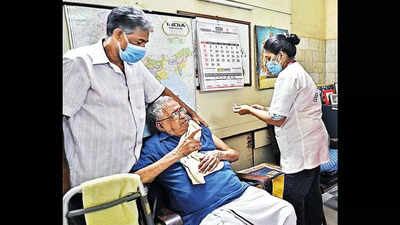
Andheri resident Balchandran Gangadharan, 103, was born in 1918 during the ‘Spanish flu’ pandemic. On Tuesday, he got fully vaccinated against Covid-19
In Mumbai, 61% in this category have received at least one dose even though their inoculation started in May and was erratic till late June. In comparison, those 45-59 years old and in the 60-plus bracket, who started getting jabs in March, have not been entirely covered with one dose yet.

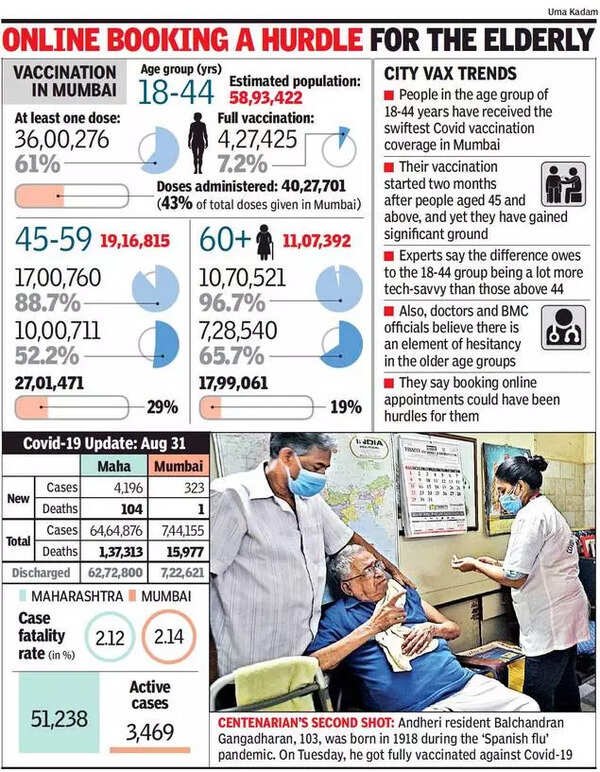
Civic data shows highest share of doses (43%) has gone to the 18-44 age bracket, followed by 29% to the 45-59 and 19% to senior citizens. About 7% in 18-44 have received two doses so far. In the 45-59 bracket, 52% have got two doses; in senior citizens, it is 66%.
Vaccination of senior citizens and those above 45 with comorbidities began in March. Month later, vaccination for all 45-plus irrespective of comorbidities followed.
For 18-44, it started from May 1, but under a new policy that put the onus of vaccinating them on states. Maharashtra could vaccinate this group only for 12 days before having to divert doses for older groups. Younger groups thus could not get free vaccines till June 21 when the Centre once again revised its policy to cover the 18-44 as well. Most in this category have got vaccinated at private centres.
Dr Shashank Joshi, a member of the state’s Covid taskforce, said this group is comfortable with technology and could use Co-Win with ease. "That is one of the key reasons why a large proportion has managed to get vaccinated so quickly. There was also willingness to get vaccinated,” he said.
An official said the 18-44 group has the highest share in the city's adult population. Of the estimated 93 lakh adults, nearly 59 lakh are from the 18-44 bracket which explains why they have received maximum doses. "People from their age group also had to return to work as quickly as possible," the official said.
The slow pace of vaccination among older age groups is a cause for concern. In fact, in the 45-59 bracket, nearly 12% people have not taken a single dose. That roughly translates into 2.3 lakh people.
Dr Mangala Gomare, BMC’s executive health officer, said it‘s intriguing why people are not coming forward for second doses. "We believe hesitancy is one of the reasons,” she said. When asked if frequent stockouts at public centres could be blamed, she said a fixed quota of doses was set aside for second dose recipients, but often there wouldn’t be takers.

About the Author
Sumitra DebroyEnd of Article
FOLLOW US ON SOCIAL MEDIA







Hot Picks
TOP TRENDING
Trending Stories
In City
Entire Website
- UPI transaction limit to change from September 16! Here are the new limits for various UPI payments
- When Laura Loomer said she's single because she's too focused on Donald Trump
- South Delhi shooting: Sleuths see killing as a message to big businessmen
- Top 10 sports stars turned power couples: From Agassi-Graf to Conner-Comaneci
- 3 Zodiac Signs Most Likely to Become Multimillionaires
- Narayana Murthy faces backlash for parenting remarks on social media; users say, "after working 72 hours a week, there’s barely time left to have babies…”
- 'Would not fit in ... ': Princess Diana's brother warned Prince Harry about marrying Meghan Markle
- The 3 Strongest Zodiac Signs: Powerhouses of the Zodiac Wheel
- Dark Side Of Each Zodiac Sign
- Hamster Kombat Daily Cipher Codes and Combo Cards for September 15, 2024: Unlock up to 1 million coins
- 'PR stunt ... gimmick': How BJP, Congress reacted to Kejriwal's shock announcement
- 'Op Sadbhav': India sends aid to Myanmar, Vietnam, and Laos post Typhoon Yagi
- Will Germany’s suspension of Schengen entry end the Europe dream?
- Watch: India, Pakistan players involved in heated exchange
- Kolkata rape-murder: Ex-principal, police officer sent to CBI custody till Sept 17
- 'Shocking details soon': Cong alleges 'rigging' by Maha govt in Adani power deal
- Why you should not be fooled by ‘20-year SIP crorepati’ dream
- Melinda Gates reveals the 'best part' of not working with ex-husband Bill Gates
- Watch: Pak batter trolled after no look shot gone wrong
- J&K polls: MP Rashid refutes ties with BJP, announces alliance with ...

Popular Categories
Hot on the Web
Top Trends
Trending Topics
World Largest HorseEID WishesOnam WishesPriyanka Chopra TattooKottukkaali OTT ReleaseEngineers Day WishesGoat CollectionHair LossSudha MurtyMalayalam ProducersIndia's Best Dancer 4Simi GarewalDilli BabuIndian National ParksLaung BenefitsVikas SethiApple iPhone 16Donald TrumpAadhar Card UpdateWordle Answer
Living and entertainment
Latest News
PM Modi's Sunday roadshow in Jamshedpur cancelled due to heavy rain4 types of tea to improve gut health and ease digestive issuesFour Zodiac Signs That Are Hard to Control'Message for Modi': Opposition takes jab at BJP over Nitin Gadkari's 'PM post' claimNetflix denies filmmaker Soham Shah’s plagiarism allegations over Squid Games, says claim holds 'no merit''Virat bhaiya's passion and dedication for the game is...': Sarfaraz KhanFather rapes and murders 8-year-old daughter in Madhya Pradesh, throws body in wellWeekly Career Horoscope, September 15 to September 21, 2024: Read your weekly astrological work predictions for all zodiac signsZodiac Signs That Crave a Luxurious Lifestyle"Miami Dolphins Owner Stephen Ross Eyes Multi-Billion Dollar Deal: The $7 Billion Power Play"Rajkummar Rao hails Kareena Kapoor Khan's The Buckingham Murders as a 'gripping thriller'MoS Finance likely to be convenor of GoM on GST compensation cessRole Rewind: Did you know Ranveer Singh and Deepika Padukone's love story has a strong Kareena Kapoor Khan connection?Coin Master free spins and coins for 15 September, 2024: Earn 7 million coins using today’s linksHow to set up partner sharing in Google PhotosIndia, Pakistan players involved in heated exchange during Asian Champions Trophy. WatchNoida authority fraud: 2 arrested in Rs 3.9 crore scam linked to fake bank accountsWeekly love Horoscope, September 15 to September 21, 2024: Read your weekly astrological romantic predictions for all zodiac signs
Copyright © 2024 Bennett, Coleman & Co. Ltd. All rights reserved. For reprint rights: Times Syndication Service