
- News
- City News
- mumbai News
- Bombay HC directs ACB not to register FIR against former slum chief
Trending
This story is from August 9, 2017
Bombay HC directs ACB not to register FIR against former slum chief
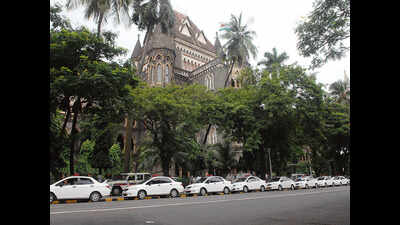
Bombay high court.
The HC was hearing a petition by Patil and observed that he had raised significant questions over law on the issue or prior sanction required before registration of a criminal case against a public servant.

His counsel Amit Desai with advocate Subir Kumar argued that under a Maharashtra amendment to the criminal procedural law a sanction is required to be taken when there are accusations under the Indian Penal Code against a public servant, even a former one. Desai said that the lower court passed an order without segregating the offences against him.
The Prosecutor said the ACB could register an offence and if any IPC sections are there sanction could be sought. But the HC agreed with Desai who said that it was not for the agency to decide if the order makes no such mention.
The HC said since question of law is involved in the case an exhaustive hearing is required and placed the matter on September 8.
Patil's petition challenges the validity of an order of the special judge under the Prevention of Corruption Act which had ordered the ACB to register a First Information Report (FIR) against him as former Mumbai suburban collector and former Chief Executive Officer, Slum Rehabilitation Authority (SRA), his wife and two developers Ramji Shah and Rasesh Kanakia.
Desai said that law requires prior sanction to be taken before a court can order investigation against a person who is or was a public servant. He also said that Patil was merely discharging his "ministerial functions" as a collector in 2009 on a decision taken by someone else.
The ACB special judge had last month passed the order against Patil and others on a private complaint filed by a Malad resident and shop occupant Hitendra Yadav. The complainant sought an FIR to be registered and probed for criminal conspiracy under IPC and misconduct under PCA against Patil and others for conspiring to hand over a large government area as free sale plot, where Kanakia is constructing a luxury project called, Kanakia Levels. The allegation is that Vishwas Patil as then Mumbai suburban district collector covered a government land at Malad east to developer Ramji Shah, after his wife was made Director in Shah’s Company. In a slum rehabilitation scheme, 44% extra land was given for development to the Kanakias, alleged Yadav’s lawyer Aditya Pratap.
The lower court had agreed with Pratap's submission that law doesn't require prior sanction to register a criminal case of corruption against Vishwas Patil,a public servant, as he had retired in June.
The ACB has not yet registered the FIR.
Patil has contended that the plot was divided for FSI use by SRA (Slum Rehabilitation Authority), not him and he was not even in SRA when the letter of intent was issued.
He said that the "land was acquired by Government of Maharashtra" and he had "no role to play towards granting land to Shah Housecon Pvt. Ltd."
His wife is also a petitioner. The petition said that "Chandrasena Vishwas Patil was not a director in Shah Housecon Pvt. Ltd."
Their plea is that the Complainant had knowledge about execution of lease deed since 2009, but kept silent for seven years and hence said that the complaint was "motivated".
His case is also that the law prohibited registration of FIR against public servant without prior sanction of the government.
The Patils had pleaded that no coercive steps be taken against them and the trial court order be set aside.

About the Author
Swati DeshpandeEnd of Article
FOLLOW US ON SOCIAL MEDIA










Photostories
Hot Picks
TOP TRENDING
Popular Categories
Hot on the Web
Top Trends
Basit AliBrittany MahomesRavichandran AshwinBabar AzamKanpur Test Match RecordsUGC NET Result 2024Tirupati LadduIsrael Hezbollah WarRahul GandhiBryonna Burrows Net WorthGovindaWomen T20 World Cup Points TableWomen T20 World Cup ScheduleAsteroid 2024 PT5DiddyTop Management Colleges of IndiaLive Cricket Score
Trending Topics
GovindaNavratri Colours 2024Deadpool and Wolverine OTT ReleaseNavratri WishesGandhi Jayanti WishesDevara CollectionGOAT OTT ReleaseGandhi Jayanti 2024Rajinikanth Health UpdateNavratri HistoryDevaraGovinda NewsDevara Movie ReviewHealthy RaitasSwatantrya Veer SavarkarColdplay India tour 2025Upcoming Smartphones In OctoberAmazon SaleSony Bravia 55 inch 4k Ultra HD TVWordle Answer
Living and entertainment
Latest News
Dashing dad Ranveer Singh's dapper looks dole out men's fashion goals - PicsJ&K’s big message"I Don't Have Any Bad Words For Vince": Former WWE 24/7 Champion Comments on Mr. McMahon Netflix DocuseriesHappy Gandhi Jayanti 2024: Images, Cards, Greetings, Quotes, Pictures, GIFs and WallpapersSebi announces new measures to tighten F&O trading, effective in phases from November 20Mahima Chaudhry reveals she begged Ajay Devgn and Prakash Jha to keep her near-fatal car accident secret: 'I feared industry boycott'Xionism In Lux: Why global luxury biz bosses will obsess over China’s communist bossLibra, Daily Horoscope Today, October 02,2024: Patience will be your best tool todayGandhi Jayanti 2023: 6 useful speech ideas for students on Gandhi JayantiElon Musk lost legal battle over unpaid severance to former Twitter employee3 held for religious conversions in AyodhyaVice Admiral Arti Sarin 1st woman to head AFMSPalak Sindhwani pens a heartfelt note as she wraps shooting for Taarak Mehta Ka Ooltah Chashmah, writes 'I reflect on the past five years filled with hard work, dedication, and perseverance'West Bengal doctors cease work again, government mulls legal moveSohum Shah gives updates on Tumbbad 2, denies fallout with director Rahi Anil BarveSolar eclipse 2024 date and time: When is Surya Grahan in October? Will it be visible in India?4 get life for killing Jharkhand Congress netaHaryana assembly elections: Dera chief Ram Rahim Singh walks out of jail on 20-day parole
Copyright © 2024 Bennett, Coleman & Co. Ltd. All rights reserved. For reprint rights: Times Syndication Service