
- News
- City News
- lucknow News
- Settled for centuries, but they want a train back home
Trending
This story is from March 6, 2017
Settled for centuries, but they want a train back home
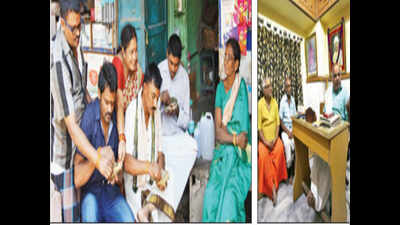
His Hindi betraying a strong Telugu accent, Tulsi Laxmikant Joshi says, “Saat sau saal poorva, hamare poorvaj paidal aur bailgaadi lekar mahino lagakar Kashi ko yatra karne aaye they aur phir yahi bass gae Shiv ji ke Banaras mai. Itney varsh beet gae, lekin ek railgaadi ab bhi seedhi wapas nahi jaati (700 years ago, our ancestors travelled on foot and by bullock carts, travelling for months to reach Kashi for pilgrimage and they got settled here. In all these years, there has still no direct train back home)”.
His Hindi betraying a strong Telugu accent, Tulsi Laxmikant Joshi says, “Saat sau saal poorva, hamare poorvaj paidal aur bailgaadi lekar mahino lagakar Kashi ko yatra karne aaye they aur phir yahi bass gae Shiv ji ke Banaras mai. Itney varsh beet gae, lekin ek railgaadi ab bhi seedhi wapas nahi jaati (700 years ago, our ancestors travelled on foot and by bullock carts, travelling for months to reach Kashi for pilgrimage and they got settled here. In all these years, there has still no direct train back home)”.
Tulsi is eldest of seven Joshi brothers settled in Varanasi with roots in Karim Nagar district of Andhra Pradesh. The small community that calls itself ‘Banarasi South Indian’ comprises 250-odd families settled in pockets around the Ganga in Kedar ghat, Narad ghat and Hanuman ghat areas for centuries. Their demand for a train to Andhra Pradesh they say will reflect in votes on March 8. We have demanded so many times for direct train from Varanasi to Visakhapatnam,” said Ramakant Joshi, adding, “We have to travel for days, changing several trains and members of our community come in large numbers for pilgrimage to Kashi, holiest city for Shaivites,” added Kedarnath Shastry. As lanes to Kedar Ghat get narrower, writing on the wall transforms from Hindi and English to Telugu. Barefoot pilgrims seek purohits from their homeland, for their “right” diction of Krishna Yajurveda rituals to perform ‘Karmkand’ (rituals). Banarasi kachaudi shops are replaced by idli-dosa stalls. “People travel from Andhra Pradesh, Tamil Nadu and Karnataka to Kashi to spend from nine days, nine months to nine years to perform the rituals. Government should work more for the community, however small it is,” he added.
Varanasi: His Hindi betraying a strong Telugu accent, Tulsi Laxmikant Joshi says, “Saat sau saal poorva, hamare poorvaj paidal aur bailgaadi lekar mahino lagakar Kashi ko yatra karne aaye they aur phir yahi bass gae Shiv ji ke Banaras mai. Itney varsh beet gae, lekin ek railgaadi ab bhi seedhi wapas nahi jaati (700 years ago, our ancestors travelled on foot and by bullock carts, travelling for months to reach Kashi for pilgrimage and they got settled here. In all these years, there has still no direct train back home)”. Tulsi is eldest of seven Joshi brothers settled in Varanasi with roots in Karim Nagar district of Andhra Pradesh.
The small community that calls itself ‘Banarasi South Indian’ comprises 250-odd families settled in pockets around the Ganga in Kedar ghat, Narad ghat and Hanuman ghat areas for centuries. Their demand for a train to Andhra Pradesh they say will reflect in votes on March 8.
“People travel from Andhra Pradesh, Tamil Nadu and Karnataka to Kashi to spend from nine days, nine months to nine years to perform the rituals. Government should work more for the community, however small it is. As permanent residents who vote, we cannot be ignored,” he added.
While the community celebrates its New Year, Ugadi and Sankranti preparing prasad from mango, jaggery, tamarind and neem flower, instead of their Lord Subramaniam, the Banarsi South Indians pray to Ramchandra, chew on the Banarasi paan and manage both south Indian lungi and north Indian dhoti effortlessly.
End of Article
FOLLOW US ON SOCIAL MEDIA









Hot Picks
TOP TRENDING
Explore Every Corner
Across The Globe
Donald TrumpWayne Gretzky DaughterTrump Trade WarTaylor SwiftAuston MatthewsMatthew Tkachuk InjuryZack WheelerDwyane Wade WifePM Mark CarneyMichael Jordan Viral DanceWWE Raw PreviewAnthony DavisSan Diego EarthquakeBill Belichick GirlfriendKarenna GroffKyren LacyAlex Ovechkin WifeKarenna GroffSteve KerrAnthony VolpeKris Bryant Net WorthTrump TariffsMontreal CanadiensBlue Origin RocketJimmy ButlerSteve KerrIPL Purple CapIPL Orange CapIPL Schedule 2025IPL Points Table
Hot on the Web
Blue Origin launch Live UpdateJaat Box Office CollectionSikandar Box Office CollectionMehul ChoksiGood Bad Ugly Box Office CollectionBengali New Year 2025Bengali New Year 2025 WishesAncient Indian TechniquesShoaib IbrahimSeema KapoorKalki 10th AvatarSoha Ali KhanRandeep HoodaRatna Pathak ShahChia Seeds BenefitsGood Bad Ugly Movie ReviewWorld Largest Snake GatheringGood Bad Ugly OTT ReleaseSuperfoods For Kidney HealthSuniel ShettyMehul ChoksiManiesh PaulSchengen VisaUS VisaIndia PalacesHina KhanAkshay KumarKaziranga National ParkAmerican WildlifeEurope Heritage Sites
Trending Topics
Mike BudenholzerKurt AngleBest Strains in Schedule 1How to get coca leaves in Schedule 1Anti Waqf ProtestsLucknow Hospital FireBengal ViolenceJames VinceMS DhoniTrump Tariffs NewsElon MuskPS 5 PriceJallianwala MassacreAustralias VisaKevin OwensIndian Chess GrandmastersWho is Shaik RasheedElias PetterssonNew York Mets vs Minnesota TwinsVideo Game PredictedWordle HintsNYT ConnectionsSam AltmanGarena Free Fire MaxLauren SanchezJoJo Steel Ball RunBank Holidays AprilPublic Holidays AprilCraftmine Update
Popular Categories
HeadlinesSports NewsBusiness NewsIndia NewsWorld NewsBollywood NewsHealth+ TipsIndian TV ShowsTechnologyTravelEtimesHealth & FitnessWWENFLICC Champions TrophyAstrologyWeather TodayIPLAnimeApril Bank HolidaysPublic Holidays in AprilIPL TeamsStock Market HolidaysNSE HolidaysBSE HolidaysMCX HolidaysTechnology NewsInternational SportsPublic HolidaysBank Holidays
Latest News
Cong humiliated, distorted vision of Ambedkar: PM ModiIndia united, strong due to statute: Justice Gavai“She ended him”: Taylor Swift didn’t respond to Kanye West but fans think she shut him down back in 2024Maharashtra stipend for 8L Ladki beneficiaries cut'Babasaheb effort helped awaken Hindu society': RSS chief Mohan BhagwatNot disclosing criminal case 'moral turpitude': HCCan President be forced to seek Supreme Court opinion on a bill?“Isn’t she engaged?”: Josh Allen's fiancée Hailee Steinfeld and Michael B. Jordan’s bond in new photos leaves fans confused and curiousWhy Kilmar Abrego Garcia won't be returned to the US despite Supreme Court order. 'Not a Maryland man'Melinda Gates responds to Bill Gates statement that their divorce was biggest regret of his life: He's got his ...Aaron Rodgers’ comeback faces another hurdle as NFL bans his longtime favoriteMcLaren team principal Andrea Stella in awe of Lando Norris: “He absorbs the blame and points it at himself”Woman forced to take off hijab in UP, assaulted3 Jain monks sheltering in MP temple attacked'Marco Polo of turtles' swims from Odisha to Maharashtra for double nestingZack Snyder's 'Rebel Moon' getting new comic book prequel seriesBooze by mail? Postmaster bustedMatt Damon enjoys some time on yacht during break from 'The Odyssey' shoot , shows off his ripped physique
Copyright © 2025 Bennett, Coleman & Co. Ltd. All rights reserved. For reprint rights: Times Syndication Service