
- News
- City News
- kolkata News
- Desperation leads to violence as history repeats itself
Trending
This story is from May 16, 2018
Desperation leads to violence as history repeats itself
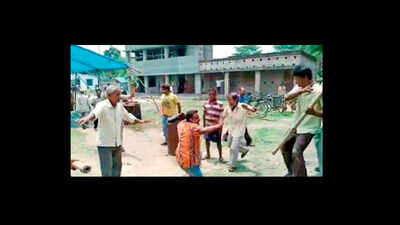
A party activist being beaten up by goons on Monday.

With returns diminishing from the continuous fragmentation of land, many youths from villages migrate to other states for earnings only to come back during elections so that their families get the government doles — a bicycle, a dwelling unit, pension for their parents and so on. Those who stay back become cogs and wheels of the vote machinery to eke out a living. They run errands for the local political bosses, and act as their trusted soldiers for a pittance. Politics for them is a means of survival. They oil the vote machinery round the year, take to violence to crush dissent because their fortunes are linked to the boss’s ability to deliver. Any threat to the local political power makes them feel shaky and they overdo to set things right. However,this beneficiary system creates another group of youth — the “have nots” that Mamata Banerjee had identified during the CPM regime — who become desperate to bring a different party in power, resulting in violence.
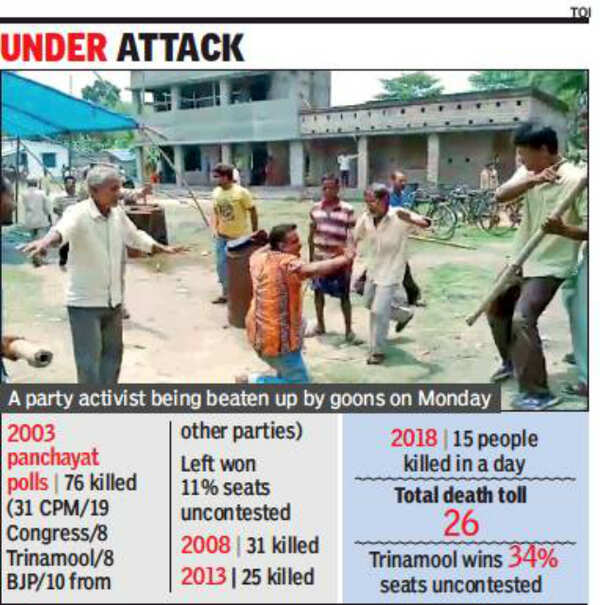
In Bengal, political leaders are sometime driven by this desperation when they start nursing national ambitions. After staying in power for a term or more, these leaders in a bid to elevate themselves to the national level want maximum number of seats from their home state — be it in the panchayat or in the Lok Sabha. CPM took to the same tactic in Bengal when Jyoti Basu’s name started doing the rounds in the national corridors of power. It is not mere coincidence that the opposition didn’t get candidates to field in the 2003 panchayat polls. A monopoly in the panchayat was what the Left wanted to bag the maximum number of Lok Sabha seats in 2004. It enabled CPM to hold the lifeline of the UPA I government between 2004 and 2008. The desperate bid to gain a monopoly in panchayats perhaps explains the worst violence in the 2003 panchayat polls.
Time has come when Trinamool seems to be taking the same route. want maximum panahayat seats that can get fetch for the party all the 42 seats from Bengal. Trinamool wants this to help Mamata Banerjee lead the anti-BJP conglomerate. BJP, is also eyeing Bengal and Odisha after it has come to power in Jharkhand, Assam and Tripura. It’s a make or break for both Trinamool and BJP. Political desperation begets violence.
Bengal had practiced extremist politics during Independence struggle. But it was ideology-driven, good or bad. “Now we are heading for times when violence has no ideological or moral backing. It’s a means of survival,” said sociologist Prasanta Roy.
End of Article
FOLLOW US ON SOCIAL MEDIA










Hot Picks
TOP TRENDING
Trending Stories
In City
Entire Website
- 7 Must-Watch Films to Inspire Students
- Florida woman who sold all her possessions for a 3-year luxury cruise banned for WhatsApp messages
- Animal fat in Tirupati laddu: Centre intervenes, temple trust blacklists supplier - Top developments
- Indian Embassy official found dead at Washington DC office under mysterious circumstances
- Rohit Sharma gets angry at team-mate: 'Soye hue hain sab log'
- PM Modi on 3-day US visit for Quad summit: Key agendas, full schedule
- 10 Daily Habits for Students to Keep Their Minds Young and Sharp
- 'When temples are being attacked ... ': Andhra deputy CM Pawan Kalyan on Tirupati laddu row
- NIA conduct raids at several locations across Punjab in terror-conspiracy case linked to Gurpatwant Singh Pannun
- To challenge Ola and Uber, Chennai auto drivers rebuild ride-booking app after crippling hack
- Last spoke to family 3 days ago: Kerala man linked to Hezbollah pager blasts?
- 'Offered water laced with drugs': 13-yr-old Dalit gang-raped in car
- How Israel killed most wanted terrorist with a phone call in 1996
- Watch: Army troops show night ops skills in Ladakh’s high-altitude areas
- 1st Test Live: Pant, Shubman slam fifties vs Bangladesh
- Speaks 7 languages, PhD holder: All about the woman linked to pagers blast
- Sri Lanka is not voting for a new president. It's voting for...
- EY employee's death: Anna Sebastian's father appeals to the company
- PM Modi on 3-day US visit for Quad summit: Key agenda, full schedule
- Cheeky Pant helps Bangladesh set field on Day 3 of Chennai Test

Popular Categories
Hot on the Web
Top Trends
IND vs BAN Live ScoreRohit SharmaVirat KohliRishabh PantUGC NET Result 2024Cristiana Barsony ArcidiaconoTirupati Laddu RowIsraeli Strikes on HezbollahRhea RipleyIsrael Hezbollah WarIND vs BAN Highlights Days 2Kerala Lottery ResultTirupati PrasadamEY Pune EmployeeSean DiddySandip GhoshLive Cricket Score
Trending Topics
Stree 2 CollectionRuksana BanoAbdu RozikYudhra ReviewJayamSana Khan HusbandTirupati Laddoo ControversyGOAT CollectionVaazha OTT ReviewKozhipannai Chelladurai ReviewCheetahsKangana RanautAditi Rao HydariDalljiet KaurHoliday DestinationVikas SethiBest Selling Earbuds Under 1000Apple iPhone 16 ProVirat KohliWordle Answer
Living and entertainment
Latest News
Stuck in Lebanon for 23 years, Punjab man back homeVivek Ramaswamy hints at Ohio governor run at his Springfield town hallRoman Reigns Gives His Word to Back Cody Rhodes Against The BloodlineSupreme Court questions change in NEET-PG pattern, seeks response of NBE and CentreYudhra box office collection day 1: Siddhant Chaturvedi and Malvika Mohanan starrer opens with Rs 4.50 croreBigg Boss fame Sana Khan on her photos wearing Abayas going viral during her Maldives vacation; says 'people think you can only wear swimwear...'UP man kills newborn daughter in fit of rage over fourth girl cild, ArrestedSalesforce to expand its innovation hubs in Bengaluru, HyderabadThe truth about sugar substitutes: Safe alternative or hidden health risk?Govt caps late fee at Rs 1k for vehicle fitness certificateSalman Khan will NOT make a cameo in Rohit Shetty’s 'Singham Again'; fans say 'disappointed'Not taking EY to court, says dead CA's fatherCheeky Rishabh Pant helps Bangladesh set field on Day 3 of Chennai Test - WatchKarnataka HC asks couple to seek spiritual guru's help to save marriageBombay HC strikes down Centre's fact check unitFire breaks out at furniture market in Central DelhiLibra, Daily Horoscope Today, September 21, 2024: Focus on a balanced diet and exercise to maintain well-beingMemeFi daily codes for 21 September 2024: Boost your earnings with daily codes and know how to maximize
Copyright © 2024 Bennett, Coleman & Co. Ltd. All rights reserved. For reprint rights: Times Syndication Service