
- News
- City News
- kochi News
- Daughter finds the feminine in her dad
Trending
This story is from February 3, 2018
Daughter finds the feminine in her dad
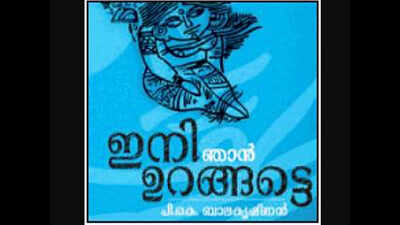
Jayalekshmy P K has translated her father’s book ‘Ini Njan Urangattey’
“It took me many years to finish the work. I started it in 2002, juggling between my own and translating my father’s work.

The translation titled ‘Battle Beyond Kurukshetra’ published by Oxford University Press will be launched at Kerala Literature Festival, Kozhikode, on February 8.
“After reading his books, the one I liked most was ‘Ini Njan Urangattey’. I felt he was a good writer, worthy to be known beyond the borders of our locale. And for that the best bet was this book, and so I started working on the translation,” Jayalekshmy said.
However, she still wonders how her father, whom she knew only as a strong masculine personality, could articulate so well from the viewpoint of a woman in the book.
“I don’t know how he got that perspective of a female character. The father I knew was not someone who had a feminine aspect to him, and rather was quite the opposite. It was quite strange for me that he could think from such a standpoint, without his manliness reflecting in it. These are the questions I’d have asked him if he was alive,” Jayalekshmy said.
According to the writer, there is hardly any change in the relevance of the book published in 1976, which has Draupadi, a strong female character as a protagonist, as opposed to her role in the myth.
“The feminist perspective and the concept of war which are ubiquitous in the novel are so relevant now as before. Most people don’t behave oppressively to women blatantly nowadays. They have just become more ‘politically correct’ in expressing opinions,” Jayalekshmy said.
But it was no easy task as Balakrishnan’s writing had a unique touch to it, the kind hard to capture in a translated work.
“The language was hard, tough words were used frequently throughout the writing, and it has very long-winding sentences, which adds a musical, poetic flow to it. So basically, it was not just about translating the work with its essence, but an attempt to gather all of its charm,” Jayalekshmy said.
End of Article
FOLLOW US ON SOCIAL MEDIA








Hot Picks
TOP TRENDING
Trending Stories
In City
Entire Website
- Alberto Del Rio Defends Former WWE CEO Vince McMahon Amid Sexual Harassment Allegations
- 9 Inspirational Quotes Every Student Should Embrace for Academic Success
- '3 lakh laddus daily, Rs 500 crore revenue annually': Tirupati's sacred sweet takes a sour turn after ghee adulteration charges
- 'What was the need to disrespect?': Priyanka Gandhi slams PM Modi over JP Nadda's reply to Kharge
- Anna Sebastian Perayil’s death: EY Chairman Rajiv Memani says, ‘I truly regret…’
- Admission of India's greatness from Pakistan: 'Bharat ek great team ban chuka hai'
- RG Kar ex-principal Sandip Ghosh no longer a doctor: What is next for this orthopaedic surgeon?
- Scotch giant to lay India's biggest malt distillery's foundation in Nagpur on Oct 7
- Northeast faces unprecedented autumn heat, no relief in sight
- Who is Dr. Kaustav Nayak, Removed by CM Mamata Banerjee from the Position of Director of Medical Education?
- Top Hezbollah commander reportedly among 8 killed as IDF carries out air strikes in Beirut
- EY employee death: Anna's father breaks silence after mother's letter goes viral
- One nation, one poll: Does Modi have the numbers to clear it?
- Indian Embassy official found dead at Washington DC office
- Kunal Kamra vs Centre: Bombay HC strikes down fact-check unit
- Sri Lanka presidential elections: What's at stake for India and China
- Animal fat in Tirupati laddu: Why lakhs of devotees are outraged
- Ex-Google employee looking for job in Canada: 'I've been reducing ...'
- How RBI chief Shaktikanta Das tamed volatile rupee with $689 bn in reserves
- Kohli's wit steals the show as Rohit playfully teases Gill

Popular Categories
Hot on the Web
Top Trends
AppleGurgaon Bike AccidentTirupati Laddu RowIsraeli Strikes on HezbollahIND vs BAN LiveJacoby BrissettIIT Companies WFH PolicyOdisha Bharatpur Police Station NewsRhea RipleyIsrael Hezbollah WarKerala Lottery ResultAssembly ElectionTirupati PrasadamEY Pune EmployeeSean DiddySandip GhoshLive Cricket Score
Trending Topics
Stree 2 CollectionRuksana BanoAbdu RozikYudhra ReviewJayamSana Khan HusbandTirupati Laddoo ControversyGOAT CollectionVaazha OTT ReviewKozhipannai Chelladurai ReviewCheetahsKangana RanautAditi Rao HydariDalljiet KaurHoliday DestinationVikas SethiBest Selling Earbuds Under 1000Apple iPhone 16 ProVirat KohliWordle Answer
Living and entertainment
Latest News
SoftBank’s latest investment signals Masa’s brand-new India strategyEvery single infiltrator will be thrown from here, need to protect tribal culture: Amit Shah in JharkhandHenry Danger: Here’s where you can see all seasons - 1 to 5Former Rapper Shyne barrow speaks about Diddy's arrest, says he "Killed" his lifeWhat happens if we see God in DreamsCon artist held for posing as customs inspector in SuratWhen Sunita Ahuja said, "You have to be very strong to be an actor’s wife"Kaun Banega Crorepati 16: Amitabh Bachchan reminisces about shooting for Deewar and Kabhi Kabhie; says “Kabhi Kabhie josh mein hum log bohot kuch kar dete hain"Allu Aravind on Bollywood filmmakers having limited perspectives in their films: 'They are locked between Bandra and Juhu'India's familiarity with UAE conditions gives them an edge in Women’s T20 World Cup: Mithali RajThe Interplay of Sun Signs and Numerology: Unlocking Your Ultimate PotentialNFL Players Who Use Their Platform for Social GoodJuju Baby Music revives folk with a twist with their latest EP, Folk Outta The BoxKarunaratne, Chandimal fire as Sri Lanka take control of first New Zealand TestOnePlus 12 is available for Rs 35,314 only on Amazon; check exchange deal and bank offersHow to watch 'Fast and Furious' movies in chronological order and release datesBack support for chair: Top picks onlineAnna Sebastian Perayil’s death: EY Chairman Rajiv Memani says, ‘I truly regret…’
Copyright © 2024 Bennett, Coleman & Co. Ltd. All rights reserved. For reprint rights: Times Syndication Service