
- News
- City News
- gurgaon News
- Drawing family tree to mapping weather changes: Govt schools tweak homework
Trending
This story is from June 3, 2023
Drawing family tree to mapping weather changes: Govt schools tweak homework
The directorate of school education has this year decided to do away with the usual summer homework for government school students of primary classes.
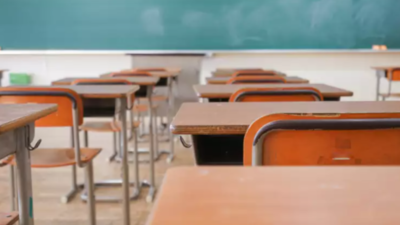
Image used for representational purpose only
Instead, the department has directed district officials and school heads to assign a series of fun-based and observational assignments that not only engage students but also the community as part of the Nipun Haryana mission.

The activities that students have to do tthis summer include spending time in the fields and observing different crops and their growth pattern, sitting with elders and chalking out their family tree, observing weather patterns and noting them down, reading electricity meters, making a list of utensils found in the kitchen and writing about the material used to make them, and measuring the amount of water that flows from a tap in three minutes, among others. Students have also been asked to practice yoga and write about the new exercises they learned.
“Under the mission, we have completely overhauled how students are taught and evaluated. Students are being taught using new-age pedagogy which is activity-based and focused on experiential learning rather than rote learning. This cycle would be incomplete if we do not overhaul how students are given homework during the summer break. So, from this year we are working toward assignments based on experience and observation,” said an official from the senior elementary education department.
“The National Curriculum Framework (NCF) has changed the way homework for summer vacations are to be given. Under the new guidelines, this homework has to be done along with the family and community members so that the students learn about the world around them. We have created four different categories under which detailed activities have been listed,” said Pramod Kumar, the state programme officer (directorate of elementary education) and nodal officer of the Nipun Haryana mission.
For instance, students in rural areas have exposure to agricultural fields, so they have been told to ask their parents about the crops that are being sown, how it develops, and the mechanisms used to ensure better yield, Kumar added.
“Students also visit their relatives and attend various functions during this time. So, students will speak with their family members and write about the tradition, folklore, origin of traditional dresses and delicacies,” he said.
“Moreover, we want to create awareness on the environment and bring behavioural change. For this, we have included tasks like observing days where students refrain from social media and TV.,” Kumar added.
End of Article
FOLLOW US ON SOCIAL MEDIA







Hot Picks
TOP TRENDING
Trending Stories
In City
Entire Website
- Missiles in living room: Israel releases photos of Hezbollah’s arms in civilian homes
- It's YEET time! - Rikishi shares Rhea Ripley's dance moves over Jey Uso's WWE Intercontinental title victory
- 'Jahil log': Pakistan's Basit Ali slams home curators after India's win over Bangladesh
- 'Diddy List': Names of celebrities connected to Sean Combs viral
- When Kamala Harris denied Kimberly Guilfoyle a job: 'She called and pretended to be...'
- Why Earth will have two moons from September 29 to November 25
- 'Grave insult': Atishi's 'Bharat'-like gesture with CM chair for Kejriwal angers Congress, BJP
- PM Modi meets Ukraine President Zelenskyy for second time in a month, reaffirms India's support for peaceful conflict resolution
- Apple MacBook Air M1 to be available on Amazon for Rs 49,990; know how to grab the deal
- Oil, prostitutes, candles: What ex-girlfriend Cassie said about Sean 'Diddy' Combs
- Badlapur locals happy with ‘encounter’ of sexual assault accused Akshay Shinde, distribute sweets
- Muda case: Setback for CM Siddaramaiah as HC upholds governor's probe order
- Tired, judged and always catching up: Modern parenting’s only getting harder
- 'NRI business is fraud': SC junks Punjab govt's plea against HC verdict
- Lebanese journalist hit by Israeli missile while live on air; watch video
- Exclusive: Rishabh Pant is biggest match-winner for India, says Kaif
- Why renaming Port Blair as Sri Vijaya Puram is a mockery of history
- Apple cuts price of iPhone 15 & iPhone 14 models, here's new price list
- Gangster Raja gunned down: A look at his modus operandi involving juveniles
- When Steve Smith had a 'brain fade' moment against India

Popular Categories
Hot on the Web
Top Trends
Trending Topics
Living and entertainment
Latest News
CG Vyapam admit cards released for HELT24 and FF124 exams at vyapam.cgstate.gov.in: Direct link to download hereSupreme Court: Must stick to timeline for UAPA sanctionSEBI fines Anil Ambani’s son Rs1cr for loan approvals without 'due diligence'Swara Bhasker-Fahad Ahmad's daughter Raabiyaa turns one; see how the doting parents celebrated the special day with cake, balloons and moreFamily kills rape survivor, frames 'rapist' out on bailAPPG pushes for Ayurveda integration in UK’s healthcare systemBorder Gavaskar Trophy: When Steve Smith had a 'brain fade' moment against IndiaBest Time To Upgrade To 4G & 5G Tablets: Lightning-Fast Performance At Unbeatable PricesEssential tips for building and maintaining a happy marriageWhen and where to watch England vs Australia 3rd ODI: Date, time, venue, squad, broadcast detailsThe Luckiest Zodiac Signs: Who's Got the Midas Touch?BJP plans protests over reopening of ‘old cases’When Remo D'Souza opened up about his heart attack and revealed how Salman Khan stayed in constant touch with his wife over the phoneWB ANM, GNM result 2024 out: Direct link to download rank card hereYour daily career horoscope: 24th September 2024Tirupati Laddoo Controversy: What is Beef Tallow and why was it addedVince McMahon Breaks Silence on Netflix's 'Mr. McMahon'"Tom Brady's problem, and ours, is his voice": Tom Brady Faces Criticism From ESPN Analyst For His Broadcast Skills
Copyright © 2024 Bennett, Coleman & Co. Ltd. All rights reserved. For reprint rights: Times Syndication Service