
- News
- City News
- gurgaon News
- Catch this tale of women, narrated through Kathak
Trending
This story is from March 31, 2017
Catch this tale of women, narrated through Kathak
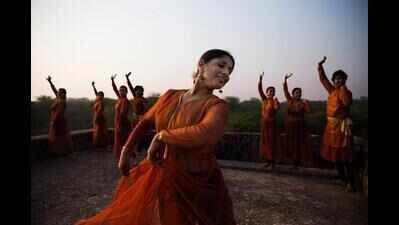
‘Trishanku’ began life as a work of fiction, and has now inspired a piece of choreography. The author is Mannu Bhandari, among India’s most feted progressive writers (and a part of the ‘Nayi Kahaani’ literary movement, alongside Nirmal Verma, Rajendra Yadav, Bhisham Sahni, Mohan Rakesh and Kamleshwar), and the choreographer Rachana Yadav.
Rachana is Mannu’s daughter, and in ‘Trishanku’, she uses Kathak to weave a tale about women’s journeys, from being the daughter of a mother to becoming the mother of a daughter.

“My mother has written this story from my point of view, when I was growing up, when I was a teenager,” Yadav told TOI. Mum, she reveals, was a “bit of a rebel” who ran away from home to study, and married out of caste (and late). “In her head, she was fairly liberal and progressive. She brought me up quite independently, and proactively sent me to a co-ed college. She encouraged me to make friends with guys.”
“Because the middle generation is confused, I guess somewhere we pass on that confusion to our next generation.
“Now that I am a mother of two girls, it is about how I am confused. I am the one who broke traditions, I was fairly liberal in my thinking, and I thought I was bringing up my daughters very liberally. But their definition of liberal is different from mine.”
Indeed, the definition of the balance point, and of modernity and liberalism, differs widely not just between generations, explains Yadav, but from household to household. “But whatever the scenario, the middle generation is always in this tug of war.”
And in ‘Trishanku’ is reflected the push and pull between life’s contrasts and opposites.
The Rachana Yadav Kathak Studio will present ‘Trishanku’ (music by the Gundecha brothers and Samiullah Khan), a Kathak choreography, at the Kamani Auditorium, on April 1.
End of Article
FOLLOW US ON SOCIAL MEDIA







Photostories

Hot Picks
TOP TRENDING
Popular Categories
Hot on the Web
Top Trends
AUS vs SA Live ScoreRohit SharmaLiam PayneUGC Net June ResultSL vs WI Live ScoreIND vs NZ HighlightsUGC NET ResultInfosys Q2 ResultHaryana Cabinet Ministers ListJustin TrudeauFlights Bomb ThreatJharkhand Election ScheduleMaharashtra Election 2024US Presidential Election 2024Maharashtra Election ScheduleJharkhand Election ScheduleLive Cricket Score
Trending Topics
Diwali WishesDhanteras 2024Fake PaneerLiam PayneVettaiyan CollectionVicky Vidya Ka Woh Wala Video CollectionLawrence BishnoiJigra OTT ReleaseCow GheeBigg Boss 18Salman KhanShraddha KapoorRenukaswamys WifeSharad Purnima Moonrise TimeSwatantrya Veer SavarkarSharad Purnima 2024Top Load Washing MachinesBest Premium LaptopsIntel LayoffsWordle Answer
Living and entertainment
Latest News
Drake's pigtails spark an online debate; netizens are divided over bold fashion move and midlife crisisInjury scare for Team India as Rishabh Pant hobbles off the fieldCitizenship under Assam accord: 4:1 SC verdict upholds validity of Section 6A; dissenting judge says provision 'has become more prone to abuse'Student kills self in Kota, 15th this yr'Love Rohit Sharma's honesty': Sanjay Manjrekar calls India captain 'top man''Secret service needs reform': Independent probe panel on Trump's assassinationBreast cancer fighter Hina Khan shares a video of people who have inspired her during her journey; watchWWE Superstar Seth Rollins confirms date and occasion for in-ring returnAt 25,007 weekly departures, 5% more domestic flights this winter: DGCAUGC NET Result 2024 OUT: Direct link to check subject/category wise cut-offSolo, but never alone! Embrace Abu Dhabi’s unique experiences for independent adventurersWatch: Rohit Sharma's reaction as KL Rahul drops a sitter against New ZealandWomen with Higher Education Are Less Likely to Quit Jobs After Marriage: A Look at India’s Gender Divide in Education and the WorkforceIn a breakthrough, Indian scientists develop unique method to treat brain tuberculosisJessi comes out after six hours of interrogation; the new victim alleges a similar assault incidentAstrology’s Role in Choosing Natural IngredientsHansika Motwani shares happy moments from her Griha Pravesh puja with husband Sohael KathuriyaCJI DYC proposes Justice Khanna as his successor
Copyright © 2024 Bennett, Coleman & Co. Ltd. All rights reserved. For reprint rights: Times Syndication Service