
- News
- City News
- delhi News
- New Parliament building to have Mirzapur carpets, Nagpur teakwood
Trending
This story is from September 29, 2021
New Parliament building to have Mirzapur carpets, Nagpur teakwood
Cushioned handwoven carpets of Mirzapur, teakwood furniture of Nagpur and Mumbai and wooden floors of Agartala bamboo will welcome MPs when they enter the new Parliament building during the winter session of 2022.
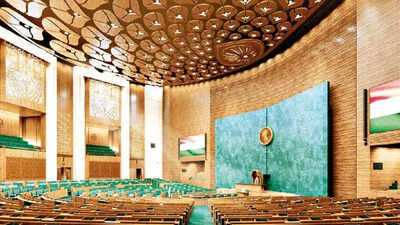
Materials from across the country have been used like Kesharia greenstone of Udaipur, white marble of Ambaji, red marble of Lakha in Ajmer, and sandstone of Sirmathura in the “first Indian Parliament built by the people, of the people and for the people of the country.”
Similarly materials from across the country have been used like Kesharia greenstone of Udaipur, white marble of Ambaji, red marble of Lakha in Ajmer, and sandstone of Sirmathura in the “first Indian Parliament built by the people, of the people and for the people of the country.”
“The new Parliament is an intrinsic part of the vision for Azadi@75 and symbolises our commitment and efforts towards building self reliant India.

He said the PM has reviewed the status of construction activities at the site multiple times and his noteworthy inputs have been instrumental towards enhancement of functionality of the new building.
With an architectural strategy to harmonise the two buildings such that they work in conjunction, the new Parliament building’s architecture and aesthetics will reference the present Parliament building, other buildings of the Central Vista, and the classical, folk and tribal arts and crafts of India.
The Lok Sabha and Rajya Sabha interiors will have reference to the national bird (Peacock) and national flower (Lotus) respectively.
While the courtyard will have national tree (Banyan), national emblem will crown the new Parliament building.
Mishra said that with a construction timeline of 21 months, it is planned that the new Parliament building will house the winter session of Parliament in its 75th anniversary of Independence in 2022. It will cater to the future demands of ‘New India’, while preserving the iconic heritage of the Central Vista, Mishra said.
In the new Parliament building, the Lok Sabha capacity will be up to 876 seats, Rajya Sabha 400 seats and joint session (in the Lok Sabha Hall) — up to 1,224 seats which will be sufficient to accommodate an expanded Parliament, post reconstitution in 2026.
End of Article
FOLLOW US ON SOCIAL MEDIA








Photostories

Hot Picks
TOP TRENDING
Popular Categories
Hot on the Web
Top Trends
Trending Topics
Bigg Boss Tamil 8 Contestants ListNavratri Colours 2024Navratri Day 2 ColourTMKOC New SonuBigg Boss 18 House PhotoDevara CollectionGOAT OTT ReleaseRajinikanthDeepika PadukoneGovindaDevaraGovinda NewsDevara Movie ReviewHealthy RaitasSwatantrya Veer SavarkarColdplay India tour 2025Maa Durga 108 NamesNavratri JewellerySony Bravia 55 inch 4k Ultra HD TVWordle Answer
Living and entertainment
Latest News
India’s F&O addiction: Falling, hurting, bleeding but chasing that elusive pot of goldVirgo, Weekly Horoscope, October 06 to October 12, 2024: Financial setbacks may arise mid-week but will improve by the weekendDRDO tests of man-portable air defence shield successfulWorld Meningitis Day 2024: What is meningitis, the deadly brain infection? Know signs and symptomsBlaze damages goods worth Rs 3L at Bambolim flat“With Davante Adams on the Verge of Departure, Raiders' Robert Spillane Promises Big Plays Ahead”Maryland Governor Makes Bold Pitch for Raiders' $140M All-Pro: Could Davante Adams Join the Ravens?Aries, Weekly Horoscope, October 06 to October 12, 2024: Face health and emotional challenges at the start of the weekKareena Kapoor, Soha Ali Khan, Kunal Kemmu and others have a blast at Neha Dhupia's son Guriq's birthday bash - See INSIDE photosAmid China's muscle-flexing, Malabar drill to start on October 86,000 Dasara dolls bring underwater city of Dwarka to life in BasavanagudiWWE Bad Blood 2024 Betting Odds: Dominik Mysterio favored to escape shark cage, Punk and McIntyre favored to bleed, and moreTripura court serves notice to a police officer on cash looting chargeRecord 41 companies files for IPOs in SeptemberBone health in the elderly: Why seniors should get a bone density testBengal villagers attack police after child's body found in ditchHarnaaz Sandhu's breathtaking golden gown appearance after incredible weight loss!Colts Risk Repeating Browns' Mistake with Joe Flacco as Anthony Richardson Faces Uncertain Return
Copyright © 2024 Bennett, Coleman & Co. Ltd. All rights reserved. For reprint rights: Times Syndication Service