
- News
- City News
- delhi News
- Delhi Half Marathon helps women hit their stride
Trending
This story is from October 12, 2023
Delhi Half Marathon helps women hit their stride
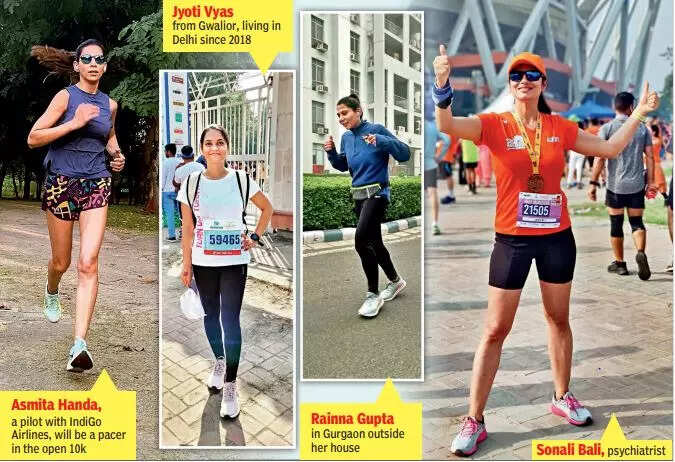
The Vedanta Delhi Half Marathon (VDHM) has inspired women in the national capital to overcome challenges and hit the road to run. The marathon has prioritized increasing female participation and has introduced initiatives such as reserved spots for women and an all-women pacer squad. Women runners have shared stories of how running has helped them overcome postnatal depression, regain their love for running, and improve their physical fitness. The marathon has also provided opportunities for rural women to participate and excel in running events.

You Can Also Check: Delhi AQI | Weather in Delhi | Bank Holidays in Delhi | Public Holidays in Delhi
However, events like the Vedanta Delhi Half Marathon, the first one was in 2005, have spurred women in the national capital to hit the road while braving their own demons and bad AQI. "The Vedanta Delhi Half Marathon has been dedicated to establishing a fair, and equal platform for women. Through continuous efforts, we have prioritised increasing female participation. This commitment is evident in initiatives like reserved spots in diverse categories and the introduction of an all-women pacer squad guiding the open 10K participants," says Vivek Singh, joint managing director at Procam International, the organiser of the marathon.Her colleagues call Asmita Handa 'Red Bull' since the 38-year-old, pilot with IndiGo Airlines and mum to a 13-year-old, is always full of energy. Be it stadiums, hotel treadmills, open roads or parks, Handa magically takes out time for running practice and speed workouts from her unpredictable days like a rabbit out of hat. In fact, she's always been a runner, Handa says, excelling in short-distance dash runs in her school days. "When my daughter was born after a C-sec operation, it was running that helped me come out of postnatal depression and be back in the cockpit three months after delivery," says Handa. Yet the challenges of the aviation industry made running take a backseat. It wasn't until 2019 that Handa fought through lethargy and work duties to reclaim her love for running. She got herself a coach and began rebuilding her stamina. From a 5km run in the Delhi Half Marathon in 2019, she transitioned to the 10km race category, and later went on to successfully complete other long-distance events like TCS 10k Bengaluru, and the rigorous Ladakh Marathon. At VDHM, Handa has appropriately tapped into her leadership qualities as a senior captain in the cockpit to become a pacer for the 10k category. She will set the pace for both amateur and professional runners so they can finish the race in 60 minutes. "As a runner, I have a happy energy rotating around me. That's perfect for a pacer who leads," adds Handa. Some 35,000 participants will be spread across five categories at VDHM - from 10k to half-marathon for elite and amateur runners to champions with disability and the senior citizen run, apart from the Great Delhi Run for 4.5k. As of now, 8,000 women have registered with more expected to join.For Jyoti Vyas, the importance of physical fitness hit home when her father, a temple priest in Gwalior, had a stroke in 2020. " I realised I must start working out, so my family learns to look after themselves," says the 33-year-old software engineer who joined a runners' group this year to amp up her game. Joining a running group has also been a turning point for Sonali Bali, a psychiatrist practising in the Delhi-NCR for the last 20 years. The group taught her discipline. She learnt how many days to run in a week, about the right shoes and clothes, hydration, nutrition, strength training and ways to improve pace. "I started my journey with barely being able to walk one or two kilometres. But in one and a half years, I have done a couple of half marathons, a six-hour stadium run and recently completed the Ladakh Full Marathon on September 23. Next year I want to do triathlons, the 72 km Khardung La Challenge and many more," says Bali. At the VDHM this week, she has no plans to trump her personal best or win it like some competition. "In my career, I have achieved everything I set out to achieve. I was looking for something more. Something to keep me all pepped up in my midlife. This is not a competitive sport for me. I run for the sheer joy of running and completing the half-marathon. You shouldn't be competing with anyone else but with your own self," adds Bali.Personal fitness, work-life balance, weight-loss, stress management, self-care, emotional healing or even finding one's community and making new friends are among the several reasons why urban women run. But what about rural women? "It is rural women who have gained the most out of the neo-liberal marathon economy," says Sohini Chattopadhyay, author of 'The Day I Became a Runner: A Women' History of India Through the Lens of Sport' which releases this month. "The women who do well at marathons are usually serious sportswomen from rural, usually impoverished backgrounds. The urban affluent demographic of runners, the ones we see in Anglophone advertisements and our Instagram echo-chambers, people like me in essence, we may be more visible and vocal as runners, but we typically have jobs or backgrounds that pay us well enough that we do not take running as seriously as we would if we were doing it for the money," says Chattopadhyay, who recalls the story of Lata Bhagwan Kare who started running marathons after the age of 60 to pay for her husband's medical treatment.Kavita Rawat is coming to Delhi for the first time, thanks to VDHM. The 20-year-old runner from Kainyur village in Pauri Garhwal district has never managed to get her pictures clicked in the few marathon events she has participated in, even the one in Rishikesh last year where she finished first and won a prize money of Rs12,000. "Wherever I go, I travel alone. So there's no one to take pictures. But my cousin brother will be there in Delhi this time," says Rawat whose parents are farmers. Rawat aced several races in school, practising on the non-surfaced mountain roads of her village all alone. "There were jungles all around so the only thing I was scared of were the hidden animals," says Rawat. Soon a coach from the Maharana Pratap Sports College in Dehradun spotted her, and she joined the college in June this year. She is practising hard for VDHM. "I am participating to win. There are some family problems, so this is important," says Rawat.
About the Author
Sneha BhuraEnd of Article
Follow Us On Social Media










Photostories
Hot Picks
Top Trending
Explore Every Corner
Across The Globe
Josh AllenMuhammad Alis Ex WifeIND vs ENGDwyane WadeHulk Hogan WifeRussell Wilson DaughterCarlos AlcarazPatrick MahomesShannon SharpeKlay ThompsonJoy TaylorSimone BilesWho Is Lorenzo BonicelliBill ClintonOlympia StadiumKerala JailbreakTyrese Haliburton GirlfriendJeffrey JordanOlympia StadiumGisele BndchenAaron JohnsonJannik SinnerBrock LesnarRoddy HoganTaylor SwiftWomens Chess World Cup FinalTravis KelceStephen CurryJasprit BumrahJared Goff
Hot on the Web
Brain ExercisesAlimony Case IndiaChest PainKargil Vijay Diwas WishesPeanut Butter BenefitsSaiyaaraHeart ProblemSaiyaara Box Office CollectionKishore KumarLiver HealthEye Cancer SymptomsHari Hara Veera Mallu Movie ReviewHeart ProblemMaareesan Movie ReviewLiver Protection VegetablesThalaivan Thalaivii Movie ReviewGut HealthShweta TiwariPersonality TestPancreatic CancerHari Hara Veera Mallu Box Office CollectionParrotSkin ProblemArchana Puran SinghMaharashtra Glass SkywalkSaiyaara Movie ReviewHeart AttackBaby NamesTiny DeerBad CholesterolFatty LiverHair LossSolar EclipseAnand MahindraFatty LiverHeart ProblemOne PieceBest Shounen AnimeNeck Pain TipsMonsoon Travel TipsChronic InflammationJeff Bezos
Trending Topics
Michael JordanCaitlin ClarkCardi BFortnite Fantastic Four skinsVShojoConnor McDavidNicala MaddenIndia vs England ScorecardDanil GushchinTaylor SwiftBrock LesnarCarlos AlcarazConor McGregorTyrese HaliburtonLeBron JamesMatthew TkachukNHL Players Sexual Assault CaseChirag PaswanColdplay ScandalDeMar DeRozanJa MorantKiren RijijuJD VanceAhmedabad SuicideToronto Maple LeafsRameshwaram Cafe NewsGovindachamyJonathan KumingaKarnataka Bhawan RowMithun ChakrabortyTravis KelceNyt Connections HintsWordle TodayKashish MittalHariyali TeejElon MuskBill Gates MansionGTA San Andreas Cheat CodesJensen HuangSundar PichaiBlackrockJD Vance
Popular Categories
HeadlinesSports NewsBusiness NewsIndia NewsWorld NewsBollywood NewsHealth+ TipsIndian TV ShowsTechnologyTravelEtimesHealth & FitnessNFLAugust Long Weekend 2025India vs EnglandAstrologyWeather TodayPlatinum Rate TodaySilver Rate TodayGold Rate TodayIs Bank open todayIs Bank Open TomorrowJune Bank HolidaysPublic Holidays in JuneStock Market HolidaysFinancial CalculatorsTechnology NewsInternational SportsPublic HolidaysBank Holidays
Latest News
Bihar woman faints at home guard test, raped in ambulance“Obsessed ex”: Gisele Bündchen blasted for allegedly stalking Tom Brady near his Miami mansionMichigan horror: 11 stabbed at Walmart in Traverse City; suspect in custodyPUBG Mobile World Cup 2025 Group Stage Day 3: Schedule, Teams, How to Watch, and What’s at StakeAquarius Daily Horoscope Today, July 27, 2025: Let your thoughts create your futureGovernment orders urgent school safety audits1 pyre, 2 siblings: Fury over Rajasthan school tragedyEven the dead are filling up Bihar SIR forms, Supreme Court toldBihar elections 2025: EC to enrol 1st time, new voters in AugCourt grants bail to co-accused in case involving Vikas YadavCapricorn Daily Horoscope Today, July 27, 2025: Explore life with a curious heartMatty Healy thrashed Taylor Swift for her lyrics as Travis Kelce hard launches their relationship on Instagram“I’m going to work my a*s off”: Ben Askren shares emotional video thanking Dana White and Jake Paul as he recovers from near-death experiencePMWC 2025: What Went Wrong for Team Aryan x TMG After Day 2 and Can They Make a Comeback?Air India pays interim relief of Rs 25 lakh to 166 crash victims' kinHow smartphone use can lead to chronic poor mental healthSagittarius Daily Horoscope Today, July 27, 2025: Believe in dreams that guide youGovernment tells Air India to 'end backseat driving' in key departments
Copyright © 2025 Bennett, Coleman & Co. Ltd. All rights reserved. For reprint rights: Times Syndication Service