
- News
- City News
- chandigarh News
- PU lacks disabled-friendly measures, reveals audit
Trending
This story is from February 4, 2024
PU lacks disabled-friendly measures, reveals audit
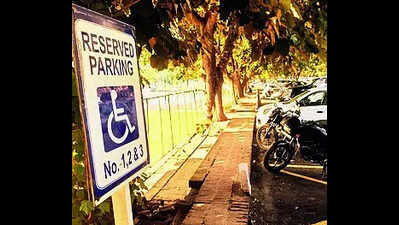
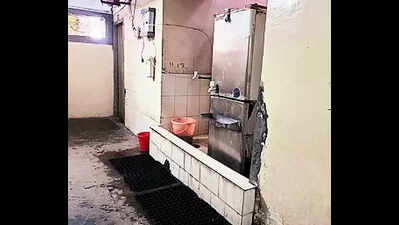
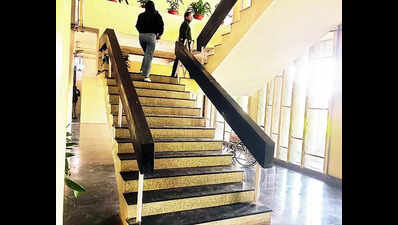
With approximately 150-200 differently-abled students enrolled, the equal opportunity cell (EOC) spearheaded the comprehensive audit, assessing physical barriers across the campus, including administrative blocks, the vice chancellor's office, public spaces, and department buildings, over seven days.

The audit was conducted for Rs 1.78 lakh by Samarthyam NGO with Dr Anjlee Agarwal leading the audit. The report reveals a pervasive failure to meet the ‘Harmonised Guidelines and Space Standards for Barrier-free Built Environment for Persons with Disability and Elderly Persons' outlined by the ministry of urban development in 2016.
Ramps were notably absent in various departments, forcing dependence on stairs, while essential facilities such as signage, separate toilets, and lifts were lacking. Moreover, washrooms across the campus failed to meet basic hygiene standards, with certain accessible toilets, especially the one available at the student centre, often found locked or dysfunctional. The team could find only one toilet in an international hostel, which fulfiled all the norms and was accessible.
Parking encroachments, improper ramp gradients, and slippery floor finishes were common issues identified in the audit. A comprehensive report spanning approximately 700 pages has been compiled, with separate folders dedicated to individual buildings.
One major problem, identified in the report, was of encroachment on most reserved parking spaces. In the admin block, officials said the entry itself posed an obstacle in the form of a 150mm step, rendering it inaccessible or challenging for wheelchair users. Moving further into the building, the handrails on the stairs were positioned at a distance such that they were accessible only after ascending the first step.
Additionally, the lift button height was not optimized for ease of use, and inside the washroom, the absence of railings and wet floors further compromised accessibility. Notably, the washroom's location in the basement posed additional challenges. For visually impaired individuals, Braille signage was only observed near the lift, with neither ramps nor color contrasting equipped with visual-friendly features.
End of Article
FOLLOW US ON SOCIAL MEDIA









Hot Picks
TOP TRENDING
Trending Stories
In City
Entire Website
- UPS vs NPS Calculator: Is A Switch From National Pension Scheme to Unified Pension Scheme Really A No-Brainer? Check Calculations, Benefits - Top Points
- Monster vs Monster: WWE announced massive match for this week's Monday Night Raw
- UPI transaction limit to change from September 16! Here are the new limits for various UPI payments
- File movement linked to weight of money: Nitin Gadkari
- Apple's biggest 'iPhone update' for year 2024, iOS 18, rollout starts today - September 16: India time and how to prepare your iPhone for iOS 18 download
- Arvind Kejriwal's resignation: Who will be next Delhi CM? Atishi seen as top choice
- UP medical aspirants converting religion to secure MBBS seats: A look at NEET UG admission criteria around minority reservation rules
- Protests against students wearing hijab in school play, principal forced to apologize for promoting religious harmony
- Pitru Paksha 2024 Date and Time: Know Significance of Shradh Paksha
- Andhra suspends 3 IPS officers for 'framing', arresting Mumbai actress
- Modi govt will bury bid to revive 90s-like terrorism in J&K: Amit Shah
- Second assassination attempt on Trump triggers outrage, suspicion on all sides
- Did doctors humiliate Mamata, or did she make it an ego issue?
- BAPS swaminarayan temple vandalised in New York; 'unacceptable', says Indian consulate
- Kolkata police commissioner removed after Mamata's meeting with docs
- Trump assassination bid: Suspect 'lay in wait' for 12 hours before arrest
- Will Kejriwal pass the agni pariksha like Indira did in 1971?
- Apple's biggest 'iPhone update' for year 2024 rollout starts today
- 36 all out! Ashwin reveals what Shastri did after India's historic low
- UPS vs NPS Calculator: Switch a no-brainer? Not really! Check top points

Popular Categories
Hot on the Web
Top Trends
Prince HarryWho is Ryan RouthUPI Transaction LimitArvind Kejriwal ResignationNEET UG Admission CriteriaKolkata Doctor Rape CaseUS Presidential ElectionsRohit SharmaSports Stars Turned Power CouplesIBPS RRB Clark PO ResultDonald TrumpCristiano RonaldoIndia vs Korea HighlightsBMW Accident Madhya PradeshUPS vs NPS CalculatorMiami Dolphins OwnerLive Cricket Score
Trending Topics
Living and entertainment
Latest News
Best Power Banks to Buy in India During the Big Billion Days SaleShooting after NFL game leaves 2 dead; suspect remains in custodyGovt launches programme to tackle glacial lake outburst flood threat in Himalayas, all 190 high-risk lakes to be monitoredHow Disney+Hotstar’s new AI feature can help users save internet dataKhatron Ke Khiladi 14: Shalin Bhanot hosts a fun party for his co-contestants Krishna Shroff, Abhishek Kumar, KaranVeer Mehra and othersAstrological Influence on Zodiac Signs' Career ChoicesFalcons' Predictable Offense and Cousins' Prime-Time Woes Spell Trouble in PhiladelphiaTaurus, Daily Horoscope Today, September 17, 2024: Anxiety and stress diminishAnkit Arora opens up about being typecast in television industry; says ‘it can be a creative challenge for many actors’Aditi Rao Hydari-Siddharth get married secretly, Sandeep Reddy Vanga wants to do a biopic on Michael Jackson, Aishwarya Rai-Aaradhya Bacchan's PDA catches eyeballs: Top 5 entertainment news of the day“Words really fall short”- Lyra Valkyria confesses love for her fiancé in a social media postKSCA Invitational: Arjun Tendulkar takes match haul of 9 wickets in big Goa CA XI winTaylor Swift's mom steals the show with a heartfelt hug for Donna Kelce at Chiefs GamePitra Paksha 2024: Significance of Urad Dal and Rice in Shraadh ritualsWho is Paul Heyman's Wife? Marla Heyman's Age, Job, Net Worth, and MoreSohum Shah says 'Tumbbad 2' will be different from 'Munjya' and 'Stree 2': 'They are not making dadi-nani ki kahaniyaan'1031 candidates to contest Haryana Assembly Elections to be held on October 5: CEO J AgarwalSathiyan set to partner Sreeja in mixed doubles
Copyright © 2024 Bennett, Coleman & Co. Ltd. All rights reserved. For reprint rights: Times Syndication Service