Giu Mummy
Giu Mummy
You're Reading


Synopsis
When you drive from Nako to Tabo, you cross a bridge over the Spiti River after Sumdo and take a detour of about 7 km to reach a small hamlet called Giu. This is an almost isolated habitation with no other village in view, but wh … Read more
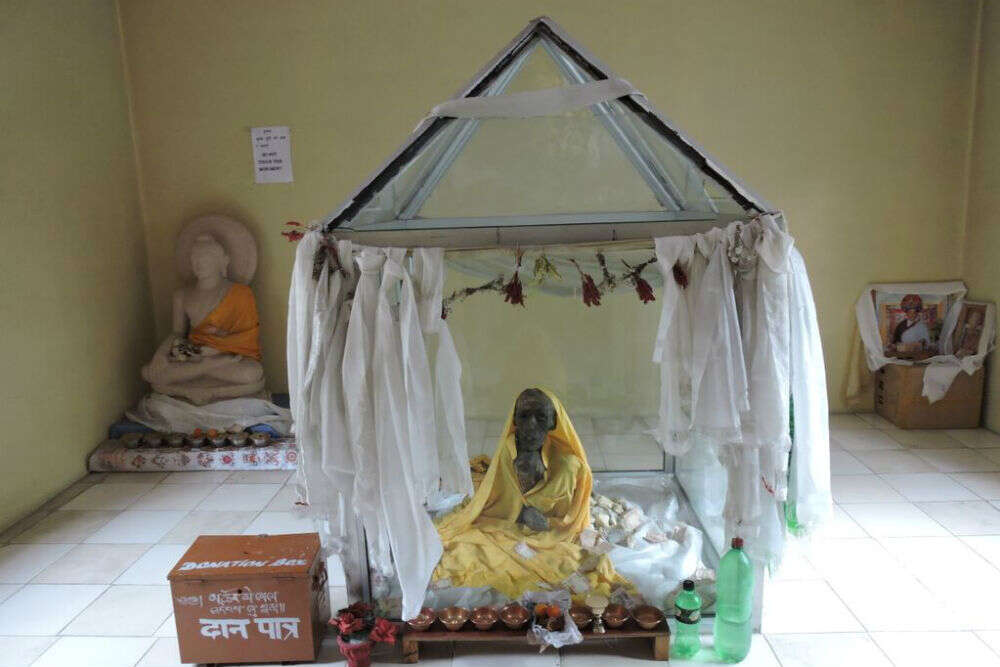
When you drive from Nako to Tabo, you cross a bridge over the Spiti River after Sumdo and take a detour of about 7 km to reach a small hamlet called Giu. This is an almost isolated habitation with no other village in view, but what makes it famous is over 500-years-old mummy of a Buddhist monk. On a small hillock just on the outskirts of the village in a small room, inside a glass cabin, lies the mummy of an old monk. The nails, teeth and hair of the mummy appear as if of a living person. There are many theories about how this monk’s body has remained in this state without decay and without the use of any chemicals for preservation. Apparently his body got buried beneath a glacier during an avalanche and remained there for hundreds of years till ITBP (Indo Tibetan Border Police) personnel found it during some road clearance project. It was then brought to Giu and placed here, and a small shrine was built around it. Another theory claims that the yogic posture in which the monk sits can self preserve the body. Whatever the case be, it is no less than a wonder to witness that how a human body has preserved itself for so many years without any decay or chemicals. When I visited, a new big temple was being built next to the existing shrine.

closecomments

Be the first one to review.
We have sent you a verification email. To verify, just follow the link in the message
end of article
Next story
Tabo Rock Art
Visual Stories

10 pretty Indian villages to visit this year-end

8 castles in Germany straight out of a fairy-tale

8 tiger reserves every wildlife enthusiast should visit in India

10 animals that are easily spotted in Ranthambore National Park
How to prepare for a night safari in India?

9 rare animals to spot in the Western Ghats and where to find them


Trending Stories
This is the only Jyotirlinga temple in Jharkhand and why it draws millions of pilgrims every year
From reversing waterfalls and doorless homes; Maharashtra’s most unique wonders every curious traveller should experience
Meet the cutest ‘toll collectors’ in the Himalayas and why Zanskar deserves a spot on every traveller’s bucket list
Indian towns where clouds float through the streets
“In logo ko sharam nahi aati kya”: Indian tourists’ dance on Vietnam’s famous ‘Hanoi Train Street’ sparks online backlash




Comments (0)