
- News
- lifestyle
- soul-search
- 5 powerful mantras to chant during tough times
5 powerful mantras to chant during tough times

5 powerful mantras to chant during tough times
When life tightens its grip, grief lingers, plans unravel, and courage starts to feel threadbare, many people reach for mantra not as a miracle cure but as an anchor. In Sanskrit traditions, a mantra is closer to a tuning instrument than a motivational phrase, a sound shaped to steady breath, gather scattered attention, and soften inner turbulence. Repeated slowly, it creates rhythm where there is panic and spaciousness where thoughts spiral. Most modern compilations circle the same well-known chants. Yet India’s spiritual literature holds a far broader, more lyrical spectrum, verses whispered in forests, murmured in temples, passed quietly between teachers and students over centuries. Scroll down for five lesser-quoted but deeply resonant mantras, paired with the states of mind they are traditionally believed to cultivate during difficult seasons.
1) A mantra for protection when the world feels hostile
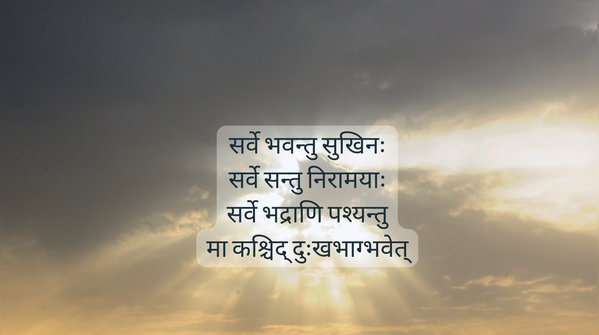
सर्वे भवन्तु सुखिनः
सर्वे सन्तु निरामयाः
सर्वे भद्राणि पश्यन्तु
मा कश्चिद् दुःखभाग्भवेत्
May all be happy.
May all be free from illness.
May all see what is auspicious.
May none suffer.
This ancient benediction widens the lens just when pain tries to shrink it. During periods of personal crisis, people often turn inward, replaying injuries and fears until the mind becomes a locked room. Chanting this verse pushes attention outward, to the collective, to a larger moral horizon. Its quiet radicalism lies in its refusal to single out the self. By wishing safety and well-being for everyone, the chanter steps briefly outside their own spiral. In traditional practice, that shift, from clenched survival to expansive goodwill, is itself considered healing.
2) A mantra for courage in the middle of instability
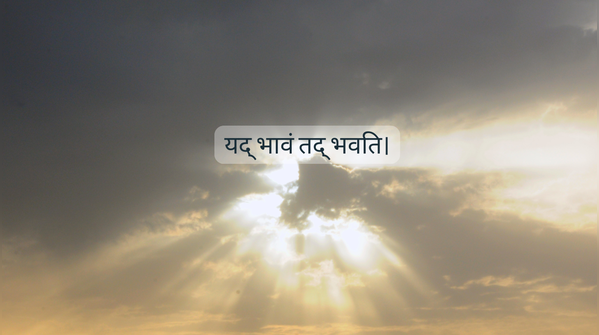
यद् भावं तद् भवति।
What you hold in your mind is what you become
Short and deceptively simple, the line is often invoked as a reminder that inner climate shapes outer experience. During periods of financial strain, professional upheaval, or emotional fracture, it points to the invisible mechanics of response; fear tends to amplify itself, while steadiness creates room for wiser action.
Repeated slowly, it is not a demand for forced positivity but an invitation to observe the mind before its habits solidify. With journal-like clarity, the phrase becomes a private checkpoint, urging a pause to notice which inner state is being strengthened before it quietly shapes the next choice.
3) A mantra for surrender when control runs out
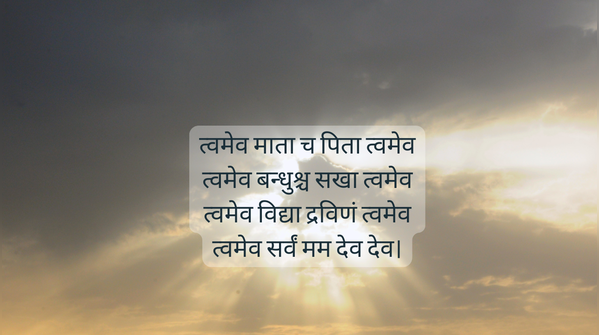
त्वमेव माता च पिता त्वमेव
त्वमेव बन्धुश्च सखा त्वमेव
त्वमेव विद्या द्रविणं त्वमेव
त्वमेव सर्वं मम देव देव।
You alone are my mother and father.
You alone are my kin and friend.
You alone are knowledge and wealth.
You alone are everything to me, O divine.
This verse often surfaces when people reach the edge of what effort alone can carry, during illness, exhaustion, or long seasons of uncertainty. It is not about giving up; it is about loosening the grip on constant self-management and admitting vulnerability.
Chanted slowly, it is meant to soften the feeling of being alone with one’s burdens. When human systems falter and relationships strain, the mantra points toward a larger refuge, offering the quiet reassurance of being held rather than abandoned.
4) A mantra for resilience after collapse
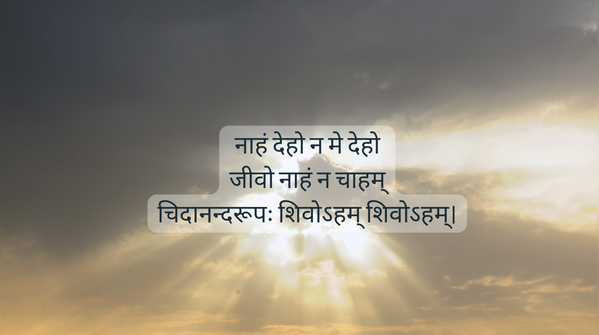
नाहं देहो न मे देहो
जीवो नाहं न चाहम्
चिदानन्दरूपः शिवोऽहम् शिवोऽहम्।
I am not the body, nor the mind.
I am not the ego-bound self.
My nature is consciousness and bliss
I am that awareness; I am that.
Traditionally linked to philosophical self-inquiry, this chant is often turned to after identity takes a blow, like job loss, heartbreak, public failure, ageing, diagnosis. When labels fall away, the verse points to something underneath: witness rather than wreckage.
In tough periods, repeating it can feel like standing on bedrock while the shoreline shifts. The body hurts, the story wobbles, and the future blurs, but something remains intact, observing.
5) A mantra for calm in the middle of noise
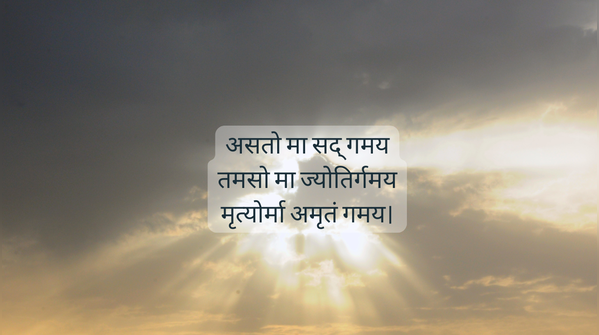
असतो मा सद् गमय
तमसो मा ज्योतिर्गमय
मृत्योर्मा अमृतं गमय।
Lead me from untruth to truth.
From darkness to light.
From mortality to what is beyond death.
Rather than claiming arrival, the mantra acknowledges confusion and asks for direction. That humility is why it surfaces in anxious times, when information overwhelms, fear fogs judgement, and the way forward feels obscured. It admits vulnerability without collapsing into helplessness, reminding the speaker that seeking light is itself an act of courage and orientation, especially when certainty has dissolved and every option seems equally fragile or fraught with unseen consequences.
Chanted steadily, it works like a compass recalibration, away from distortion toward clarity, and away from despair toward continuity.
Featured In lifestyle

MORE FROM ETIMES
life & style