
- News
- lifestyle
- fashion
- style-guide
- Ancient Indian royal and commoner clothing: What set them apart?
Ancient Indian royal and commoner clothing: What set them apart?
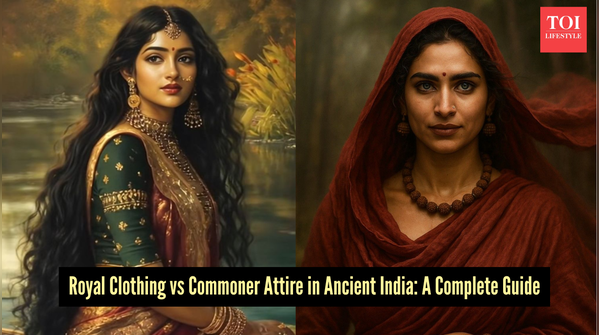
Attires of ancient India
Clothing in ancient India spoke not just about the fabrics, but it also related to power, societal status, wealth, caste, occupation, and an individual's regional identity. From donning expensive and lavish silks, which were reserved for the royalty, to simple cotton ensembles for the common people, there were allotted dress codes that reflected an individual’s place in society. Let’s see what Indian royalty and commoner clothing were like and what set them apart.

The fabric and material
The fabric used was the most important visible difference between the rich and the poor. Royalty was usually seen in ensembles made from fine silk, like kauseya, muslin, and brocade. Fabrics were imported through trade routes during the Maurya Empire and Gupta periods, where the use of zari and perfumed fabrics was also prevalent. Common clothing involved a simple, functional silhouette made of durable cotton with minimal dyes.
(Image Credits: Pinterest)
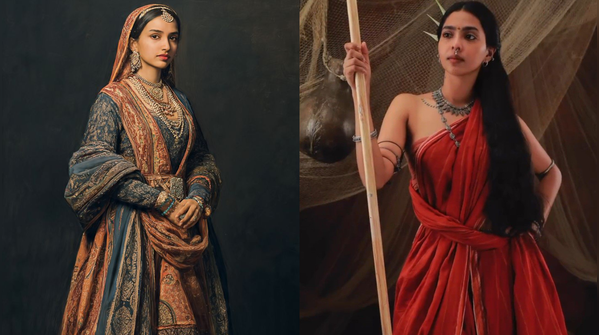
The embroidery detailing
Clothing for royalty was rarely plain, as their ensembles always featured heavy gold thread detailing with gemstone embellishments, intricate borders and motifs, and decorative sashes and statement waistbands. On the other hand, commoners’ attire showed no sign of lavish embroidery; simple hemline stitches and simple prints were limited only to festival wear.
(Image Credits: Pinterest)

The colour symbolism
Colours played a huge role in ancient Indian clothing. Royal colours mostly revolved around shades of deep reds, saffron, gold, and royal blues, produced from natural dyes like indigo and madder. Vibrant and saturated tones are used to signify wealth. For a common man, muted earthy tones, an undyed cotton silhouette, and lightly dyed fabric were the call.
(Image Credits: Pinterest)

Structure and layering of the fit
Ancient Indian clothing depended heavily on layering and was largely unstitched. Royal garments usually included a dhoti or antariya with decorative pleats, a uttariya, which was the upper drape made of silk, and multiple layers of stoles, scarves, and sashes for grandeur. Stitched garments became a common choice in later periods. Commoner garments included saree-style calf-length drapes for women and basic dhotis for men. Short upper cloth, and fewer layers because of the hot climate. While royal clothing placed great emphasis on volume and vibrancy, which brought presence, commoners’ attire revolved more around mobility and comfort.
(Image Credits: Pinterest)
Featured In lifestyle

MORE FROM ETIMES
life & style