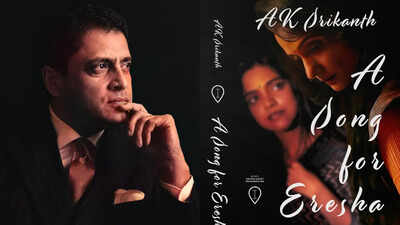
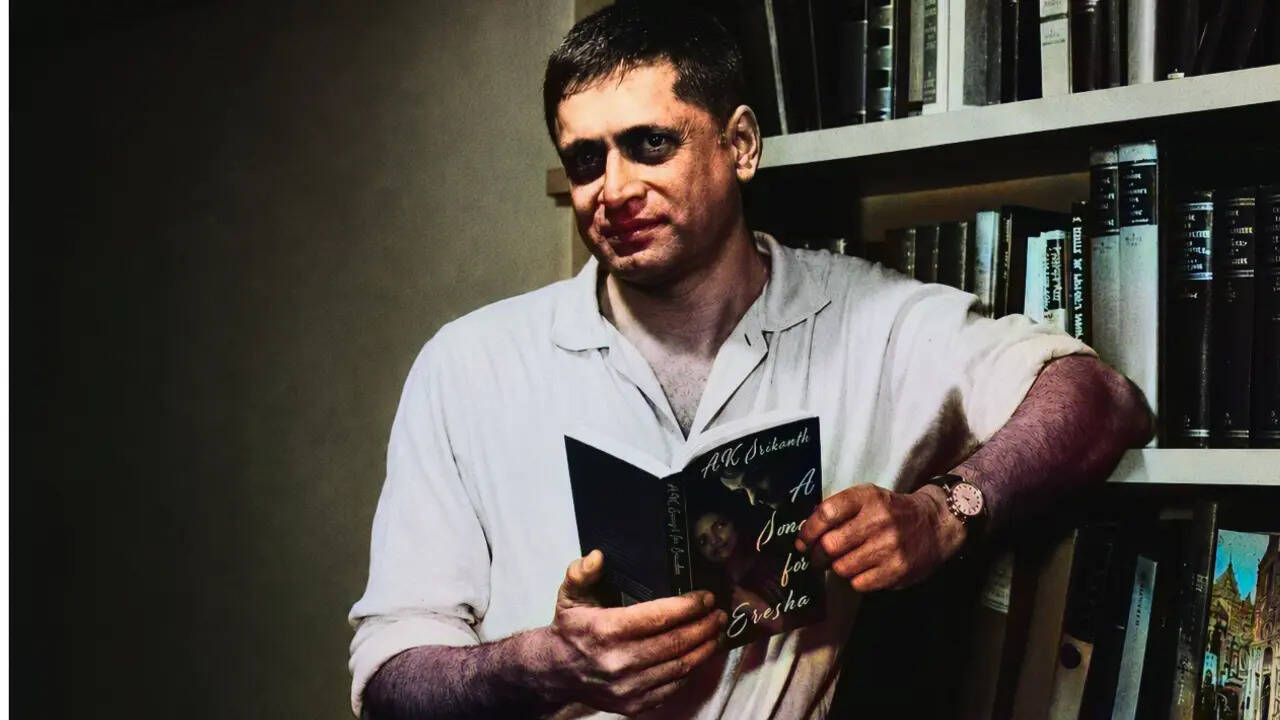
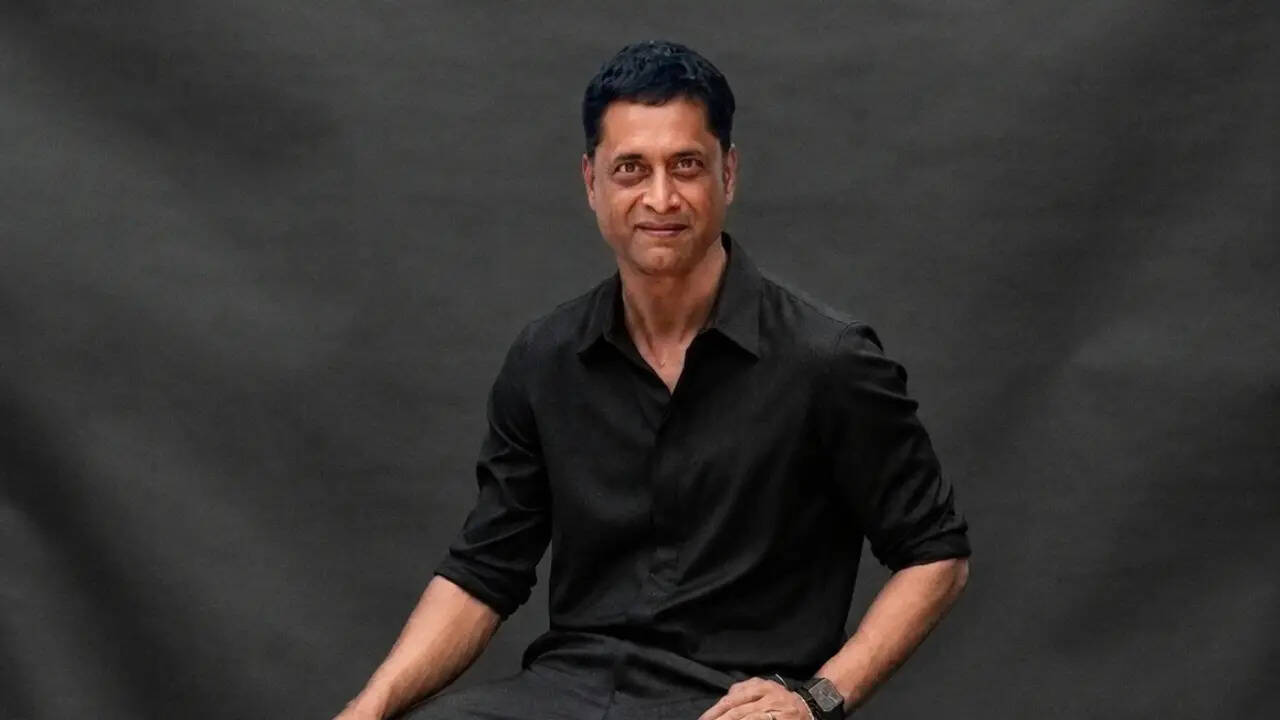
In an era where stories frequently move between books and screens, author-filmmaker AK
Srikanth has taken an unusual route. His latest work, A Song for Eresha, arrives simultaneously as a novel and a feature film—both created by him. While the two versions tell the same story, Srikanth insists they were never intended to replicate each other. Instead, they represent two distinct ways of exploring the same world. "From the beginning, I felt that the novel and the film were doing slightly different things, even though they tell the same story,” he says. “The principal difference lies in where the drama resides.”
Building the World of Azhagankarai
At the heart of A Song for Eresha is Azhagankarai, a fictional town inspired by the mangrove marshlands of Muthupet in Tamil Nadu. In the novel, the setting is much more than a backdrop—it becomes a living presence that shapes the narrative and its characters. “The book allowed me to spend more time with the characters, their histories, relationships, motivations, and the social fabric of the town,” Srikanth explains. “The drama emerges not only from the central plot, but also from the world around it.” The film, however, takes a different approach.
It focuses more intensely on the emotional journey of the principal characters and the central dramatic conflict. For Srikanth, cinema’s greatest strength lies in its ability to communicate meaning through sensory experience. “A glance, a silence, a shift in light, or a musical phrase can communicate something instantly that might require pages of prose to achieve,” he says.
The film’s performances, cinematography, and musical score become storytelling devices in themselves, creating an immediacy that prose cannot replicate. Yet Srikanth is quick to point out that both mediums have limitations as well as strengths. “The novel can take readers inside a character’s consciousness and spend time with the nuances of a place and its people,” he says. “Film can create an immediate sensory and emotional experience, but it often demands compression.” For him, the two formats complement rather than compete with one another. “The novel allowed me to expand the world of Azhagankarai and deepen its characters, while the film distilled the story into a more immediate and visceral experience.”
From the Director’s Chair to the Writing Desk
Although Srikanth is best known as a filmmaker, writing long-form fiction presented an entirely different creative challenge. “The biggest difference is that filmmaking is fundamentally collaborative, while novel writing is largely solitary,” he says. As a director, he works closely with actors, cinematographers, editors, composers, and producers. Every creative decision emerges through collaboration and negotiation. Writing a novel, on the other hand, requires long periods of isolation. “You are alone with the material for long stretches, and there are no performances, visuals, music, or locations to support the narrative,” he explains. “Everything has to be built through language.” Yet that solitude also proved liberating. Unlike filmmaking, where pacing is often dictated by production realities and runtime constraints, fiction offered the freedom to move at the story’s own pace.
“In a novel, you can pause, observe, enter a character’s mind, or allow the atmosphere of a place to slowly gather meaning,” he says. At the same time, the experience taught him discipline. “Just because you can describe everything does not mean you should. The challenge is to know what to reveal, what to leave unsaid, and how much space to give the reader’s imagination.” Ultimately, the journey reinforced his belief that storytelling transcends medium. “Whether you are writing a chapter or directing a scene, you are trying to hold the audience close to the emotional life of the story.”
Stories About Human Nature
Srikanth’s approach to storytelling is driven less by themes or messages than by a curiosity about people. “I am less interested in heroes and villains than I am in understanding why people make the choices they do,” he says. His characters often exist in moral grey zones, capable of generosity and selfishness, courage and weakness. He is especially fascinated by the gap between public perception and private reality. “Society often places individuals on pedestals, turning them into symbols, heroes, or even saints,” he says. “But the moment we look closely, we are reminded that they are human, with all the contradictions and imperfections that come with being human.” Rather than beginning with a message he wants to communicate, Srikanth starts with questions.
“I am more interested in exploring ambiguity than arriving at neat conclusions,” he says. “Stories become compelling when readers are invited to wrestle with the same uncertainties that the characters face.” This emphasis on human complexity also explains why his stories resonate beyond their immediate cultural setting. “Ambition, love, jealousy, pride, fear, faith, self-deception, redemption, and the need to belong are experiences that transcend geography,” he says.
Rooted in India, Relevant Everywhere
Indian cultural and philosophical influences run through Srikanth’s work, but he does not consciously write for international audiences. “I write about the cultures, traditions, and philosophies that I know best,” he says. He recalls growing up listening to stories from mythology and folklore told by grandparents on open terraces under the night sky. Those experiences, he believes, shaped both his imagination and his understanding of storytelling. “What strikes me now is that while the settings and cultural details of those stories were distinctly Indian, the underlying concerns were deeply human,” he says. For Srikanth, authenticity and universality are not opposing goals. In fact, he believes the opposite is true. “The more rooted a story is in its own cultural reality, the more universal it can become,” he says. “Audiences do not need to share the same cultural background to connect with a story. What they need is an emotional point of entry.”
The Challenges Facing Writers Today
The contemporary literary landscape, Srikanth observes, is both exciting and demanding. “Readers today have access to more stories than at any point in history,” he says. “One obvious challenge is attention.” Books now compete with streaming services, social media platforms, podcasts, and gaming for audiences’ time. While digital technology has expanded opportunities for writers, it has also created new obstacles. “Digital platforms have made publishing and distribution more accessible,” he notes. “But the rise of vanity publishing and various pay-to-publish models means that an enormous volume of work enters the market every year with very little editorial filtration.”
As a result, talented writers often struggle to stand out amid the sheer volume of available content. Yet he remains optimistic. “Strong storytelling remains the foundation of the craft,” he says. “A good story still has the power to find its audience, even if the path to that audience is more crowded than it once was.”
When Film and Fiction Collide
Working on both versions of A Song for Eresha often created internal creative conflicts. “My filmmaker instincts tend to favour economy,” Srikanth says. “Film encourages you to trust the audience and leave certain things unsaid.” His novelist instincts, however, wanted to dig deeper into character psychology and the broader life of Azhagankarai. “There are several passages and subplots in the novel that never made it to the screen,” he says. “Not because they were unimportant, but because they interfered with the visual flow and momentum of the film.” Eventually, he learned to stop forcing one medium to behave like the other. “Once I accepted that they did not need to be identical, the process became much more rewarding,” he says. “The novel and the film ultimately became two interpretations of the same story.” That philosophy extends to the future of storytelling itself. While he acknowledges the growing popularity of multi-platform narratives, he cautions against treating adaptation as an automatic goal. “Not every novel belongs in a visual medium,” he says. “Sometimes a story wants to be a novel. Sometimes it wants to be a film. And occasionally, if you're fortunate, it asks to be both.” For A Song for Eresha, it was the latter—a rare story that found its fullest expression on both the page and the screen.