
- News
- etimes
- animals-pets
- 5 Snakes that love British gardens
5 Snakes that love British gardens

5 Snakes that love British gardens
While United Kingdom isn’t exactly known for being the home to
dangerous snakes and reptiles, but when it comes to the British, gardens some snakes are absolutely in love with the lush green gardens and around the ponds. In fact, for nature lovers, spotting a snake in the garden is a thrilling sign of a healthy, thriving ecosystem. Far from being pests, these creatures are master pest-controllers themselves, quietly keeping slug and rodent populations in check while doing their best to stay out of your way.

The Grass Snake (Natrix helvetica)
The grass snake is the undisputed king of the British garden pond. Easily identifiable by the distinct yellow and black collar around its neck and its olive-green body, this is the UK’s largest native snake, sometimes reaching over a meter in length. They are completely harmless to humans and are exceptional swimmers, actively hunting for frogs, toads, and small fish. If you have a compost heap, leave it undisturbed in late summer; grass snakes love the natural warmth of decomposing garden waste to incubate their leathery eggs.

The Smooth Snake (Coronella austriaca)
The smooth snake is the rarest reptile in the UK, found almost exclusively in the sandy heaths of southern England, like Dorset and Hampshire. However, if your garden backs onto these protected heathlands, you might just get lucky. Often mistaken for adders, smooth snakes are a duller grey or brown and lack the distinct zigzag pattern, opting for a double row of dark spots instead. They get their name from their flat scales, which feel completely smooth to the touch, unlike the ridged scales of adders and grass snakes. They are entirely harmless and spend most of their time hidden deep under ground cover hunting lizards.

The Adder (Vipera berus)
The adder holds the title of the UK’s only venomous snake, but they are notoriously shy and prefer flight over fight. You can spot them by the striking, dark zigzag pattern running down their backs and their piercing red eyes. While they prefer wild heaths and woodlands, gardens that border these habitats will often get a visit. Adders love south-facing rockeries or log piles where they can flatten their bodies to bask in the morning sun. While their bite is rarely fatal to humans, it does require medical attention, so it’s best to admire these beautiful vipers from a respectful distance.
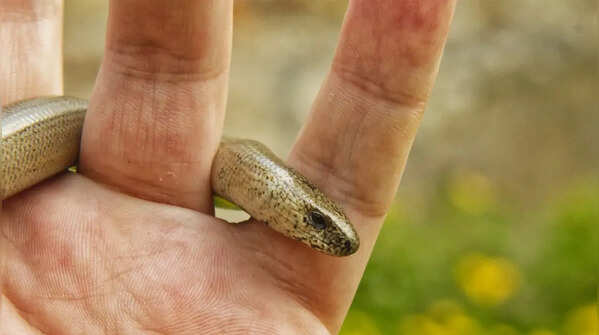
The Slow Worm (Anguis fragilis)
Alright, let's clear up a classic case of mistaken identity: the slow worm isn't actually a snake at all, but a legless lizard. To the untrained eye, though, this smooth, metallic-looking creature is the "snake" most commonly found in British backyards. Ranging from a shiny copper to a deep grey, slow worms are a gardener's absolute best friend. They spend their days hiding under plastic sheeting, logs, or compost bags, coming out at night to feast on a massive buffet of slugs and snails. Unlike real snakes, they can blink, and they can even drop their tails if a cat grabs hold of them.

The Aesculapian Snake (Zamenis longissimus)
This last one is a bit of a wildcard, but if you live in specific pockets of London (near the Regent's Canal) or North Wales, you might encounter the Aesculapian snake. This is a non-native species that escaped from captivity decades ago and has formed self-sustaining, localized breeding colonies. They are massive, elegant, uniform-colored snakes (usually olive-green or brownish) that can grow up to two meters long. They are incredible climbers, so if you live in their territory, don't be surprised to see one scaling a garden wall or lounging in a thick hedgerow in search of rodents.
Featured In etimes

