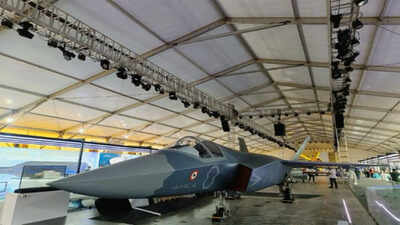
Most conversations around the Advanced Medium Combat Aircraft (AMCA) program are in the realm of combat capabilities. When the fighter becomes operational it would be the most advanced fighter aircraft in the
Indian Air Force's fleet. At the same time the aircraft, especially in its later format would also be the pinnacle of what the Indian defence industry will have to offer. The program is not just about the fifth-generation fighter, it is about creating and strengthening a national eco-system that demonstrates top tier manufacturing, materials science, electronics, jet engine technology, advanced weapons and systems integration.
The decision to have three private consortiums bid for the project has opened additional avenues for the development of the Indian defence eco-systems. Also, by demanding indigenous composites, radar-absorbing coatings and high-temperature alloys the program strengthens India’s research base in advanced materials and creates spillovers into other sectors such as automotive, computing, Artificial Intelligence (AI), metallurgy, composites and renewable energy.
India Readies BOLD Plan To COMBAT Pak's 'Made In China' Stealth Fighter Jet | 5th Gen AMCA
Precision manufacturing for stealth shaping requires tighter tolerances and advanced machining, pushing Indian industry towards more detailed aerospace-grade standards and expanding supply chains that integrate MSMEs.
This industrial expansion supports defence while also enhancing civilian aerospace and industrial production capabilities.
On the technology front, AMCA drives innovation in avionics, sensor fusion, and AI-assisted mission systems, these applications extend into civil aviation and space sector. The propulsion challenge, particularly the push for indigenous jet engines, addresses a decades long-standing gap in India’s aerospace capability and has direct relevance for the civilian aviation sector as well.
Subsystems such as radars, avionics, and composites can be marketed globally, creating export potential and further strengthening India's position as a supplier of high-value aerospace technologies. Civil aviation programs, UAV development, and
ISRO’s space missions stand to benefit from overlaps in propulsion, composites and avionics. Digital twin technology, simulation, and advanced computer-aided prototyping demanded by AMCA strengthen India’s digital engineering ecosystem, which can be leveraged across industries ranging from automotive design to infrastructure planning.
The program also upskills India’s workforce, exposing engineers and technicians to cutting-edge aerospace practices and improving talent pool. Allied sectors such as energy, automotive, and cybersecurity gain from innovations in high-performance batteries, cooling systems, advanced metallurgy, secure communication networks and AI-driven decision systems. These technologies have direct applications in electric vehicles, renewable energy and digital infrastructure, creating a multiplier effect across the economy.
Most conversations around the Advanced Medium Combat Aircraft (AMCA) program are in the realm of combat capabilities. When the fighter becomes operational it would be the most advanced fighter aircraft in the Indian Air Force's fleet. At the same time the aircraft, especially in its later format would also be the pinnacle of what the Indian defence industry will have to offer. The program is not just about the fifth-generation fighter, it is about creating and strengthening a national eco-system that demonstrates top tier manufacturing, materials science, electronics, jet engine technology, advanced weapons and systems integration.
The decision to have three private consortiums bid for the project has opened additional avenues for the development of the Indian defence eco-systems. Also, by demanding indigenous composites, radar-absorbing coatings and high-temperature alloys the program strengthens India’s research base in advanced materials and creates spillovers into other sectors such as automotive, computing, Artificial Intelligence (AI), metallurgy, composites and renewable energy.
Precision manufacturing for stealth shaping requires tighter tolerances and advanced machining, pushing Indian industry towards more detailed aerospace-grade standards and expanding supply chains that integrate MSMEs. This industrial expansion supports defence while also enhancing civilian aerospace and industrial production capabilities.
On the technology front, AMCA drives innovation in avionics, sensor fusion, and AI-assisted mission systems, these applications extend into civil aviation and space sector. The propulsion challenge, particularly the push for indigenous jet engines, addresses a decades long-standing gap in India’s aerospace capability and has direct relevance for the civilian aviation sector as well.
Subsystems such as radars, avionics, and composites can be marketed globally, creating export potential and further strengthening India's position as a supplier of high-value aerospace technologies. Civil aviation programs, UAV development, and ISRO’s space missions stand to benefit from overlaps in propulsion, composites and avionics. Digital twin technology, simulation, and advanced computer-aided prototyping demanded by AMCA strengthen India’s digital engineering ecosystem, which can be leveraged across industries ranging from automotive design to infrastructure planning.
The program also upskills India’s workforce, exposing engineers and technicians to cutting-edge aerospace practices and improving talent pool. Allied sectors such as energy, automotive, and cybersecurity gain from innovations in high-performance batteries, cooling systems, advanced metallurgy, secure communication networks and AI-driven decision systems. These technologies have direct applications in electric vehicles, renewable energy and digital infrastructure, creating a multiplier effect across the economy.