
- News
- World News
- Middle East News
- Israel-Hamas war top developments: A region on edge as struggles intensify
Trending
This story is from October 16, 2023
Israel-Hamas war top developments: A region on edge as struggles intensify
As tensions continue to rise between Israel and Hamas, Israel has urged over a million residents in Gaza to move to the safer southern region. Gaza is facing critical shortages of essential supplies and fears an imminent Israeli invasion following Hamas's initial assault. Israeli forces, with support from US warships, are preparing for action against Hamas to stop the violence near the border.
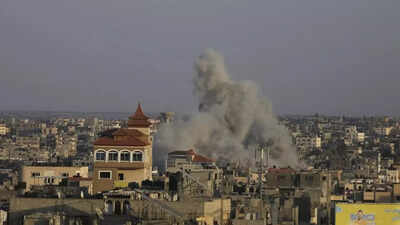
<p>Gaze faces critical shortages of essential supplies and fears an imminent Israeli invasion following Hamas's initial assault. (AP)<br></p>
Israel urged over a million Gaze residents to move to the safer southern region amid ongoing tension. Meanwhile, Gaze faces critical shortages of essential supplies and fears an imminent Israeli invasion following Hamas's initial assault. On the other hand, Israel is preparing for action against Hamas to stop violence near the border. Here are the top developments in the story-
Many people in Gaza were told by Israel to leave the northern part of their land.
2. The military from Israel said on Sunday that they won't attack a certain route south for a few hours. They are asking Palestinians to leave the north together. The day before, they gave more time and two safe paths to leave. They mentioned that many people have already gone south.
3. Israel has not decided to send soldiers into the area, but they are gathering their troops near the border of Gaza.
4. Since Hamas started attacking on October 7th, more than 3,600 lives have been lost in this war.
5. Gaza's hospitals will run out of fuel for emergency power in two days, says the United Nations. This is dangerous for thousands of patients.
Israel is getting ready to take strong action against Hamas, a militant group. They want to stop the violence caused by Hamas in Israeli towns near the border.
American warships are heading to the area because the situation might get worse between Israel and Hamas. There are already fights happening near Israel's border with Lebanon.
Israel has told people in Gaza, a place with over 2 million residents, to move to the safer southern part of the area. Many have left Gaza City, where about half of the people live. However, Hamas wants them to stay where they are.
In Gaza, hospitals are running out of fuel and supplies, putting many lives at risk. People are struggling to find enough food, water, and safety, fearing an upcoming ground attack by Israel, triggered by a deadly Hamas assault.
Israeli forces, along with support from US warships, are positioned along Gaza's border, preparing for a significant campaign to dismantle Hamas.
The week-long airstrikes have caused massive destruction, but haven't stopped Hamas from firing rockets into Israel.
The Gaza Health Ministry reported a high death toll and many injuries, making this conflict the deadliest for both sides in Gaza's history.
Efforts are being made to reopen a border crossing into Gaza for aid delivery, as the region faces immense challenges due to the ongoing violence. The US is working with various countries and the UN to facilitate aid delivery and evacuation of foreign nationals.
We are on the 'verge of collapse'; running out of body bags: Head of UN agency for Palestinian refugees
The United Nations agency for Palestinian refugees, which has the largest UN footprint in the Gaza Strip, has warned that it is on the “verge of collapse” and was even running out of body bags amidst the raging conflict between Israel and the Hamas militants.
“As I speak with you, Gaza is running out of water and electricity. In fact, Gaza is being strangled and it seems that the world right now has lost its humanity,” United Nations Relief and Works Agency for Palestine Refugees in the Near East (UNRWA) Commissioner-General Philippe Lazzarini said on the situation in the Gaza Strip on Sunday.
“Gaza is now even running out of body bags. Entire families are being ripped apart," he said.
Addressing a press conference at UNRWA headquarters in East Jerusalem, Lazzarini said his colleagues in Gaza are no longer able to provide humanitarian assistance.
Danny Danon, Israel's representative at the United Nations, got a call from Nikki Haley, the former governor of South Carolina and President Donald Trump's new ambassador to the United Nations.
Haley was calling to say sorry.
A month before this, the United Nations Security Council had criticized Israel for constructing buildings in the West Bank. The Obama government, by not voting, let the criticism pass, which was a way of showing dissatisfaction to Benjamin Netanyahu, Israel's prime minister.
In her first call to a fellow ambassador, Haley wanted to make sure things changed.
"She promised that it wouldn't happen as long as she was an ambassador," Danon remembered, "and that she would support us."
This promise shaped much of Haley's time at the UN. During her almost two years as ambassador, she became known for strongly defending Israel.
On Monday, the prices of oil dropped a bit after going up on Friday. People are watching to see if the situation between Israel and Hamas involves more countries. If it does, the prices of oil might go higher, which could hurt the global economy.
The cost of Brent futures went down by 34 cents to $90.55 per barrel, and US West Texas Intermediate (WTI) crude dropped by 41 cents to $87.28 a barrel.
Experts say people are trying to understand what will happen because a major ground fight hasn't started yet, even after Israel told people in the northern part of Gaza to move to the south.
On a national holiday in Israel, the response from their forces was slow. During this time, Hamas militants took advantage and entered over 20 towns outside Gaza. They caused a lot of harm, killing at least 1,200 people and holding around 150 people as hostages.
Israeli officials haven't explained why their response was slow. We'll share what we know about the timeline of these terrible events and how the authorities responded, based on what survivors and their families have told us, along with analyzing photos and videos.
Before the attacks happened:
Early in the morning on October 7, Israeli intelligence noticed something unusual happening in the militant groups in Gaza. They quickly informed the Israeli soldiers who were protecting the border with Gaza.
When the attacks began:
At about 6:30 am, the most dangerous attacks in Israel's history began simultaneously in many locations. People with powered parachutes (paragliders) took off from Gaza. The militants used small flying robots (drones) to destroy Israeli surveillance stations and started shooting a lot of rockets. Special forces on trucks and motorcycles rushed into southern Israel.
6 hours after the attacks started:
At 12:21 pm, the Israeli military shared that they had sent soldiers and additional forces to southern Israel to take back the towns that Hamas attackers had captured.
20 hours after the attacks started:
Around 3 am on October 8th, in Kfar Aza, Okev was saved from a secure room.
Day 9 of the latest Israel-Hamas war
Many people in Gaza were told by Israel to leave the northern part of their land.
Some went to hospitals in the north for safety. Gaza, a place with about 2.3 million people, is struggling to get enough food, water, and safety. They are also worried about an upcoming invasion after Hamas, a militant group, attacked Israel and caused harm. Israeli forces, with support from the US warships, are getting ready to fight in Gaza. They trained near the Gaza border for a fight using air, land, and sea to stop the militant group. Israel used flyers and social media to tell over 1 million Gaza residents to go to the southern part of Gaza for safety.
Currently:
1. Many people in northern Gaza are struggling to leave, and there's a shortage of water because Israel has stopped sending supplies to Gaza.
2. The military from Israel said on Sunday that they won't attack a certain route south for a few hours. They are asking Palestinians to leave the north together. The day before, they gave more time and two safe paths to leave. They mentioned that many people have already gone south.
3. Israel has not decided to send soldiers into the area, but they are gathering their troops near the border of Gaza.
4. Since Hamas started attacking on October 7th, more than 3,600 lives have been lost in this war.
5. Gaza's hospitals will run out of fuel for emergency power in two days, says the United Nations. This is dangerous for thousands of patients.
Israel and Hamas at war
Israel is getting ready to take strong action against Hamas, a militant group. They want to stop the violence caused by Hamas in Israeli towns near the border.
American warships are heading to the area because the situation might get worse between Israel and Hamas. There are already fights happening near Israel's border with Lebanon.
Israel has told people in Gaza, a place with over 2 million residents, to move to the safer southern part of the area. Many have left Gaza City, where about half of the people live. However, Hamas wants them to stay where they are.
Gaza hospitals are overwhelmed with patients
In Gaza, hospitals are running out of fuel and supplies, putting many lives at risk. People are struggling to find enough food, water, and safety, fearing an upcoming ground attack by Israel, triggered by a deadly Hamas assault.
Israeli forces, along with support from US warships, are positioned along Gaza's border, preparing for a significant campaign to dismantle Hamas.
The week-long airstrikes have caused massive destruction, but haven't stopped Hamas from firing rockets into Israel.
The Gaza Health Ministry reported a high death toll and many injuries, making this conflict the deadliest for both sides in Gaza's history.
Efforts are being made to reopen a border crossing into Gaza for aid delivery, as the region faces immense challenges due to the ongoing violence. The US is working with various countries and the UN to facilitate aid delivery and evacuation of foreign nationals.
We are on the 'verge of collapse'; running out of body bags: Head of UN agency for Palestinian refugees
The United Nations agency for Palestinian refugees, which has the largest UN footprint in the Gaza Strip, has warned that it is on the “verge of collapse” and was even running out of body bags amidst the raging conflict between Israel and the Hamas militants.
“As I speak with you, Gaza is running out of water and electricity. In fact, Gaza is being strangled and it seems that the world right now has lost its humanity,” United Nations Relief and Works Agency for Palestine Refugees in the Near East (UNRWA) Commissioner-General Philippe Lazzarini said on the situation in the Gaza Strip on Sunday.
“Gaza is now even running out of body bags. Entire families are being ripped apart," he said.
Addressing a press conference at UNRWA headquarters in East Jerusalem, Lazzarini said his colleagues in Gaza are no longer able to provide humanitarian assistance.
Nikki Haley, Israel and the Politics of Diplomacy
Danny Danon, Israel's representative at the United Nations, got a call from Nikki Haley, the former governor of South Carolina and President Donald Trump's new ambassador to the United Nations.
Haley was calling to say sorry.
A month before this, the United Nations Security Council had criticized Israel for constructing buildings in the West Bank. The Obama government, by not voting, let the criticism pass, which was a way of showing dissatisfaction to Benjamin Netanyahu, Israel's prime minister.
In her first call to a fellow ambassador, Haley wanted to make sure things changed.
"She promised that it wouldn't happen as long as she was an ambassador," Danon remembered, "and that she would support us."
This promise shaped much of Haley's time at the UN. During her almost two years as ambassador, she became known for strongly defending Israel.
Oil prices fall as investors assess impact of Israel-Hamas war
On Monday, the prices of oil dropped a bit after going up on Friday. People are watching to see if the situation between Israel and Hamas involves more countries. If it does, the prices of oil might go higher, which could hurt the global economy.
The cost of Brent futures went down by 34 cents to $90.55 per barrel, and US West Texas Intermediate (WTI) crude dropped by 41 cents to $87.28 a barrel.
Experts say people are trying to understand what will happen because a major ground fight hasn't started yet, even after Israel told people in the northern part of Gaza to move to the south.
In timeline of attacks in Israel, wait for help seemed to be endless
On a national holiday in Israel, the response from their forces was slow. During this time, Hamas militants took advantage and entered over 20 towns outside Gaza. They caused a lot of harm, killing at least 1,200 people and holding around 150 people as hostages.
Israeli officials haven't explained why their response was slow. We'll share what we know about the timeline of these terrible events and how the authorities responded, based on what survivors and their families have told us, along with analyzing photos and videos.
Before the attacks happened:
Early in the morning on October 7, Israeli intelligence noticed something unusual happening in the militant groups in Gaza. They quickly informed the Israeli soldiers who were protecting the border with Gaza.
When the attacks began:
At about 6:30 am, the most dangerous attacks in Israel's history began simultaneously in many locations. People with powered parachutes (paragliders) took off from Gaza. The militants used small flying robots (drones) to destroy Israeli surveillance stations and started shooting a lot of rockets. Special forces on trucks and motorcycles rushed into southern Israel.
6 hours after the attacks started:
At 12:21 pm, the Israeli military shared that they had sent soldiers and additional forces to southern Israel to take back the towns that Hamas attackers had captured.
20 hours after the attacks started:
Around 3 am on October 8th, in Kfar Aza, Okev was saved from a secure room.
End of Article
FOLLOW US ON SOCIAL MEDIA






Hot Picks
TOP TRENDING
Trending Stories
In World
Entire Website
- Diljit Dosanjh’s Dil-Luminati India Tour: Check dates, venue, how to book concert tickets online
- Hamster Kombat Daily Cipher Codes and Combo Cards for September 13, 2024: Unlock up to 1 million coins
- Narayana Murthy faces backlash for parenting remarks on social media; users say, "after working 72 hours a week, there’s barely time left to have babies…”
- Shreyas Iyer comes out to bat wearing sunglasses, falls for a duck in Duleep Trophy
- iPhone 16 will be available for Rs 54,900 on Apple website; here's how you can grab the deal
- iPhone 16 to go on pre-order today: Pre-booking details, time, sale date and more
- Vande Metro launch date, schedule: PM Modi to flag off Bhuj-Ahmedabad Vande Metro train; check timings, stoppages of new Indian Railways train
- Why around 40,000 TCS employees have received tax demand notices for Rs 50,000 to over Rs 1 lakh
- Bill meant to usurp Waqf land, JPC told
- Delhi to UP: IMD releases forecast and issues warnings across several states
- 'My resolve has grown 100-fold': Kejriwal walks out of Tihar jail hours after SC grants bail
- 'My father was on the flight': EAM opens up about '84 Air India hijack
- Why Rahul should talk more about jobs and less about ideology
- 'Fail to understand ...': What SC said while granting bail to Kejriwal
- To do away with colonial legacy, govt renames Port Blair to...
- 'Can't attend office': SC's bail conditions for Delhi CM Kejriwal
- Can Sebi chief Madhabi Puri Buch survive this storm of allegations?
- Refund on iPhone 15 & 14: Apple's policy says conditions applied
- 'Cops stood as mute spectators': Docs write to prez over RG Kar impasse
- India's Test wins ready to outnumber defeats: Where the trend changed

Popular Categories
Hot on the Web
Top Trends
Aadhaar Card UpdateTech LayoffsArvind Kejriwal BailVande MetroShannon SharpeAdani HinderburgUPSC Mains Admit CardKristina JoksimovicTCS Employee Tax NoticesWay Chatgpt can be your Study PartnerAir Taxi IndiaAyushman Bharat SchemeKolkata Doctor Rape CaseDonald TrumpShreyas IyerDiljit DosanjhLive Cricket Score
Trending Topics
Alia BhattMalaika Arora Father DeathArbaaz KhanNatasa StankovicMr Bachchan OTT ReleaseNational Parks In IndiaSelena GomezGOAT CollectionVikas Sethi DeathMalayalam ProducersIndia's Best Dancer 4Simi GarewalDilli BabuIndian National ParksLaung BenefitsVikas SethiApple iPhone 16SpaceXAadhar Card Update By Sept 14Wordle Answer
Living and entertainment
Latest News
7. Hindi becomes officialSalman Khan surrounded by bodyguards as he arrives at Malaika Arora's mother's house to offer his condolences - WATCHJulie Chen to miss Big Brother live eviction for first time, taps Jerry O'Connell to hostBonedi baris hope for a peaceful start to PujoNIA raids pro-Khalistan preacher Amritpal Singh's relative's house in AmritsarA vision unfolds: How Levitation is crafting tomorrow’s enterprise solutionsPreschools turn nursing homes, retirement age raised: China's demographic crisis explodesTovino Thomas praises Prithviraj Sukumaran as director: "One of the brilliant directors I have ever worked with"Tragedy strikes at fundraiser: Mother of two dies after marshmallow-eating competitionMan shot near Delhi's Greater Kailash-I gym, gang war suspected8 animals that reproduce without matingHow a balanced pH helps maintain your skin’s youthful appearance'Cops stood as mute spectators': Protesting doctors write to President over RG Kar impasseStree 2 box office collection: Shraddha Kapoor and Rajkummar Rao starrer clocks Rs 539 croreISL-11 opener: Familiar foes back in businessFatal crash in Australia's Netherby claims life of ToddlerBiden to host fourth quad summit with PM Modi, Albanese, and Kishida in Delaware on September 21: White HouseNASA to establish New Lunar Time Standard with Coordinated Lunar Time (LTC) initiative
Copyright © 2024 Bennett, Coleman & Co. Ltd. All rights reserved. For reprint rights: Times Syndication Service