Pula Arena
Pula Arena
You're Reading


Synopsis
The Pula Arena is located in Pula, in Croatia. Constructed between 27 BC and 68 AD, it is among the six largest surviving Roman arenas in the world and the only remaining Roman amphitheatre to have 4 side towers and with all three … Read more
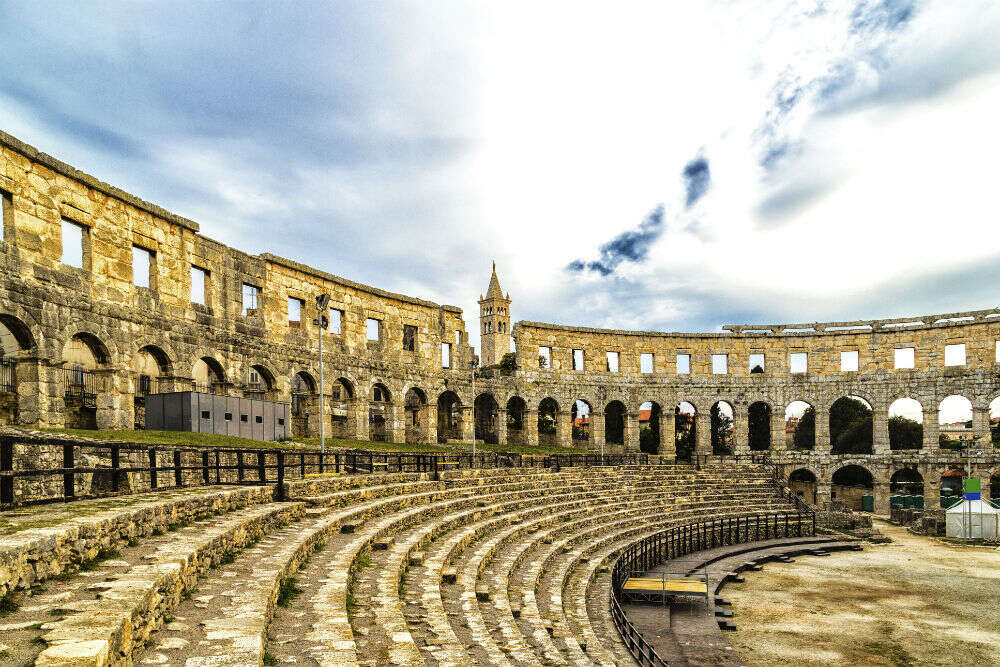 The Pula Arena is located in Pula, in Croatia. Constructed between 27 BC and 68 AD, it is among the six largest surviving Roman arenas in the world and the only remaining Roman amphitheatre to have 4 side towers and with all three Roman architectural orders entirely preserved. The amphitheatre is 132 m long and 105 m wide, and has a capacity of 23,000 spectators. Because the structure is built on a slope, only one part of the exterior wall is 3-storeyed while the other has 2 stories. Each of the 4 towers had 2 cisterns filled with perfumed water that fed a fountain or could be sprinkled on the spectators. The amphitheatre had provisions to be covered with large sails to protect the spectators from sun or rain.
The Pula Arena mainly held gladiator fights and remained in use until the 5th century, when Emperor Honorius prohibited gladiatorial combats. But it wasn’t until 681 that combat between convicts, particularly those sentenced to death, and wild animals was forbidden. By that time, the local population had already started to plunder the amphitheatre carrying away stones for local buildings. This was stopped by the patriarchate of Aquileia in the 13th century. In the Middle Ages, the interior of the Arena was used for grazing, occasional tournaments by the Knights of Malta and medieval fairs. In 1932, the amphitheatre was adapted for modern theatre, military ceremonies and public meetings. Today, with a capacity of 5,000, it holds musical concerts and film festivals and even held two professional hockey games.

closecomments

Be the first one to review.
We have sent you a verification email. To verify, just follow the link in the message
end of article
Next story
Verona Arena
Visual Stories
10 pretty Indian villages to visit this year-end

8 castles in Germany straight out of a fairy-tale

8 tiger reserves every wildlife enthusiast should visit in India

10 animals that are easily spotted in Ranthambore National Park

How to prepare for a night safari in India?

9 rare animals to spot in the Western Ghats and where to find them


Trending Stories
India's most significant hills, and why every traveller should visit them
Ravi Bridge reopens: After long months of disruption, Jammu Rail Services are back on track; here's what it means for travellers
“Koi mat aana yaha pe”...Kedarnath Dham pilgrim shares her harrowing experience of visiting Kedarnath Dham
“They told me not to come to Bihar”: American traveller busts myths as his Darbhanga journey wins hearts online
Which country is the 'Land of the Rising Sun' and what you need to know before visiting there



Comments (0)