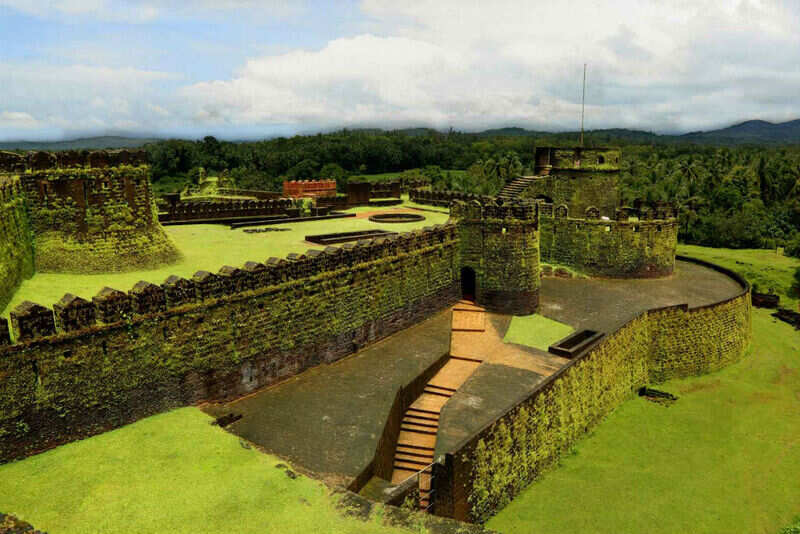
 Most travellers who visit Murudeshwar are often mesmerised by the large structures in and around the area, and many miss a structure that has withstood the test of time. Mirjan Fort is very less talked about or even promoted, therefore making it a lesser known attraction of Murudeshwar. This ancient fort has many claimants and the construction credits seem very hazy. Historians have traced back the construction to the 16th century and have seen pieces of evidence that credit Queen Chennabhairadevi of Gersoppa for the construction. Queen Chennabhairadevi was popularly known as the ‘pepper queen’ and it is said that she managed the pepper business from this fort.
If you visit the location post the monsoon season, the fort is layered beautifully with a mat of moss. Built over 4 hectares, the structure is protected with double-walls that could clearly withstand an invasion. The fort is constructed using locally available laterite stones and has four entrances, wells and hidden passages that have been planned intelligently. The excavations at the place still continue to reveal many secrets that date back to the medieval period. This fort with Deccan and Mughal influences has been home to many rulers over the centuries. After many restoration efforts, the Archaeological Survey of India (ASI) has declared the fort as a protected monument under its purview. The fort is best visited around the afternoon and can be clubbed alongside the temple tour en route Gokarna.


Share your Karnataka Trip Experience