Bayon Temple
Bayon Temple
You're Reading


Synopsis
Built during early 13th century, Bayon Temple is a centrepiece of Angkor Thom. This Buddhist temple was a state temple during the reign of King Jayavarman VII, whose delusional grandeur is evident in 216 giant smiling faces which … Read more
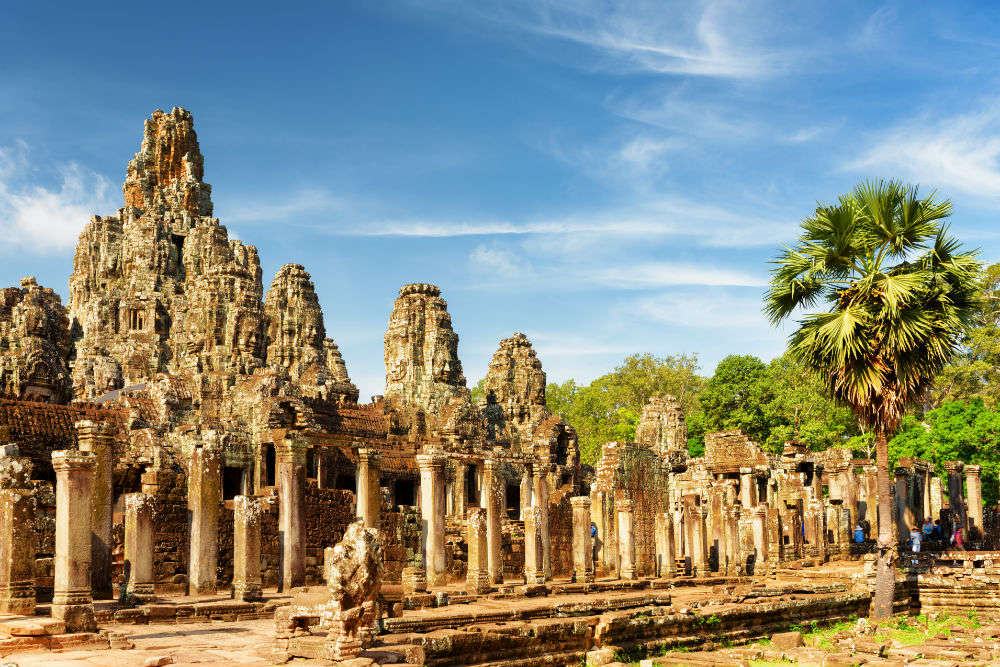
Smile along with the smiling faces – built during early 13th century, Bayon Temple is a centrepiece of Angkor Thom. This Buddhist temple was a state temple during the reign of King Jayavarman VII, whose delusional grandeur is evident in 216 giant smiling faces which adorn the towers of the Bayon. The temple’s architecture signalled a definite shift from Hinduism to Buddhism. As you enter the giant complex, you cannot miss the smiling faces greeting you from the top of the entrance. The entry bridge, flanked with 54 stone warriors tugging at a snake is quite a sight. Once you are inside the temple complex, you will find smiling faces towering over everywhere. The faces are believed to resemble the king himself. Another theory emphasises that these composed humanly faces are of Lokesvara, a compassionate Bodhisattva. The walls of Bayon temple are richly decorated with more than 10,000 bas reliefs, including apsaras. Walk around the Bayon Temple and get lost in its exotic interiors. The smiling faces will leave you wondering the purpose behind creating such a unique masterpiece!

closecomments

Be the first one to review.
We have sent you a verification email. To verify, just follow the link in the message
end of article
Next story
Angkor Wat
Visual Stories
10 pretty Indian villages to visit this year-end

8 castles in Germany straight out of a fairy-tale

8 tiger reserves every wildlife enthusiast should visit in India

10 animals that are easily spotted in Ranthambore National Park

How to prepare for a night safari in India?

9 rare animals to spot in the Western Ghats and where to find them
Also Read
Trending Stories
I usually laughed off ghost stories — until one freezing night in West Sikkim changed everything
India's 'Mountains of Death' is not actually a mountain – what and where is it?
Places that receives highest rainfall in south India during monsoon season
In photos: South India's wildest waterfalls to witness during monsoon season
10 UNESCO World Heritage Sites in India that deserve a spot on every history and nature lover’s bucket list



Comments (0)