Bratislava Castle
Bratislava Castle
You're Reading


Synopsis
Bratislava Castle stands on a small hill overlooking the River Danube. It is a rectangular castle—almost box like with four towers on its four corners. The handsome building in white has a bright red outline on top, making it dist … Read more
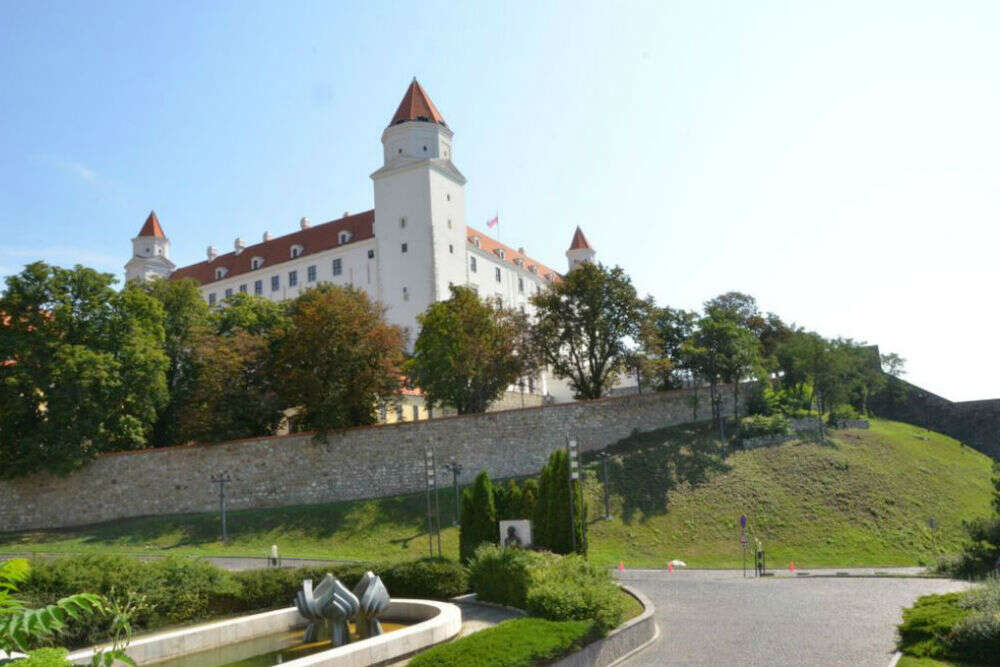
Bratislava Castle stands on a small hill overlooking the River Danube. It is a rectangular castle—almost box like with four towers on its four corners. The handsome building in white has a bright red outline on top, making it distinctly identifiable from a distance. The southwest tower of the Bratislava Castle is known as Crown Tower not only because it is the largest of the towers but also because this is where the crown jewels were kept for 200 years in the long history of this castle. Located between Carpathians and Alps ranges, the strategic location at which Bratislava Castle stands has been inhabited for thousands of years. It also lies at the intersection of important ancient trade routes, which means that this place is used to hosting travellers for a long time.
There is evidence of an acropolis having existed on this very caste hill since 3500 BC. A stone castle came up in 10th century and it underwent many stylistic changes till Queen Maria Theresa got it done in Baroque style during her reign. However the castle suffered a fire accident and was destroyed in early 19th century. The process of rebuilding began in 1950s and went on till 2010. Even if you cannot go inside the castle, you can go on top of the hill and enjoy amazing views from there. Carpathians and Alps ranges, the strategic location at which Bratislava Castle stands has been inhabited for thousands of years.


It also lies at the intersection of important ancient trade routes, which means that this place is used to hosting travellers for a long time. There is evidence of an acropolis having existed on this very caste hill since 3500 BC. A stone castle came up in 10th century and it underwent many stylistic changes till Queen Maria Theresa got it done in Baroque style during her reign. However the castle suffered a fire accident and was destroyed in early 19th century. The process of rebuilding began in 1950s and went on till 2010. Even if you cannot go inside the castle, you can go on top of the hill and enjoy amazing views from there.

closecomments

Be the first one to review.
We have sent you a verification email. To verify, just follow the link in the message
end of article
Next story
Orava Castle
Visual Stories
10 pretty Indian villages to visit this year-end
8 castles in Germany straight out of a fairy-tale

8 tiger reserves every wildlife enthusiast should visit in India

10 animals that are easily spotted in Ranthambore National Park
How to prepare for a night safari in India?

9 rare animals to spot in the Western Ghats and where to find them


Trending Stories
6 incredible animals that are found only in India, and where tourists can see them
Russian traveller, now settled in India, shares 12 things that surprise her the most in this country
This remote village in Russia wakes up to “Hare Krishna”; how Indian travellers can reach here
7 countries where Indians can enjoy island vacations; all under INR 80,000!
48°C and counting: What India’s brutal heatwave is doing to summer travel plans




Comments (0)