- News
- lifestyle
- home-garden
- Heritage, Ethics and Entertainment: Switch to these boardgames that are making comeback
Trending
This story is from May 31, 2020
Heritage, Ethics and Entertainment: Switch to these boardgames that are making comeback
From Pachisi, the national board game of India to Parama pada sopanam, the oldest version of snake and ladder, the games that were played by our grandparents are making a comeback
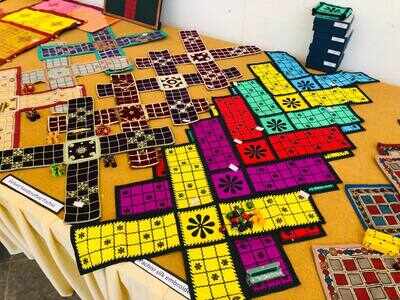
Well thanks to the booming computer and smartphone games which resulted in the faded memories of these age-old board games that used to get friends and family play together.

From candy crush to PUBG, these digital games are ruling the world and most of our minds. We would rather sit at home and chase the enemy on our screen than stepping outside and physically chasing a friend who is hiding from you while playing hide and seek. Children these days hate going out because they love their gadgets more than they love people. “Every extra minute a child spends on an iPad is an extra minute lost interacting with the world around him, whether it’s human interaction with adults or his peers or interacting with toys that he can manipulate and respond to their touch,” says Naeema Jiwani, developmental psychologist. And it’s because of the growing obsession with gadgets and technology, that a lot of kids are facing anxiety issues and mental health issues.
Due to these very reasons, Hyderabad-based Sangeetha Rajesh and Archana Reddy wanted to create something that would make the new generation aware of their heritage, culture and most importantly learn something with the time they invested in activities. “It was a series of incidents that made us realise that we need to revive the traditional old games before they go extinct. Sangeeta and I have been friends for the past 12 years and most of our discussions revolve around our children and their schooling. We have always been amazed at how this generation of kids prefers to stay indoors, play on their iPhones and wear their glasses around like a badge of honour,” says Archana, who is one of the owners of Good Old Games, a store that revives ancient traditional games that used to be played in India.
One day, as Sangeeta fell sick, the two friends wanted to kill time and played a board game which was lying around the house. “We realised we had not lost touch and thought why not introduce our children to the games we played, or the previous generation played, rather than just describing our lively childhoods to them,” says Archana.
The duo did a long intensive research before they started their store. They visited various parts of India to find out about the rules of the games and the designs and once that was done, they found out artisans Andhra Pradesh, Karnataka and Madhya Pradesh to recreate the chosen games accurately but aesthetically. The duo revived games like
Parama pada sopanam, which is an older version of Snakes and Ladders. “The game is symbolic of a man’s quest to reach heaven. The ladders in the game represent virtues that take the player closer to paradise, while the snakes denote vices that take him farther away from it. The hundredth square represents moksha or nirvana,” says Sangeetha. But the game doesn’t end at 100, adding further Sangeetha says, “After you get to hundred, there are 21 squares that have various Dashavataras and other images of gods and goddesses and you can move ahead only on rolling 6 or 12. This is to signify that spiritual life isn’t easy. Once you cross them, you have to roll 1 to win, which symbolises the last stage of the spiritual journey. In all, it has 140 squares and takes hours to finish.”
The store houses games starting from Rs 100 and can go up to Rs 60,000. One of the recent addition to their game collection is Krida-patram, an ancient playing cards made of cloth that showcase scenes from the Ramayana and Mahabharata. In medieval India, they were called ganjifa cards and played in royal courts.
Sangeetha says what was fascinating about them was the design. “If you played them in the morning, Rama was the king, while Krishna was the king after dusk,” she said. “There are many reasons attributed to this, but the most popular one is that Rama was preferred in the morning as he was considered the ideal man. In the evening, as things got merrier, Krishna was preferred since he was considered a romantic. The cards were themed: from Hanuman cards to Dashavataras, there was plenty of choice.”
Another interesting games which is known to teach you team work and help developing strategy is Adu Huli Ata, the tiger and goat game. “This game is a hunting game played by two players. One player controls three tigers while the other controls the flock of fifteen goats. The game ends when either tiger takes out more than six goats or the goats manage to immobilise all tigers,” says Bengaluru-based Sreeranjini GS, an ardent lover of traditional games and runs a toy store which is all about old traditional games and eco-friendly toys.Sreejani decided to bring this idea in the forefront because of her kids. She wanted them to know about the games that their mother used to play in her childhood. A few games that Sreejani has managed to revive are arePagade, Chowkabara, Dayakattam, Ali Guli Mane, Navakankari, Bhadrakatam, Ganjifa cards, Pima sticks, Kai Mel Kashi, and Huli Kuri Aata. These games have been revived from the regions of Karnataka, Tamil Nadu, Odisha, Benaras, Africa, Europe, and the Mesopotamian civilization.
Sreejanis also holds traditional board game tournaments where children, adults and elderly people can come and play these traditional games. “These games are not just restricted to kids, there are a lot of adults too who haven’t played this game since they grew up, so though for children its something very new, for many adults and elderly people, its like going back to their childhood and reliving the memories,” says Sreejani. One such parent, Mohan Joshi felt that people today rarely keep these games at home. He added that tournaments like such help children develop patience in their otherwise fast paced life. He said his son Rohit, all of nine years, seemed to have developed a liking toward these games after trying his hand at alugulimane. “It helps children apply their mind unlike the aimless video games, thereby improving the thought process”, he says. Its not just Mohit who felt happy playing this game, one of Sreejani’s customer shared how her 90-year-old mother with Alzheimers was extremely happy to play Pagade also known as pachisi which the national board game of India. “I was shocked the way my mother responded to the game, in no time sh got a hang of it and it seemed like suddenly everything is back to her. And I can’t thank Sreejani enough for this,” says the customer.
End of Article
FOLLOW US ON SOCIAL MEDIA









Photostories
Featured In Lifestyle

MORE FROM ETIMES
life & stylePopular Categories
Entertainment NewsBollywood NewsTollywood NewsKollywood NewsMollywood NewsMovie ReviewsLatest Hindi MoviesLatest Tamil MoviesMX PlayerParenting TipsHome RemediesWeight LossBeauty TipsParenting TipsHindi VideosHindi Video SongsBhojpuri Music VideosLatest Telugu MoviesBhojpuri Music VideoHindi TV News
Trending in Entertainment
Latest MoviesBollywood MoviesHollywood MoviesTamil Movies 2024Telugu Movies 2024Malayalam Movies 2024Kannada Movies 2024Marathi Movies 2024Bengali Movies 2024Top Rated Movies 2024Best Hindi MoviesBest English MoviesBest Telugu MoviesBest Tamil MoviesBest Malayalam MoviesBest Kannada MoviesBest Bengali MoviesUpcoming Hindi MoviesBest Movies Of All TimeBest Hindi Movies of All Time
Trending in Etimes
Horoscope TodayNumerology Predictions TodayWalking BenefitsBreast Cancer DiagnosisYung Filly Rape CaseTaylor Rousseau GriggBelly FatSean Diddy CombsOzempic PersonalityDepression RiskBelly Fat LossDurga Visarjan 2024Toxic FriendshipDonald TrumpElon MuskDussehra 2024Durga Ashtami 2024Multitasking TipsSaraswati Visarjan 2024
Trending in TV
Trending in Lifestyle
Trending in Regional
Movie Reviews
Binny And Family ReviewLove, Sitara ReviewWill & Harper ReviewWolfs ReviewYudhra ReviewJo Tera Hai Woh Mera Hai ReviewKahan Shuru Kahan Khatam ReviewHis Three Daughters ReviewNever Let Go ReviewDancing Village: The Curse Begins ReviewTransformers One ReviewFirst Love ReviewBerlin ReviewThe Buckingham Murders Review
Upcoming Hindi Movies
Upcoming Regional Movies
Latest News
Sena vs Sena: Dusshera rallies in Mumbai turn political as Shinde, Uddhav take aim at each otherTaurus, Weekly Horoscope, October 13 to October 19, 2024: Focus on gains and accomplishmentsCan a dash of cinnamon in your coffee speed up belly fat loss?Roblox dismisses claims made by Hindenburg report: "...don't support their agenda"'Procrastination greatest thief of time': HC junks 'belated case'RSS chief Mohan Bhagwat: Hindus must take lessons from Bangladesh violenceTapSwap Daily Codes for October 13, 2024: Earn coins and cryptocurrency by completing tasks2 flee Uttarakhand jail. Did they escape as Ramlila ‘vanars’ looking for Sita?Numerology Predictions Today, October 13, 2024: Read your personalised forecast for numbers 1 to 9Did you know NTR is the only actor to play both Lord Rama and Ravana?Loneliness across generations: Why is it important to address this hidden danger?For 500 years, this village in Madhya Pradesh worships Ravan as ‘Kul Devta’Leo, Daily Horoscope Today, October 13, 2024: Keep your plans and strategies to yourselfHurricane Milton triggers EF-3 Tornado in Florida's Palm Beach County, leaving seven injuredNIA charges Babbar Khalsa chief with VHP neta's murder'Ab ki baar 300 paar': Fans go crazy as India pile up 297 against Bangladesh'Really sympathetic...We want him bowling': Pat Cummins shows solidarity with Cameron Green during injury recovery'Rs 64L for errors': Maths teacher fined for totalling mistake of 30 marks in class X exam
Other Group Sites -
ETimes is an Entertainment, TV & Lifestyle industrys promotional website and carries advertorials and native advertising.