- News
- lifestyle
- books
- interviews
- Our sufferings make us humble: ‘Karma Sutra’ author Ritu Sharma
Trending
This story is from March 31, 2021
Our sufferings make us humble: ‘Karma Sutra’ author Ritu Sharma
Ritu Sharma, columnist, scholar and author of ‘Karma Sutra’ is no more with us but her views on the law of karma that she felt so strongly about, will continue to stay with us.
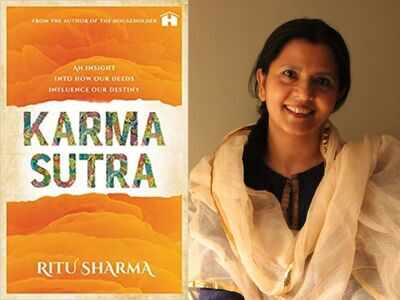
Karma Sutra
Ritu Sharma, columnist, scholar and author of ‘Karma Sutra: An Insight Into How Our Deeds Influence Our Destiny’ is no more with us but her views on the law of karma that she felt so strongly about, will continue to stay with us. She could barely live to see her published work. Shortly before she passed away, she spoke at length about life, sufferings and our actions in the backdrop of the ‘cause and effect’ principle - a central concept of Indian philosophy.
Excerpts from the interview:
What is the book ‘Karma Sutra’ about?
The book sheds light on the workings of the law of karma and its implications on various aspects of our life. This law, which is actually the law of ‘cause and effect’, governs our life. My book suggests that unless we cultivate our ethical self (character) we will continue to suffer at the hands of fate. It is only by working on us that we can conquer our ego and evolve as human beings.
I have always been fascinated by the striking disparity in society – in terms of rich versus poor, healthy versus ill, those from happy families versus those from broken families, those who were successful versus those who failed at everything they did, those who came from a comfortable background versus those who had to struggle for everything and many more. The quest led me to the law of karma, which is also a central concept of Indian philosophy – largely based on the maxim – “As you sow, so shall you reap”.
Your book focuses on one of the most common questions about suffering – ‘Why me’? Can you tell us something about it?
Most of us attribute our sufferings to external factors. But the truth is that it is often the result of our past life karmas. There may have been times when due to sheer frustration or helplessness with our situation, we may have resorted to cheating people, harming them in some way or sought revenge and maybe even ended our lives, which resulted in us being bound in the web of karmas.
We feel helpless, vulnerable and anchorless, but that is actually a lesson by existence to make us humble and lead us towards self-reflection and self-awareness. Once we are on that path, we also find the power to change our destiny - by working on our current actions or Karmas, by realizing our ethical self and by having faith in divine forces.
What can the readers take away from the book ‘Karma Sutra’?
I feel that by understanding the workings of the law of karma, the readers can take comfort in the fact that though the cards they have been dealt with is not in their hands, the power to create a better destiny in the future is still in our control. The book underlines the boomerang effect in existence – what you throw is what comes back to you. If we follow the path of goodness, we will receive goodness in every way and at every turn. That, I feel, is motivation enough for the readers to follow the righteous path and live by the ethical theory - ‘do unto others what you would have them do unto you’.
Excerpts from the interview:
What is the book ‘Karma Sutra’ about?
The book sheds light on the workings of the law of karma and its implications on various aspects of our life.
What inspired you to work on this theory of Karma?
I have always been fascinated by the striking disparity in society – in terms of rich versus poor, healthy versus ill, those from happy families versus those from broken families, those who were successful versus those who failed at everything they did, those who came from a comfortable background versus those who had to struggle for everything and many more. The quest led me to the law of karma, which is also a central concept of Indian philosophy – largely based on the maxim – “As you sow, so shall you reap”.
Your book focuses on one of the most common questions about suffering – ‘Why me’? Can you tell us something about it?
Most of us attribute our sufferings to external factors. But the truth is that it is often the result of our past life karmas. There may have been times when due to sheer frustration or helplessness with our situation, we may have resorted to cheating people, harming them in some way or sought revenge and maybe even ended our lives, which resulted in us being bound in the web of karmas.
We feel helpless, vulnerable and anchorless, but that is actually a lesson by existence to make us humble and lead us towards self-reflection and self-awareness. Once we are on that path, we also find the power to change our destiny - by working on our current actions or Karmas, by realizing our ethical self and by having faith in divine forces.
What can the readers take away from the book ‘Karma Sutra’?
I feel that by understanding the workings of the law of karma, the readers can take comfort in the fact that though the cards they have been dealt with is not in their hands, the power to create a better destiny in the future is still in our control. The book underlines the boomerang effect in existence – what you throw is what comes back to you. If we follow the path of goodness, we will receive goodness in every way and at every turn. That, I feel, is motivation enough for the readers to follow the righteous path and live by the ethical theory - ‘do unto others what you would have them do unto you’.
End of Article
FOLLOW US ON SOCIAL MEDIA








Photostories
Featured In Lifestyle

Popular Categories
Entertainment NewsBollywood NewsTollywood NewsKollywood NewsMollywood NewsMovie ReviewsLatest Hindi MoviesLatest Tamil MoviesMX PlayerParenting TipsHome RemediesWeight LossBeauty TipsParenting TipsHindi VideosHindi Video SongsBhojpuri Music VideosLatest Telugu MoviesBhojpuri Music VideoHindi TV News
Trending in Entertainment
Latest MoviesBollywood MoviesHollywood MoviesTamil Movies 2024Telugu Movies 2024Malayalam Movies 2024Kannada Movies 2024Marathi Movies 2024Bengali Movies 2024Top Rated Movies 2024Best Hindi MoviesBest English MoviesBest Telugu MoviesBest Tamil MoviesBest Malayalam MoviesBest Kannada MoviesBest Bengali MoviesUpcoming Hindi MoviesBest Movies Of All TimeBest Hindi Movies of All Time
Trending in Etimes
Horoscope TodayNumerology Predictions TodayDinner With TrumpTim WalzIvanka TrumpJose LopezKristina JoksimovicJoe WilsonTrump Eating The Dogs SongGermany NewsKamala HarrisPrince HarryPatriot Day 2024Diabetes RiskHappy Mindfulness Day 2024Trump Vs HarrisJoe JonasPositive Thinking Day 2024Dave Bautista
Trending in TV
Trending in Lifestyle
Trending in Regional
Movie Reviews
Berlin ReviewThe Buckingham Murders ReviewSpeak No Evil ReviewVisfot ReviewThalapathy Is The G.O.A.T ReviewRebel Ridge ReviewDetective Conan vs. Kid the Phantom Thief ReviewBeetlejuice Beetlejuice ReviewPad Gaye Pange ReviewA Wedding Story ReviewThe Diary Of West Bengal ReviewTikdam ReviewKinds Of Kindness ReviewAfraid Review
Upcoming Hindi Movies
Upcoming Regional Movies
Latest News
WWE SmackDown Introduced Fresh New Logo, Theme Song From Megan Thee StallionMan acquitted in 31 year old dacoity caseThis Strange Eventful History: Claire Messud's Ambitious Novel Spanning Generations and ContinentsNew season begins with renewed hope for BlastersPremier League: Erling Haaland hits another two in Man City's come from behind win over BrentfordMeerut building collapse: 3 dead; rescue operations continuePeople offer food, umbrellas to agitating doctors; thousands treated at free 'Abhaya' clinicDon’t rethink pink. Plane truth is we need women-friendly seatsTCS teams up with Tata Electronics for ‘made-in-India’ chipsWWE NXT Star Reunites With Father At TNA Victory Road'Nafrat ki dukaan pe ...': PM Modi attacks Congress over 'brutality' in US‘There is no affordable transport currently, the biggest problem in Goa is taxis’IIM Jammu hosts 'Fostering Academia and Industry Partnerships' event at BengalaruMP Bharat, TDP Andhra President Srinivas promise action to safeguard protection of steel plant workersLiverpool slump to shock 1-0 home defeat by Nottingham ForestHimanta urges banned ULFA(I) chief not to indulge in activity jeopardising future of Assam's youthActivists complain as showroom burns old papers; NMMC penalizes Rs 250 onlyVinith Venkatesh scores in ISL debut as Bengaluru FC edge past East Bengal
Other Group Sites -
ETimes is an Entertainment, TV & Lifestyle industrys promotional website and carries advertorials and native advertising.