
- News
- India News
- ‘Boatmen’ row suggests end of OBC sub-division in UP
Trending
This story is from July 8, 2019
‘Boatmen’ row suggests end of OBC sub-division in UP
The UP government’s decision to include 17 OBC castes of ‘boatmen’ in the Scheduled Caste list seems to suggest that the BJP-ruled state may have junked its plan for sub-categorisation of the backward castes list. The 17 castes fall in the informal bracket of ‘Most Backward Castes’ among the OBCs and would be the prime beneficiary of sub-categorisation of OBCs.
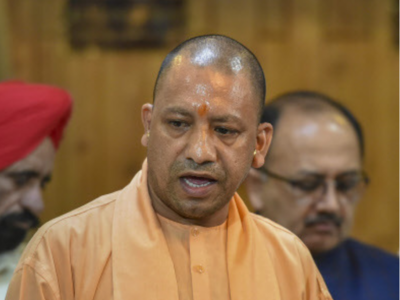
File photo of UP chief minister Yogi Adityanath.
Amid political brouhaha, the Centre last week took the step of censuring the state in Parliament by calling its move “unconstitutional”.

UP had set up a committee on sub-division of backwards and the panel submitted its report a few months ago.
The 17 castes are Mallah, Kashyap, Kumhar, Dheemar, Bind, Prajapati, Dheevar, Bhar, Kewat, Batham, Kahar, Machhua, Rajbhar, Nishad, Turha, Manjhi and Gaudia.
Sub-categorisation is designed to meet the demand for equitable distribution of reservation benefits. Under this scheme, the OBC list is divided into groups of castes according to their socio-economic status and the 27% Mandal quota is apportioned among them in proportion to their share in the backward population.
The ‘boatmen’ MBCs have not benefited from affirmative action because they are unable to compete against the strong backward castes for the same 27% Mandal quota pie.
Experts argued that if UP wanted to help the MBCs, it should have taken the sub-categorisation route. That it has not done so appears to suggest that the BJP regime may have junked the proposal it had announced with much fanfare after the Adityanath government took office two years ago.
The case of ‘boatmen/machhua’ castes is an old one, with SP leader Mulayam Singh Yadav having tried to include them in the SC list twice during his governments in 2005 and in 2017 when his son Akhilesh Yadav was CM.
While the Centre blocked the move in 2006, it was struck down by the high court the second time. Interestingly, the Registrar General of India rejected UP’s proposal in 2005, contending that the 17 castes did not pass the test of “untouchability” that is indispensable for a community to be declared as SC.
Later, the state submitted a research report on the 17 castes to bolster its case. However, the RGI again rejected the proposal, concluding that the study done by UP did not establish untouchability among these communities.
End of Article
FOLLOW US ON SOCIAL MEDIA




Photostories

Hot Picks
TOP TRENDING
Popular Categories
Hot on the Web
Top Trends
PAK W vs SL W Live ScoreLiv Morgan Car CollectionSSC CGL Answer KeyTrichy School Bomb ThreatIsrael Hezbollah WarKerala Lottery ResultsRohit SharmaBrittany MahomesUP Police Constable ResultSeth Rollin Car CollectionTirupati Laddu CaseICC Women t20 World CupWomen's T20 World CupTop Management Colleges of IndiaT20 WC ScheduleWomen T20 World Cup Points TableLive Cricket Score
Trending Topics
Samantha Ruth PrabhuNavratri Colours 2024Navratri WishesHappy Navratri 2024 WishesNaga ChaitanyaDevara CollectionGOAT OTT ReleaseRajinikanthRajinikanth Health UpdateNavratri HistoryDevaraGovinda NewsDevara Movie ReviewHealthy RaitasSwatantrya Veer SavarkarColdplay India tour 2025Upcoming Smartphones In OctoberNavratri JewellerySony Bravia 55 inch 4k Ultra HD TVWordle Answer
Living and entertainment
Latest News
ICC Women’s T20 World Cup ninth-edition: Will India capture their first title? Key players, schedule, and where to watchMohammad Azharuddin skips ED summons in money laundering casePower outages, water shortages emerge as Hurricane Helene smashes US' SoutheastEver wondered how business and corporate laws provide organisations with a competitive edge? Learn their nuances with IIM Calcutta5 must follow rules of Ayurveda to lose 5kg in 30 days'Was screaming, hitting him': 5-year-old Florida boy suffers cardiac arrest on Disney rollercoaster rideMicrosoft launches developer feedback program to address Xbox platform pain pointsKiara Advani shakes up the internet with her backless crochet and ruffle-dressTwo youths held captive in Manipur’s Kangpokpi released after week-long abductionNavarathri is all about inspiration and motivation: Shivani NarayananBank of America faces outage leading to zero balance glitches, hilarious memes flood social mediaWho is S Iswaran? Former Singapore minister of Indian origin sentenced to one year in prisonThere’s a huge angle of woman empowerment also in our story of Ram and Vaishnavi: Shiv SagarSSC CGL Answer Key 2024 released for Tier 1 exam, raise objections by Oct 6: Direct link hereGlobal Chess League 2024: Indians in action, teams, format, scoring system, timeCan mosquitoes spread HIV? Here’s what you need to knowSomen Mishra sets record straight on Alia Bhatt and Vasan Bala 'Jigra' controversy: We were DYING to get Alia on boardThis Is Why Tarot Cards Are Classified As Potential, Consciousness, Subconscious And Superconscious
Copyright © 2024 Bennett, Coleman & Co. Ltd. All rights reserved. For reprint rights: Times Syndication Service