
- News
- Education (Old) News
- How post-study work visa for international students in UK has opened a new chapter
This story is from November 6, 2019
How post-study work visa for international students in UK has opened a new chapter
Professor Sir Keith Burnett on how the reintroduction of two-year post-study work visa for international students in the UK has opened a new chapter
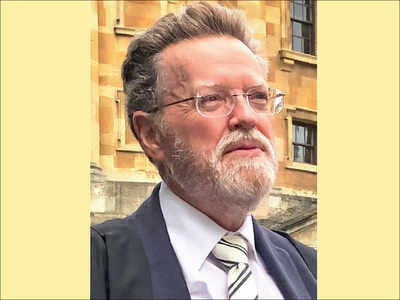
Professor Sir Keith Burnett, Fellow of the Royal Society and a member of the UK Prime Minister's Council of Science and Technology.
In 2016, I sat in a meeting of Indian and British Scientists in Delhi. On the stage in front of me were two PMs, Narendra Modi and Theresa May. Around me were my colleagues in Physics, Biology, Medicine, Computer Science – many of them had collaborated to solve common problems over many years.
A good number were, like me, Fellows of the Royal Society led by an Indian-born Nobel Laureate, Sir Venki Ramakrishnan.
It was only my second visit to India but I was already in awe of the brilliant scientific tradition of the country. I had met with scholars in Bangalore and visited government scientists in the vast agricultural and energy research centres in Delhi. I had been moved by efforts to take medical developments to the poorest regions, to enable the blind to see.
I had also spoken to Indian graduates of British universities, now senior in their field, who were bewildered and hurt by what felt to them like growing xenophobia in Britain expressed most sharply in the removal of post-study work visas from brilliant Indian students in the UK.
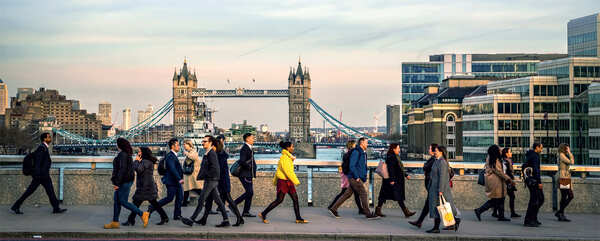
Back in the UK, I had lobbied hard for policy change on these visas, working with my students and founding a campaign to work across universities and with business to make the case for a proper welcome for the world's brightest minds.
Indian scientists and mathematicians had shaped knowledge for the world. Srinivasa Ramanujan FRS – the second-ever Indian Fellow of the Royal Society and the first Indian Fellow of Trinity College Cambridge – of Subrahmanyan Chandrasekhar FRS, the astrophysicist, and in recent times, the gravitational physicist Abhay Vasant Ashtekar.
On the stage in Delhi though, there was only awkwardness and silence from ex-Prime Minister May. An audience hopeful for a sign of friendship was greeted with nothing. The hurt was palpable, did we want India's trade but not her children?
I had lobbied hard for policy change on the visas, working with my students and founding a campaign to work across universities and with business to make the case for indian students
Professor Sir Keith Burnett
Others called it out with me. One was my friend Lord Karan Bilimoria, an Indian-born and Cambridgeeducated businessman committed to education whose grandfather Nasservanji D Bilimoria was one of the first Indians to be commissioned as an officer at the Royal Military Academy Sandhurst and whose mother and maternal grandfather were both educated at The University of Birmingham of which he is now chancellor. The great historian William Dalrymple also hosted the UK Universities Minister in the Delhi Golf Club and warned the UK dinner guests that crass interactions would trigger historic hurt.
And now, as happens, one Prime Minister has gone and, despite all our travails around Brexit, a wrong has been righted.
Our new Premier Boris Johnson has, in one of his first acts, reintroduced post-study work for international students in the UK. His most senior advisor met early with the Indian President of the Royal Society and the government is signalling a desire to make global scientific connections and openness to talent a priority.
IMPLEMENTING THE NEW RULE
The PM has restored a simple policy which opens up knowledge and scientific cooperation. Everyone is watchful of how it will be implemented.
I will be alert to the actions of our new Home Secretary Priti Patel and her officials as they support a very welcome new international education strategy. Still, the message to Indian students is clear. The UK is open and you are welcome to study and work in the country.
Our scientific and educational connections run deep. It is my fervent hope that this announcement marks a new chapter for scholars from both our nations.
[The author is vice president (Academic) of Study Group and was formerly head of the Division of Mathematics and Physical Sciences at The University of Oxford]
End of Article
FOLLOW US ON SOCIAL MEDIA






Photostories

Hot Picks
TOP TRENDING
Popular Categories
Hot on the Web
Top Trends
UGC NET ResultHarbhajan SinghSteve BucknorVirat KohliIndian Womens Cricket TeamStock Market TodayHaryana Election ResultIsrael Hezbollah WarNima Hospital MurderSeth Rollin Car CollectionTirupati Laddu CaseICC Women t20 World CupWomen's T20 World CupTop Management Colleges of IndiaT20 WC ScheduleWomen T20 World Cup Points TableLive Cricket Score
Trending Topics
Samantha Ruth PrabhuNavratri Colours 2024Navratri Day 2 ColourTMKOC New SonuNaga ChaitanyaDevara CollectionGOAT OTT ReleaseRajinikanthDeepika PadukoneNavratri HistoryDevaraGovinda NewsDevara Movie ReviewHealthy RaitasSwatantrya Veer SavarkarColdplay India tour 2025Upcoming Smartphones In OctoberNavratri JewellerySony Bravia 55 inch 4k Ultra HD TVWordle Answer
Living and entertainment
Latest News
Watch: Yazidi girl kidnapped by ISIS at 11, rescued from Gaza after after a decade'You bear responsibility of ...': Houthis warn shipowners in new phase of escalating Red Sea attacksLeo, Daily Horoscope Today, October 04, 2024: Not the day for easy winsHere’s how you get groceries in 10 minutesIndia will work with Brazil for consensus at G20: Amitabh KantStart construction on 12th October this Navaratri and you will say WOW!Savarkar didn't oppose cow slaughter: Karnataka ministerPawan Kalyan, Allu Arjun, or Prabhas? Daggubati Suresh Babu reveals name of the biggest star in TollywoodCabinet clubs all agricultural schemes into 2 with outlay of Rs 1 lakh croreAssessing credit worthiness in informal economyJr NTR-Hrithik Roshan dance-off in 'War 2' set to be shot during THIS time'Was screaming, hitting him': 5-year-old Florida boy suffers cardiac arrest on Disney rollercoaster rideMelania Trump claims 2018 "I don’t care" jacket was directed at media , not linked to migrantsBigg Boss OTT 2 winner Elvish Yadav and comedian Bharti Singh summoned by Delhi Police for a fraud worth Rs 500 croreThis is the stock trading app linked to Rs 500 crore investment fraud; YouTubers Elvish Yadav, Bharti Singh among 5 summonedTaimur and Jeh accompanies mommy Kareena Kapoor Khan for Neha Dhupia-Angad Bedi's son Guriq's birthday bash - See PHOTOSRashami Desai stuns fans with her vibrant Gujarati lookHoroscope Today, October 4, 2024: Read your today's astrological predictions
Copyright © 2024 Bennett, Coleman & Co. Ltd. All rights reserved. For reprint rights: Times Syndication Service