
- News
- Health News
- Solar storms and human health: Should we really be worried?
Solar storms and human health: Should we really be worried?

Solar storm and it effect on health
The whole world is talking about solar storms. News headlines focus on satellite disruptions, GPS failures, communication blackouts, and the possibility of dazzling auroras lighting up the night sky. But there is another question that surfaces whenever a major solar event approaches Earth: can a storm that begins nearly 150 million kilometres away on the Sun affect human health?
Scientists recently warned that a strong geomagnetic storm could reach Earth on June 8-9 after powerful solar eruptions were observed on June 6. In response, the Space Weather Prediction Center of the US National Oceanic and Atmospheric Administration (NOAA) issued a geomagnetic storm watch. The expected event is linked to a coronal mass ejection (CME), a massive cloud of charged particles released by the Sun that is travelling toward Earth.
While the technology sector closely monitors these events, the health implications remain less clear. The answer is not as dramatic as science fiction might suggest, but it is also not entirely settled. Researchers continue to investigate whether changes in Earth's magnetic environment can subtly influence human biology.
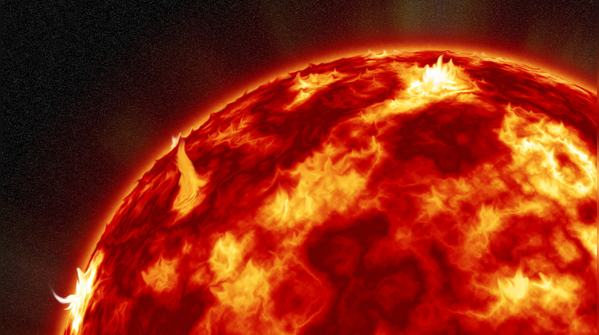
Why do solar storms happen?
The Sun is far from a quiet ball of fire. Its surface constantly produces magnetic activity. Sometimes this activity becomes unstable and releases enormous amounts of energy in the form of solar flares and coronal mass ejections.
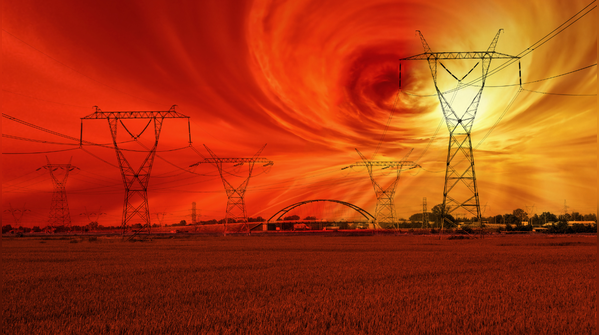
When these charged particles reach Earth, they interact with the planet's magnetic field. This interaction can trigger what scientists call a geomagnetic storm. During intense events, the magnetic field surrounding Earth temporarily fluctuates, creating conditions that can affect satellites, radio communication, navigation systems, and electrical infrastructure.
The same process is also responsible for one of nature's most beautiful spectacles: the aurora, commonly known as the Northern or Southern Lights.
Can solar storms affect human health?
This is where the conversation becomes more nuanced.
Scientists have studied the possible relationship between geomagnetic disturbances and human health for decades. Some research has reported links between periods of heightened geomagnetic activity and changes in cardiovascular health, including alterations in heart rate variability, blood pressure regulation, and the frequency of certain cardiac events. However, these findings do not prove that solar storms directly cause illness.
According to Dr Amit Kumar Malik, Director, Electrophysiology, Interventional Cardiology, Cardiac Care, Medanta Noida, "Solar or geomagnetic storms occur when charged particles released by the Sun interact with the Earth’s magnetic field. These events are known to affect satellites, communication systems, and power grids. However, their impact on human health, particularly heart health, remains an area of ongoing research."
He further explained, "Some studies have reported an association between periods of increased geomagnetic activity and subtle changes in heart rate variability, blood pressure regulation, and the occurrence of cardiovascular events. However, the evidence is not strong enough to establish a direct cause-and-effect relationship."
A large review published through the US National Library of Medicine's PubMed database examined decades of research on geomagnetic activity and cardiovascular outcomes. While several studies identified potential associations, researchers concluded that the evidence remains inconsistent and requires further investigation before any firm conclusions can be drawn.
In simple terms, scientists are observing intriguing patterns, but they have not yet established that solar storms directly harm human health.

Should heart patients be concerned?
For most people, including those living with heart disease, experts say there is currently no reason to panic.
Dr Malik noted, "For patients with heart disease, there is currently no reason for alarm. Modern pacemakers, implantable cardiac devices, and healthcare technologies are designed with safeguards against external electromagnetic interference. Most individuals are unlikely to experience any direct health effects from solar storms."
This is an important point because fears often arise whenever stories about solar storms become widespread. People with pacemakers and implanted cardiac devices may worry that changes in Earth's magnetic field could interfere with their equipment. Current medical technology is built to withstand such environmental influences, and no major public health advisories recommend special precautions during solar storms.
The reality is that everyday cardiovascular risk factors continue to pose a much greater threat than any known effects from solar activity.

If solar storms cannot be stopped, can we protect ourselves?
Unlike weather on Earth, solar weather cannot be prevented. Humanity cannot stop a coronal mass ejection from leaving the Sun.
What can be managed, however, is personal health.
Dr Malik emphasised, "The most important message for cardiac patients is to focus on proven measures that protect heart health—taking prescribed medications regularly, controlling blood pressure, diabetes, and cholesterol, staying physically active, maintaining adequate hydration, and managing stress."
In other words, the best protection is not a special device or a hidden shelter. It is maintaining good health habits every day.
For the general population, there are currently no medical guidelines recommending protective actions specifically because of a solar storm. Public agencies primarily focus on protecting infrastructure, communication networks, aviation systems, and satellite operations.
What matters more: The storm above or the health within?
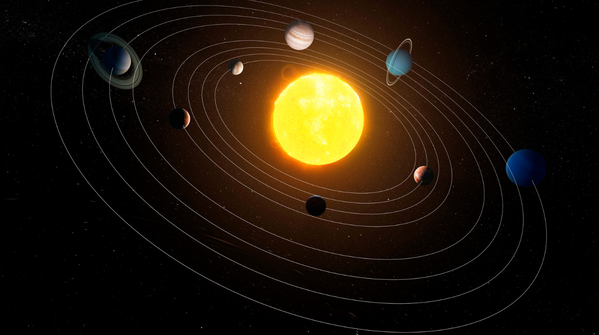
Solar storms remind people that Earth is part of a much larger cosmic system. They are fascinating events that reveal the powerful relationship between our planet and the Sun.
Yet the scientific consensus remains clear: while researchers continue to explore whether geomagnetic activity influences human physiology, the strongest and most immediate effects of solar storms are technological, not medical. Satellite systems, GPS signals, radio communications, and power grids remain the primary areas of concern.
Dr Malik concluded, "At present, the primary concerns related to solar storms remain technological rather than medical. While scientific interest in possible cardiovascular effects continues, maintaining good cardiovascular health remains far more important than worrying about solar activity."
Perhaps that is the most reassuring takeaway. The Sun may occasionally send storms across the solar system, but the habits that protect human health remain surprisingly familiar: staying active, eating well, sleeping adequately, managing stress, and following medical advice.
The universe may be unpredictable. Looking after health does not have to be.

Medical experts consulted
This article includes expert inputs shared with TOI Health by:
Dr Amit Kumar Malik, Director, Electrophysiology, Interventional Cardiology, Cardiac Care, Medanta Noida.
Inputs were used to explain what solar storms are, how they occur, and whether these powerful space weather events can have any impact on human health.
Featured In Health

