
- News
- Elections News
- ‘Manoos’ factor key to deciding outcome in Mumbai North-East
This story is from April 16, 2019
‘Manoos’ factor key to deciding outcome in Mumbai North-East
Three of the assembly seats are with BJP, two with Shiv-Sena and one with Samajwadi Party.
A total of 15.6 lakh voters here will get to exercise their franchise on April 29.
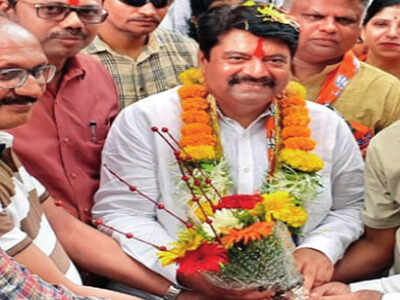
Candidates of both leading alliances have begun wooing the 7.3 lakh Marathi voters. It is yet to be seen if the support of Raj Thackeray’s MNS will pull in more Marathi votes for NCP’s Sanjay Dina Patil. In 2009, MNS had fielded its own candidate, Shishir Shinde, for the LS polls and got 1.95 lakh votes. These voters voted for Kirit Somaiya in 2014, when MNS had supported BJP. Somaiya won with a margin of over 3 lakh votes. But this time, MNS functionaries are busy campaigning round-theclock with Patil in his ‘rath.’ BJP candidate Manoj Kotak has also been aggressive in his campaigning, making a lot of visits to the Maharashtrian-dominated pockets of Bhandup, Mulund East, Kanjurmarg, Vikhroli and Ghatkopar West. A party activist said, “The Marathi votebank matters most.”
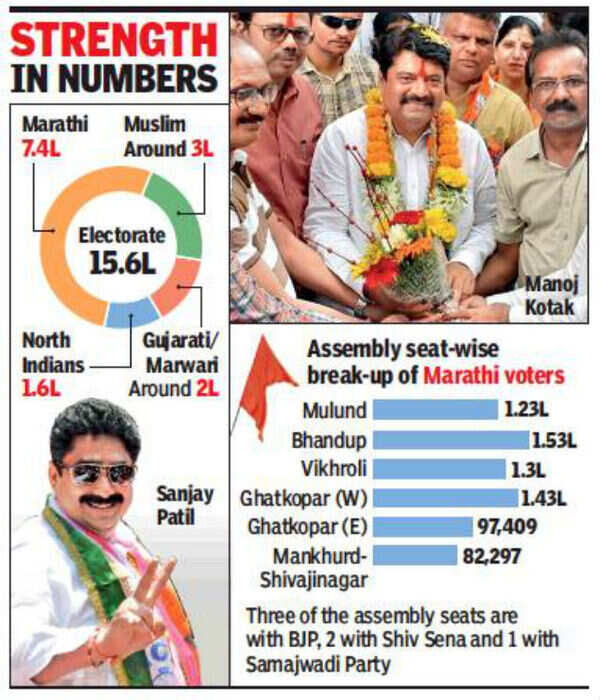
Kotak’s strength is the alliance with Shiv Sena, which has a good following in two of six assembly segments -- Bhandup and Vikhroli. Maharashtrian voters in these two assembly seats come to 2.8 lakh. Sena MLA Sunil Raut from Vikhroli has pledged support to Kotak and urged the Marathi “manoos” to back BJP-Sena.
While Patil has been playin g the “Marathi” card from Day One, when he filed his nomination and affidavit in the language, his supporters have been reminding voters that “Bhau” is a Marathi “manoos” and “will keep the community’s interests at heart.” Kotak, too, speaks fluent Marathi and knows issues of Marathi locals as he has been a three-term corporator. Pravin Phadnis, a voter. said, “Marathi votes are in high-rises, chawls as well as slum pockets. And Marathi voters do vote.”
But Ajay Govale, a Mulund resident who works for a NGO, said educated Maharashtrians will not be swayed by emotions. “The elections are being fought at the national level. We are not talking about repairing drains or roads but issues of national interest such as GDP, national security, and functioning of the Centre. Voters will elect candidates with vision who can represent them at the Centre.”
Many Dalits here can be counted among Marathi speakers. But the Dalit vote may be divided, said observers, between Prakash Ambedkar’s Vanchit Bahujan Aghadi, BJP (backed by Ramdas Athawale) and Cong-NCP (whom smaller RPI factions are supporting, said a Congress worker).
Muslim voters number 3 lakh (around 20% of the electorate) and would be a factor.

About the Author
Somit SenEnd of Article
FOLLOW US ON SOCIAL MEDIA
Hot Picks
TOP TRENDING
Popular Categories
Hot on the Web
Top Trends
IND vs BAN Live ScoreNEET UG CounsellingDolly ChaiwalaKamindu MendisMCC Weekdays Bash FightVince McMahon Netflix DocuseriesVirat KohliHigh Paying Freelance JobsElon Musk Dating MeloniNEET UG Paper Leak CaseKerala Lottery ResultsTamil Nadu NEET UG CounsellingWho is Dominik Mysterios WifeWest Bengal Teacher RecruitmentIsrael Hezbollah WarKerala Bans Study NotesLive Cricket Score
Trending Topics
Living and entertainment
Latest News
HC raps CCP for evicting 2 from fish mkt buildingTravis Kelce Shares His Excitement for His Acting Debut in Ryan Murphy’s Mystery Thriller GrotesquerieFirst person died in UK from ‘liquid’ Brazilian butt lift: All you need to know about liquid BBL and risks it posesNayanthara and Vignesh Shivan share emotional notes on their twins Ulag and Uyir's second birthdayIsraeli strikes kill 600, displace 90,000 as Lebanese civilians flee in DesperationNavya Naveli Nanda reacts to Kolkata rape-murder case, calls for accountability and safer spaces for womenArijit Singh apologizes to his female fan as the security guard held her neck during his UK concert: 'I could not protect you'World tourism day 2024: Recreate your favourite filmi moments at these localesSaif Ali Khan admits that the ‘Adipurush’ controversy was 'unsettling'; says “you need to stay away from religion...'Valpoi torrential rainfall sets record, crosses 200 inchesWeight loss and more: 5 reasons to eat soaked methi seeds every morningOptical Illusion: Only a visually sharp person can spot the caterpillar on this treeBad Boy electric trike unveiled in India: F1-inspired cockpit, 400 km range and more!Was tired of her atrocities, so killed her: Chilling details from diary of Bengaluru woman's murderer who chopped her into '59' piecesWhy are Nazca lines among the world's greatest mysteries?Maha questions from opposition’s small alliesBig Story -Has Kollywood lost its plot?Did Vincent van Gogh’s paintings have a connection with Bihar? Research says yes!
Copyright © 2024 Bennett, Coleman & Co. Ltd. All rights reserved. For reprint rights: Times Syndication Service