
- News
- Elections News
- Parties give only lip-service to women power, no seats
This story is from March 14, 2019
Parties give only lip-service to women power, no seats
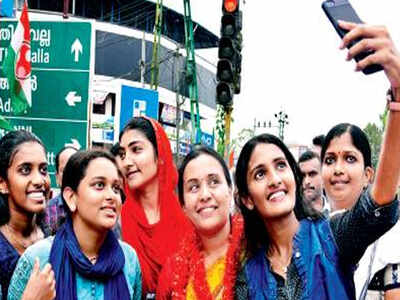
The CPM has fielded only two women candidates this time around —P K Sreemathi and Veena George (in pic)
KOCHI: Addressing a meet in Kochi recently, Congress president Rahul Gandhi had reiterated the party’s commitment for passing the women’s reservation bill if the party is voted to power. Still, chances are high for not even a single woman making it to the party’s list of candidates from Kerala. The only name doing the rounds is that of AICC secretary Shanimol Usman.
Similarly, there is nothing much to cheer about for women in the CPM’s list.
“The bill has been pending since 23 years. In 2010, it was passed in the Rajya Sabha with the support of Left parties,” said M C Josephine, chairperson, Kerala Women’s Commission and central committee member of CPM. “Though the BJP had the majority in the Parliament this time, it didn’t try to pass the bill,” she said.
“There is a public perception that adequate representation has to be given to women only after the bill comes into force. But all parties fare poor when it comes to the issue of women reservation,” she said.
BJP-led NDA is also likely to come up with a list, which will include just about one woman. Lists brought out by other major parties like the CPI, the
Unlike in the case of candidates from other states, Kerala is a state where 50% women reservation has been successfully implemented. In the past two decades, many women have assumed leadership roles in three-tier panchayats, municipalities and corporations, cutting across party lines. It has resulted in an abundance of women leaders who are capable of contesting even Parliament elections.
Interestingly, West Bengal chief minister and Trinamool Congress leader Mamata Banerji has declared that the party would earmark 40 tickets for women while Odisha chief minister and Biju Janata Dal leader Naveen Patnaik has decided to allot 33% of Lok Sabha seats to women making it clear that parties do not have to wait for the bill for providing adequate representation for women.
Only 12 women MPs from state since 1952
In six decades since 1952, Kerala has sent just 12 women MPs to the Lok Sabha thereby earning the dubious distinction of one of the states with poorest representation of women. Until 2014, the CPM had nine women MPs while the Congress had only two.
The first woman representative to the Lok Sabha from the state was an independent candidate Annie Mascarene who won from Trivandrum constituency in the then Travancore-Cochin state in 1951.
Only twice more than one woman represented the state in the Lok Sabha: In the 10th Lok Sabha CPM candidate Suseela Gopalan and Congress candidate Savithri Lakshaman won from Chirayinkil and Mukundapuram, respectively. The second instance was when C S Sujatha and P Satheedevi of the CPM were elected from Mavelikkara and Vadakara, respectively in 2004. In four Lok Sabhas, Kerala recorded zero percentage of women representation. Even states, which were ranked below Kerala in other indicators like health and literacy, have fared comparatively better in women representation. In the 16th Lok Sabha, West Bengal had the highest percentage of women MPs among states: 29%.
The state elected just 5% women in the 16th Lok Sabha ranking just above Karnataka, which fared the worst among southern states, sending just 4% women to the Parliament. The legislative assembly too witnesses a similar trend, said T N Seema, former Rajya Sabha MP. “The problem is the mindset. They say men stand a better chance of winning but it is a misconception. Until we have a system for legal reservation, things will not change,” she said. J Devika, social critic, too rubbishes the idea of winning probability. “There are so many below par candidatures from men who still end up winning because parties are willing to make use of the machinery,” she said.
According to a report by the ministry of statistics and programme implementation, the number of women contesting the Lok Sabha election has increased from 45 in 1957 to 668 in 2014. But percentage of winning candidates has declined from 60 to 9.3% during the period, the report notes.
Similarly, there is nothing much to cheer about for women in the CPM’s list.
The party has earmarked just two seats for them out of the total 14.
“The bill has been pending since 23 years. In 2010, it was passed in the Rajya Sabha with the support of Left parties,” said M C Josephine, chairperson, Kerala Women’s Commission and central committee member of CPM. “Though the BJP had the majority in the Parliament this time, it didn’t try to pass the bill,” she said.
“There is a public perception that adequate representation has to be given to women only after the bill comes into force. But all parties fare poor when it comes to the issue of women reservation,” she said.
Women will continue to be marginalized until the bill is passed, said Shanimol Usman. “Political parties, including the Congress don’t give adequate representation for women while fixing the candidates. When the Congress was in power the bill was passed in the Rajya Sabha. That was due to the determination on the part of Sonia Gandhi,” she said, adding that more women should be included in the list of candidates.
BJP-led NDA is also likely to come up with a list, which will include just about one woman. Lists brought out by other major parties like the CPI, the
Indian Union Muslim League and the RSP, do not feature a single woman.
Unlike in the case of candidates from other states, Kerala is a state where 50% women reservation has been successfully implemented. In the past two decades, many women have assumed leadership roles in three-tier panchayats, municipalities and corporations, cutting across party lines. It has resulted in an abundance of women leaders who are capable of contesting even Parliament elections.
Interestingly, West Bengal chief minister and Trinamool Congress leader Mamata Banerji has declared that the party would earmark 40 tickets for women while Odisha chief minister and Biju Janata Dal leader Naveen Patnaik has decided to allot 33% of Lok Sabha seats to women making it clear that parties do not have to wait for the bill for providing adequate representation for women.
Only 12 women MPs from state since 1952
In six decades since 1952, Kerala has sent just 12 women MPs to the Lok Sabha thereby earning the dubious distinction of one of the states with poorest representation of women. Until 2014, the CPM had nine women MPs while the Congress had only two.
The first woman representative to the Lok Sabha from the state was an independent candidate Annie Mascarene who won from Trivandrum constituency in the then Travancore-Cochin state in 1951.
Only twice more than one woman represented the state in the Lok Sabha: In the 10th Lok Sabha CPM candidate Suseela Gopalan and Congress candidate Savithri Lakshaman won from Chirayinkil and Mukundapuram, respectively. The second instance was when C S Sujatha and P Satheedevi of the CPM were elected from Mavelikkara and Vadakara, respectively in 2004. In four Lok Sabhas, Kerala recorded zero percentage of women representation. Even states, which were ranked below Kerala in other indicators like health and literacy, have fared comparatively better in women representation. In the 16th Lok Sabha, West Bengal had the highest percentage of women MPs among states: 29%.
The state elected just 5% women in the 16th Lok Sabha ranking just above Karnataka, which fared the worst among southern states, sending just 4% women to the Parliament. The legislative assembly too witnesses a similar trend, said T N Seema, former Rajya Sabha MP. “The problem is the mindset. They say men stand a better chance of winning but it is a misconception. Until we have a system for legal reservation, things will not change,” she said. J Devika, social critic, too rubbishes the idea of winning probability. “There are so many below par candidatures from men who still end up winning because parties are willing to make use of the machinery,” she said.
According to a report by the ministry of statistics and programme implementation, the number of women contesting the Lok Sabha election has increased from 45 in 1957 to 668 in 2014. But percentage of winning candidates has declined from 60 to 9.3% during the period, the report notes.
End of Article
FOLLOW US ON SOCIAL MEDIA
Hot Picks
TOP TRENDING
Trending Stories
In Section
Entire Website
- Ajit's NCP slams RSS mag for questioning its entry into NDA
- Taking 'break' for medical reasons: TMC's Abhishek
- MP Akhilesh Yadav quits Karhal assembly seat
- Andhra, Odisha will usher in record development: PM Modi
- Wayanad or Rae Bareli, which to quit? My call will make people at both seats happy: Rahul
- Modi cabinet 3.0: 39% ministers have criminal cases against them
- Congress slams PM Modi over Parliamentary Affairs minister pick
- 'Dissatisfied souls': Sanjay Raut on Naidu & Nitish after portfolio allocation in Modi cabinet 3.0
- Modi cabinet 3.0: Amit Shah takes charge as Union home minister
- 'Taking responsibility of defeat': AIUDF general secretary Aminul Islam resigns as party loses LS polls
- Govt suspends licence to make, sell eye drop that claimed no use of glasses
- 50-year-old injured in wolf attack in Bahraich; search on for sixth 'killer'
- Actor dies in his sleep. Why sudden heart attacks are killing Indians
- Sena case pending, CJI should recuse himself: Raut on PM-Chandrachud meet
- 3 dead, 7 trapped after after 400-year-old fort wall collapses in MP
- Nagpur Audi crash probe: Maha BJP chief’s son Sanket called after 14 hours
- Pictures, videos: Why there is no other beach like this in India
- German foreign minister to S Jaishankar: ‘Very impressed by your ....’
- Centre seeks review of SC’s mineral royalty judgment; CJI surprised
- 2 Army officers thrashed, their female friend gang-raped in Madhya Pradesh

Popular Categories
Hot on the Web
Top Trends
Trending Topics
Alia BhattMalaika Arora Father DeathArbaaz KhanNatasa StankovicMr Bachchan OTT ReleaseNational Parks In IndiaSelena GomezGOAT CollectionVikas Sethi DeathMalayalam ProducersIndia's Best Dancer 4Simi GarewalDilli BabuIndian National ParksLaung BenefitsVikas SethiiPhone 16Dubai Princess Sheikha MahraMG Windsor EvWordle Answer
Living and entertainment
Latest News
Kapil Sharma gives fans a peek into his Ganesh Chaturthi festivities with wife GinniNot MS Dhoni and Rohit Sharma, Gautam Gambhir calls this Indian player 'Shahenshah'. WatchBest 20000mAh Power Banks To Power Your Devices Wherever You GoWalking dog in Goa? Mouth guard, leash soon to be mustBhubaneswar man held for stalking, harassing woman doctor on social mediaCommunal violence erupts in Karnataka during Ganpati Visarjan, section 144 imposedTrump's claim about sending Taliban leader Abdul his house photo fuels social media frenzyTS PGECET 2024 first phase seat allotment result out at pgecetadm.tsche.ac.in: Direct link to download hereFinding divinity in a world addicted to noiseMTV VMAs 2024's major highlights: Taylor Swift's tribute melts hearts, Eminem's performance gives a nostalgic dose and BLACKPINK's Lisa shines on the stageOmar fighting for chair, I’m fighting for people of Kashmir, says Engineer Rashid after walking out of TiharTovino Thomas praises Prithviraj Sukumaran as director: "One of the brilliant directors I have ever worked with"Border Gavaskar Trophy: When Sourav Ganguly's Brisbane heroics set the tone for an enlivening seriesLive wire snaps, boy recalls science lesson, saves lives with sisterNTR Jr’s Devara crosses US $1 million mark for its premiere shows in USA with 15 days to releaseHow to make an egg mask for ultimate hair growthIt will take time to get back to the top: Pakistan coach ZamanThe Luckiest Zodiac Signs: Who's Got the Midas Touch?
Copyright © 2024 Bennett, Coleman & Co. Ltd. All rights reserved. For reprint rights: Times Syndication Service