





In April 1526, Babur defeated Ibrahim Lodi on the plains of Panipat, surprising the Hindustani army with his artillery and, even more so, with his cavalry’s expert flanking manoeuvres, pressing Lodi’s men upon themselves in such chaos and confusion that the battle was won by noon.
Half a millennium later, in May 2026, on the day BJP defeated Trinamool Congress in a victory some attributed to its own strategic deployments of Hindutva and the SIR, a video emerged on social media of a mob around a burning replica of the Taj Mahal, shouting “Tel lagake Dabur ka, naam mitado Babur ka”.
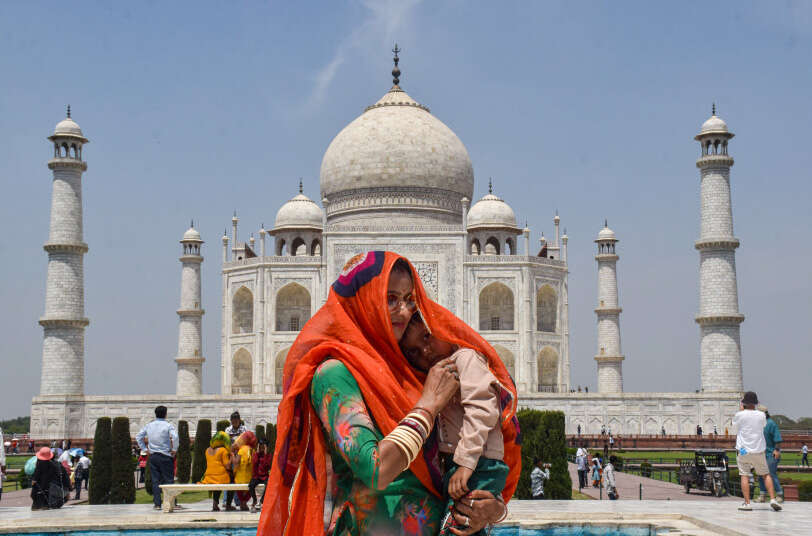

Ah Taj: How can the Taj Mahal be painted as an example of brutal, religious oppression?
Babur’s conquest appears to have inflicted a wound on the Indian psyche, one that aches even today and will heal only when his very name is rubbed out. Any serious examination of history, however, makes it difficult to support this claim.
By what logic, after all, is the Taj Mahal an example of brutal, religious oppression? There’s only one way to make it so: the absurd argument, often touted by some right-wing ideologues, that the Taj Mahal wasn’t built by Babur’s dynasty at all, that it is actually an ancient temple.
This is also why the ‘defence’ of Mughal rule is often built on its cultural contributions to the Indian subcontinent: language and literature, fashion, cuisine and architecture, all with a deeply syncretic foundation.
This framing is not immune to critique; Kapil Komireddi, for example, accused Indian historians of characterising Mughal rule as a “cultural exchange programme” (while properly damning European colonisation), thus allowing an unaddressed pain to fester — and now burst.
Let us assume, for the sake of argument, that he is right. Let us even grant that there is no difference between conquest that settles to govern and colonisation that rules to extract. In any case, the “cultural benefits of Mughal rule” argument is unlikely to convince the mob with its oily doggerel.
Let us assume, then, that nothing good came of the Mughals, not even a railway line — only illegal demolitions, arbitrary taxes, and everyday assaults on one beleaguered community’s dignity. Let us allow that this trauma will only be set right by erasing Babur’s name.
But from where, exactly? It’s too late to excise him from the voters’ list. From textbooks, then, and street signs? The mob forgets: Babur exists despite and outside its chants. First in the life he lived, an extraordinary life by any measure.
King at eleven, then throne-less vagabond; soldier, adventurer, gardener; avid drinker, conqueror, poet. Second, and even more indelibly, Babur exists in his Baburnama. However long the mob might wander with its matchboxes, anyone who wants may find Babur at any time, in his own words.
One of the first things Babur did on arriving in Agra, in the blistering May of 1526, was scout for a place for a garden, a charbagh of the style that would, one day, grace the Taj Mahal. With polemic to match Komireddi’s, Babur had dismissed newly conquered Hindustan as a “place with little charm”.
There was no sense of inter-dining and civilised conversation, no symmetry in the buildings, no good fruit or bread in the markets. There was no good place to build gardens, either: “A few days after coming to Agra, I crossed the Jumna with this plan in mind… but everywhere I looked was so unpleasant and desolate that I crossed back in great disgust.”
He settled for what he had: dug a well, laid beds of rose and narcissus, set his gardeners tending melons and grapevines. Some years later, when Babur tasted the fruit and found it good, he wrote, “To have grapes and melons grown in this way in Hindustan filled my measure of content.”
Babur did, after all, want to transform Hindustan — just not in the way the mob imagines. It wasn’t a religion he wanted to replace but the literal landscape. When the Agra garden was laid, Babur wrote with relief: “Thus, in unpleasant and inharmonious India, marvellously regular and geometric gardens were introduced.”
The word ‘garden’ occurs nearly 40 times in the Hindustan section of the Baburnama (as translated by W M Thackston); gardens that Babur made, visited or criticised. “By repeatedly returning… to his preoccupation with garden construction and embellishment,” argues the historian Stephen Dale, Babur “reveals how profoundly important these structures were to him” — the ground in which his own idea of himself, a carrier of Timurid high culture, could flourish.
By contrast, the same section has less than ten instances of the word ‘mosque’ (and no mention of any such building in Ayodhya).
What is the mob to make of this? After all, its grievances rest on the claim that Babur was a barbarian, iconoclast, destroyer of ancient worlds who built a masjid on a mandir, not that he transplanted fruit. Or perhaps that is the more unsettling fact?
That Babur thought of gardens and freshly baked bread while they dream of arson and erasure? It’s entirely consistent with the mob’s insecurity that the real wound to its puny soul is inflicted by a patch of melons.
Disclaimer
Views expressed above are the author's own.






Top Comment
{{A_D_N}}
{{C_D}}
{{{short}}} {{#more}} {{{long}}}... Read More {{/more}}
{{/totalcount}} {{^totalcount}}Start a Conversation