





Hello and welcome to TOI Bharat Abroad.
This week, we look at the Indian imprint on America’s innovation economy, Britain’s uneasy “I can’t breathe” moment, and why Silicon Valley’s AI age increasingly looks like it runs through Indian operators, founders and engineers.
Let’s go.
THE BIG STORY
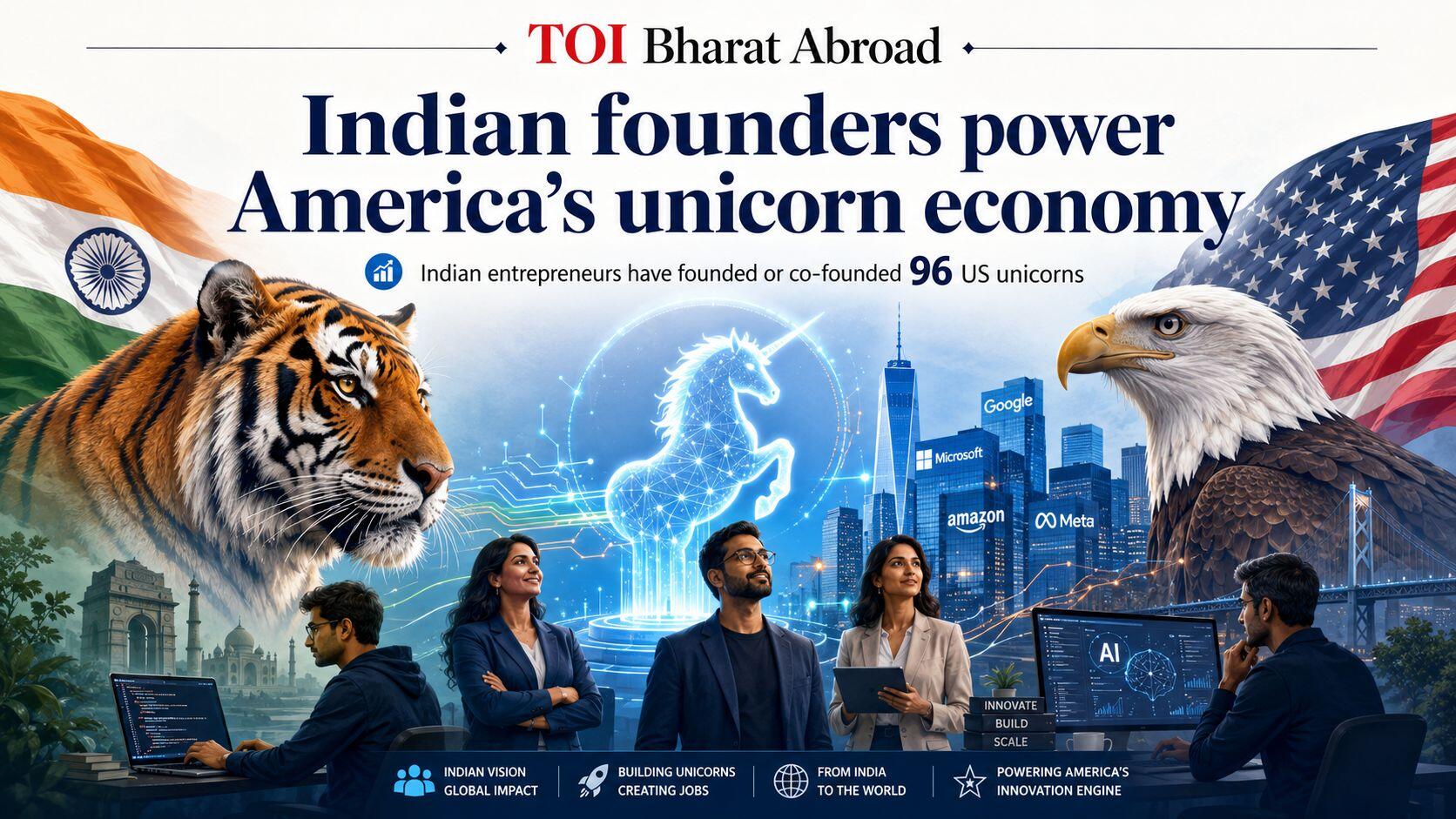

Indian founders power America’s unicorn economy
Indian entrepreneurs have emerged as the biggest immigrant force behind America’s billion-dollar startup ecosystem, founding or co-founding 96 US unicorns and underlining how deeply Indian talent now sits inside the machinery of American innovation.
Why it matters:
The finding lands at a time when the US is once again debating skilled immigration, H-1B visas and employment-based green cards. The irony is hard to miss. The very immigration pathways now under political pressure have helped build some of America’s most valuable companies. Indian professionals have long been seen as the engineers, coders and managers powering Silicon Valley. This report shows they are increasingly the founders too.
Driving the news:
A new study by the National Foundation for American Policy found that immigrants have founded or co-founded 455 of America’s 775 privately held startups valued at $1 billion or more. That is 59% of all US unicorns. India leads the list with 96 unicorns, ahead of Israel, the United Kingdom, China and Canada.
Nearly one in eight American unicorns now has an Indian-born founder. The report also found that almost two-thirds of US unicorns were founded or co-founded by immigrants or their children, while nearly 80% have either an immigrant founder or an immigrant in a key leadership role.
The big picture is clear. From AI and enterprise software to healthcare technology and cybersecurity, Indian-origin founders are no longer merely joining America’s innovation economy. They are building it. Behind the unicorn economy stands a familiar journey: Indian campuses, US universities, H-1B jobs, long green-card queues and, eventually, companies that employ Americans and shape the future.
NRI WATCH
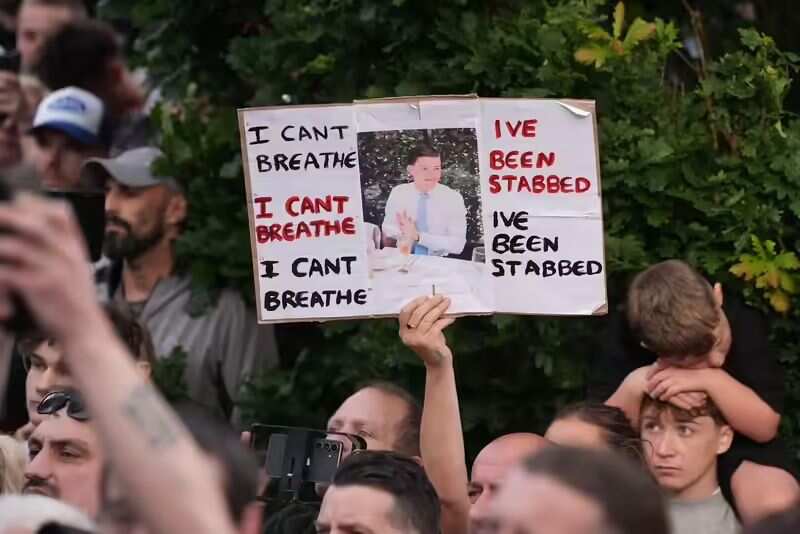

Britain’s ‘I can’t breathe’ moment
The killing of 18-year-old Henry Nowak in Southampton has become one of Britain’s most combustible law-and-order stories, with the British Right framing it as proof that the country’s institutions now see race before reality.
Nowak was stabbed by Vickrum Singh Digwa in December 2025. Digwa then called police and claimed he had been racially abused. When officers arrived, they handcuffed the fatally wounded Nowak, who said he could not breathe and told them he had been stabbed. One officer reportedly replied: “Don’t think you have, mate.”
The case has since been amplified by Nigel Farage, Tommy Robinson and Elon Musk, who argue that it exposes “two-tier policing” in Britain. Keir Starmer has rejected that claim, accusing Farage and Musk of whipping up division and politicising the family’s grief.
The comparison with George Floyd is politically loaded and morally imperfect. But that is precisely why the case has travelled so far. Floyd’s death became a global indictment of American policing. Nowak’s death is being turned into the British Right’s counter-symbol: a dead man’s final words, seized by a movement that believes they prove everything it has been saying about modern Britain.
OFFBEAT
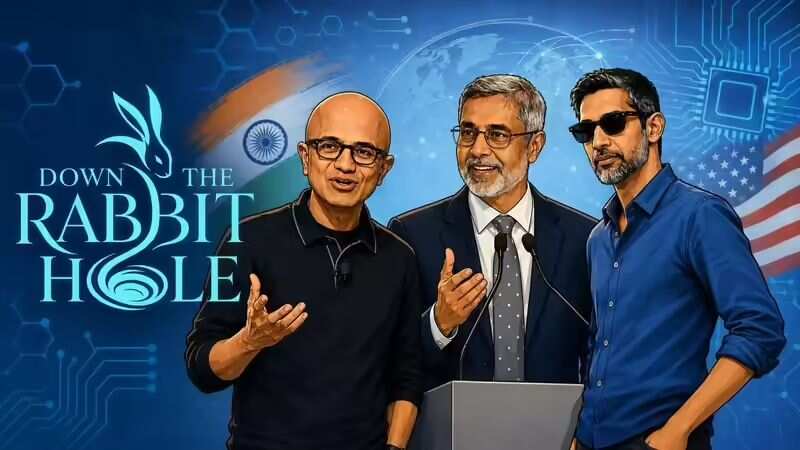

Why AI may mean ‘actually Indians’ in Silicon Valley
In Silicon Valley’s new AI age, the joke practically writes itself: AI may stand for Artificial Intelligence, but the people operating much of the machinery increasingly seem to be actually Indian.
The rise of Sanjay Mehrotra at Micron has put him alongside Satya Nadella at Microsoft and Sundar Pichai at Alphabet, creating a remarkable Indian-origin triangle at the top of American tech. The three men come from different Indias and different routes to power, but they share a common trait: they are engineers before they are executives.
Mehrotra sits at the centre of the memory-chip economy that AI depends on. Nadella turned Microsoft into a cloud-and-AI giant. Pichai runs the company that operates the front door of the internet. None of them fits the loud Silicon Valley founder-showman archetype. They represent something quieter and increasingly more valuable: the operator.
That may be the real Indian story in the AI age. The old diaspora economy was built around gas stations, motels and medicine. The new one is built around prompts, chips, cloud, search and scale. America may still dream in founder mythology, but the machine increasingly needs people who know how to keep it humming.
DID YOU KNOW?


NRI SPOTLIGHT
LEMON CHILLI.NEWS


News that hits like a meme, but sticks like a fact. For more, visit LemonChilli.News
Disclaimer
Views expressed above are the author's own.





Top Comment
{{A_D_N}}
{{C_D}}
{{{short}}} {{#more}} {{{long}}}... Read More {{/more}}
{{/totalcount}} {{^totalcount}}Start a Conversation